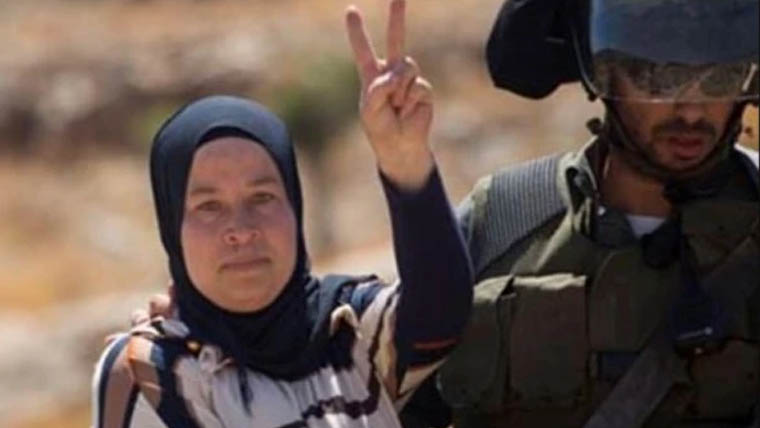
Jerusalem (Web Desk): On the occasion of Palestinian Women’s National Day, the Palestinian Prisoners’ Society (PPS) released a deeply concerning report revealing the distressing plight of 49 Palestinian women currently held in Israeli detention facilities. The PPS alleges that these female detainees are subjected to severe harsh mistreatment, pervasive torture, and systematic violations of their fundamental human rights. This disclosure casts a harsh light on the conditions within Israeli prisons, drawing immediate and urgent attention to international humanitarian obligations.
According to the comprehensive statement issued by the PPS, the current cohort of female detainees notably includes two minors and a woman explicitly identified as being from the Gaza Strip. The report asserts that all of these individuals have been exposed to degrading and inhumane treatment throughout both their prolonged interrogation phases and their subsequent imprisonment. The organisation has levelled serious accusations against the Israeli authorities, claiming the deliberate employment of physical violence, severe food deprivation, and calculated medical neglect as primary tools intended for psychological and physical control over the imprisoned population.
Intensification of Abuses Post-October 7th
The PPS report highlights a critical period, stating unequivocally that the severity of abuses directed against female prisoners has alarmingly intensified since the Israeli military launched its major offensive on Gaza on October 7, 2023. During this period of heightened conflict, women detainees have allegedly been subjected to a catalogue of violations, including humiliation, relentless verbal assaults, physical beatings, and threats of sexual violence during the often protracted and coercive interrogation sessions.
Furthermore, the report details that several detainees are being deliberately denied essential medical treatment despite having previously documented serious and life-threatening health conditions. Other women have been forced to endure prolonged periods of solitary confinement and relentless sleep deprivation, tactics which are widely recognised as forms of psychological torture.
Human rights monitors have collectively characterised the current situation as a “grave humanitarian concern,” forcefully emphasising that established international law unequivocally prohibits the mistreatment of prisoners, particularly when those prisoners are vulnerable populations such as women and minors. The adherence to conventions guaranteeing the humane treatment of all detainees is a non-negotiable obligation for all states.
Case Studies Highlight Systemic Maltreatment
To substantiate their claims of systemic abuse, the PPS report identifies several prisoners by name, whose individual cases purportedly demonstrate the systemic nature of the violations. Among those singled out is Fidaa Assaf, a cancer patient who, according to the PPS, has been systematically deprived of essential, life-saving medical care. Another named detainee is Tasneem Al-Hams from the Gaza Strip, who is described as being held under unusually harsh and detrimental conditions specifically related to her place of origin.
The group’s list also tragically includes two young teenage girls, Sally Sidqi and Hanaa Hammad, who are imprisoned despite their minor status. Notably, Hanaa Hammad is currently being held under administrative detention—a highly contentious legal practice that permits the Israeli military to authorise her indefinite detention without any formal charge or trial, fundamentally undermining core principles of due process and justice.
The PPS further revealed a startling legal discrepancy: 12 of the imprisoned women have not been formally charged with any criminal offense, yet they continue to be held for significantly extended periods. This practice, according to the organisation, constitutes a direct and undeniable violation of the detainees’ constitutional rights to due process and fair trial guarantees as established under international human rights law.
International Human Rights and Legal Compliance
Major international human rights organizations, including Amnesty International and Human Rights Watch, have previously and repeatedly condemned Israel’s consistent patterns of behaviour concerning the treatment of Palestinian detainees, with a particular focus on the vulnerability of women and minors. These organisations assert that such practices—which encompass arbitrary detention, the cruel denial of necessary medical care, and the use of threats, including sexual violence—may collectively constitute serious violations of the Fourth Geneva Convention and contravene binding international human rights law obligations.
The PPS has issued an urgent and explicit appeal to the United Nations and the International Committee of the Red Cross (ICRC), calling for immediate, high-level intervention. The objective of this intervention is to ensure the essential protection of all Palestinian women detainees, many of whom are known to be mothers and primary caregivers who have been forcibly separated from their families for years, causing immense social and familial distress.
Demands for Accountability and Transparency
Palestinian rights advocacy groups are vehemently stressing that immediate and complete accountability and transparency are critically needed. They demand that the State of Israel must immediately grant international observers and independent medical teams unrestricted access to all women’s detention centres. These facilities are frequently closed to any independent scrutiny, fostering an environment where alleged abuses can occur without effective oversight.
The PPS concluded its powerful statement by urging the broader international community to exert significant and sustained political pressure on Israel. The explicit goals of this pressure campaign are to immediately cease the practice of arbitrary arrests, secure the swift release of all prisoners held without formal charge, and ensure that Israel adheres fully to its obligations under international legal standards for the humane treatment of detainees.
The prevailing circumstances, compounded by the significant intensification of Israel’s detention campaign in the West Bank and Gaza since the outbreak of hostilities in October 2023, have resulted in the detention of thousands of Palestinians, including numerous women, minors, and journalists. Human rights observers have characterised this detention policy as part of a broader strategy of collective punishment, a tactic that is strictly prohibited under international law. The highly uncertain fate of many female detainees, combined with reports of families being denied visitation rights and lawyers facing restricted access, significantly adds to the growing global concern over the dire humanitarian and legal situation prevailing in Israeli prisons.
Conclusion: An Urgent Call for International Intervention
The revelations by the Palestinian Prisoners’ Society regarding the alleged harsh mistreatment, torture, and denial of medical care to 49 Palestinian women detainees, including minors and cancer patients, constitute a grave humanitarian and legal crisis. The reported intensification of these abuses since the escalation of the Gaza conflict demands immediate and forceful international attention. Practices such as arbitrary detention and the denial of due process potentially violate core tenets of the Fourth Geneva Convention. The situation underscores the urgent need for transparency and accountability. The international community, led by the United Nations and the ICRC, must intervene to secure humanitarian access and compel Israel to adhere to international law, ensuring the dignified and legal treatment of all detainees, and addressing the devastating human cost of this prolonged conflict.