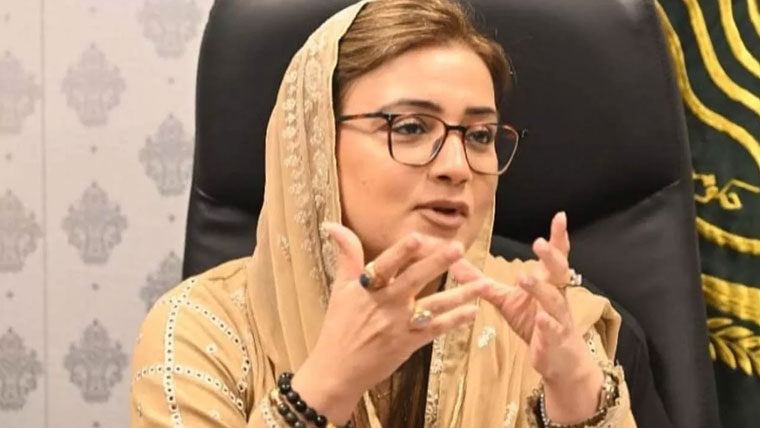
Lahore (Tassawar News) Punjab Information Minister Uzma Bukhari has clarified that the province has not imposed any restrictions on the supply of wheat flour to other provinces, rejecting allegations to the contrary. She emphasized that flour distribution from Punjab is being conducted transparently under a strict permit system to prevent hoarding and ensure fair access.
In an official statement, Bukhari said that Punjab’s first responsibility is to its own citizens, as directed by Chief Minister Maryam Nawaz Sharif, who has prioritized affordable and accessible wheat flour for every household in the province.
“Our governance model is people-centric and transparent, and that is what seems to bother some critics,” Bukhari added.
She stated that if Khyber Pakhtunkhwa (KP) faces an increased demand for wheat flour, it should utilize its stored wheat reserves or procure from the Pakistan Agricultural Storage and Services Corporation (PASSCO) rather than relying on Punjab’s stocks.
Bukhari criticized the closure of over 200 flour mills in KP, advising the KP Chief Minister to focus on reviving local production instead of holding protests outside Punjab.
Wheat Reserves and Economic Management
According to the minister, Punjab purchases and stores wheat using taxpayer funds to maintain stable flour prices and prevent shortages. The province currently holds 885,000 metric tons of wheat reserves, valued at approximately Rs 100 billion.
She credited CM Maryam Nawaz’s strategic and forward-looking policies for ensuring food security and market stability. Bukhari noted that no constitutional or legal restrictions exist on inter-provincial wheat transportation, though permits and digital tracking are required to curb profiteering and black marketing under Article 18 of the Constitution.
Punjab’s government, she added, provides wheat to flour mills at a subsidized rate of Rs 3,000 per maund to ensure consistent supply and affordable prices for consumers.
Broader Context
Analysts note that the clarification comes amid growing inter-provincial tensions over wheat supply chains, a recurring issue during peak demand seasons. Transparent policies and digital monitoring are seen as key to maintaining fair distribution and market stability across Pakistan.