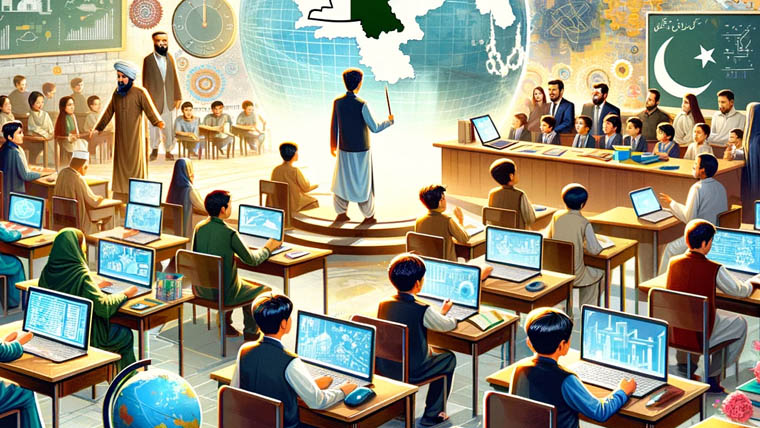
The power of language is undeniable; words possess the capacity to construct or demolish, to liberate or subjugate, and to protect or assail the human spirit. This potent influence extends to the shaping of entire societies. The very bedrock of a robust state is predicated on the respect for citizens’ inherent rights, a concept that education must cultivate diligently from the earliest stages of development. Fundamentally, moral rights are intrinsic to the human experience, beginning at birth and profoundly influencing both individual destinies and the trajectory of the nation.
Educational leadership and policymakers must, therefore, accord paramount importance to the respect and dignity of teachers and scholars. Every strategic decision concerning the education sector should inherently prioritize their professional standing. Yet, this acknowledgement must be mutually reinforced by an equal emphasis on the accountability and exemplary ethical conduct of the educators themselves, as students frequently internalise and replicate the behaviours and moral principles modelled by their teachers. Historical precedence offers a clear cautionary tale: the privatisation of government-operated schools has rarely yielded sustainable positive outcomes, often leading instead to the underutilisation of public infrastructure and an exacerbation of educational inequality.
The Multifaceted Contribution of Teachers in Government Schools
In the context of Pakistan, the commitment of government school teachers frequently transcends the confines of their formal job descriptions. They often assume unofficial roles, providing essential financial and educational support to students from underprivileged backgrounds, thereby ensuring they have access to both basic necessities and quality learning opportunities. Many students encounter significant socio-economic barriers that jeopardise their continuity in education; however, the sustained dedication of these teachers, who offer guidance and mentorship well beyond standard school hours, frequently proves pivotal to their success. Individuals who have benefitted from such transformative mentorship fully grasp the immense power of sustained teacher support.
“The dedication of teachers, who offer guidance beyond school hours, often becomes the key to their success. Those who have benefited from such mentorship understand the transformative power of teacher support.”
While it is true that disparities exist within every profession, the overwhelming majority of government teachers are deeply committed professionals, focused intently on nurturing talent, fostering intellectual growth, and actively contributing to a more prosperous future for the nation. Conversely, a pervasive concern surrounding privatisation is the heightened risk of fostering a generation of rote learners—students proficient in mere memorisation without genuine conceptual understanding—a scenario that poses a grave threat to the principles of sustainable national development.
The Critical Role of Capacity Building and Professional Development
The effective capacity building of educators is a cornerstone for strengthening the overall education system. Implementing a structured schedule of regular training workshops and strategically empowering school leaders ensures that teachers are fully equipped to execute their professional responsibilities with maximum efficiency. For example, the establishment of structured promotion systems and performance-based evaluation mechanisms, potentially mirroring the rigour of examinations conducted by bodies like the Punjab Public Service Commission, can significantly enhance teacher motivation, demonstrably improve their professional skill sets, and ultimately yield superior student outcomes.
The process of upgrading teacher skills must be comprehensive, extending beyond mere academic proficiency to encompass the development of vital competencies such as leadership, critical thinking, and ethical conduct. Government school teachers operate as educators twenty-four hours a day, instilling core values and nurturing potential both within and outside the physical confines of the classroom. The importance of respect and recognition cannot be overstated: when teachers are honoured and valued by society, they are naturally better positioned to shape confident, capable, and socially responsible future generations.
Pervasive Challenges Hindering Excellence in Government Schools
Despite the profound dedication of the teaching staff, government schools and their students in Pakistan contend with an array of formidable challenges:
- Economic Hardships: A large proportion of students originate from low-income families, a factor that significantly restricts their ability to pursue specialised fields of study or maintain consistent engagement with their education.
- Parental Neglect: A noticeable lack of consistent parental engagement and support often has a detrimental effect on student motivation and academic performance.
- Teacher Overload: Teachers are routinely burdened with excessive administrative and non-teaching duties, which regrettably detract from their core and most essential responsibility: the education of students.
- Language Barriers: In various regional contexts, students’ struggles with the primary language of instruction severely hinder their comprehension and the overall learning process, inevitably impacting their academic results.
These multifaceted challenges contribute to the observation of mixed academic outcomes, where some students achieve exceptional results while others, within the very same institutions, regrettably fail. A comprehensive solution to these issues necessitates a holistic approach that systematically integrates robust teacher training, proactive parental involvement initiatives, and targeted economic support measures.
The Ethical Foundation: Respect and Exemplary Leadership
Teachers serve a function far greater than that of mere knowledge providers—they are critical role models who fundamentally influence the formation of student character, ethics, and social behaviour. A society that genuinely respects and highly values its educators actively constructs the necessary groundwork for a resilient, intellectually curious, and educated citizenry. Conversely, any sustained effort to undermine teachers or the neglect of their crucial professional requirements inevitably perpetuates a culture characterised by intellectual dependency and weak critical thinking skills, a situation profoundly detrimental to sustainable societal development.
“A society that respects and values its educators lays the groundwork for a resilient and educated citizenry. Conversely, undermining teachers or neglecting their professional needs perpetuates a culture of dependency and weak critical thinking skills…”
Strategic Recommendations for Fortifying the Education System
To cultivate a genuinely robust and effective education system in Pakistan, the following strategic recommendations are imperative:
- Strengthen Government Schools: Guarantee consistent and proper funding, infrastructural improvements, and the allocation of essential resources to ensure that all students, regardless of background, have equitable access to high-quality education.
- Capacity Building Programs: Implement regular, structured workshops, leadership development training, and continuous skill-enhancement programs for all teachers and school administrators.
- Performance-Based Promotions: Establish transparent and structured evaluation mechanisms that effectively reward exceptional teaching performance and actively motivate continuous professional growth.
- Parental Engagement: Develop and promote targeted programs to actively encourage parental support, mentorship, and deep involvement in their children’s educational and developmental journeys.
- Focus on Ethical Leadership: Ensure that teachers consistently exemplify integrity, discipline, and dedication, thereby actively reinforcing positive, constructive values in the students they educate.
The dedicated implementation of these strategic measures will enable Pakistan to cultivate a powerful and sustainable education infrastructure, effectively transforming government schools into genuine centres of excellence. When teachers are empowered and respected, they possess the capacity to ignite the boundless potential within their students and significantly contribute to the nation’s socio-economic advancement.
Conclusion
Improving the education system in Pakistan is unequivocally more than a mere policy consideration; it stands as a profound societal and national imperative. Teachers hold the irreplaceable key to meticulously shaping the intellectual minds and moral compasses of future generations. By systematically addressing prevalent economic challenges, providing unwavering teacher support, and rigorously fostering ethical leadership throughout the education hierarchy, the government can assure that students not only achieve academic success but also mature into responsible, innovative, and highly capable citizens. Respecting teachers and unequivocally acknowledging the immense value of their efforts is the essential, foundational first step toward constructing a sustainable, educated, and truly empowered Pakistani society. The future prosperity of the nation is intrinsically linked to the status and support afforded to its educators.