Budapest (Tassawar News): In a move underscoring the deep geopolitical schisms impeding post-conflict arrangements in the Middle East, Israel has unequivocally declared its rejection of the prospective deployment of Turkish armed forces within the Gaza Strip. This stance, articulated by Israeli Foreign Minister Gideon Sa’ar during a press conference in Budapest, represents a significant hurdle for the proposed US-led international stabilization plan, the primary mechanism designed to secure the enclave following two years of protracted conflict.
The declaration firmly establishes Israel’s insistence on retaining decisive control over the composition of any international peacekeeping mission operating adjacent to its borders, a security prerogative that Jerusalem deems non-negotiable.
The Unwavering Prerogative of Security
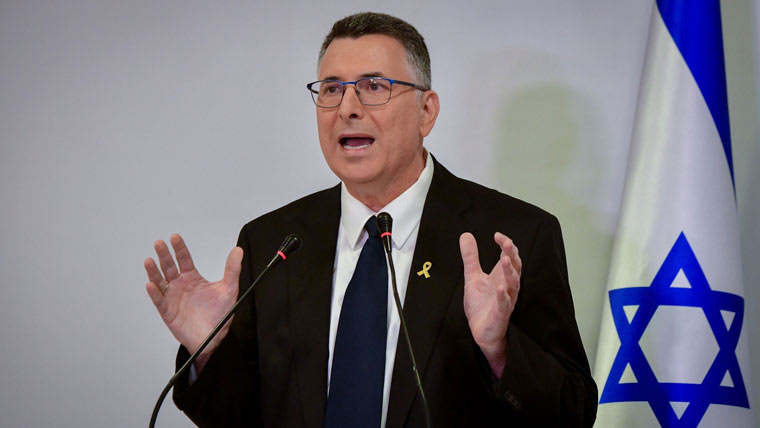
Addressing the press corps in Hungary, Minister Sa’ar stipulated that any nation seeking to contribute troops to the multinational force in Gaza must first demonstrate an impeccably “fair and balanced approach” towards Israel. This conditionality acts as a powerful screening mechanism, rooted in long-standing security concerns and recent diplomatic animosity.
The Foreign Minister did not mince words when detailing the reasoning behind the exclusion of Ankara, directly referencing the Turkish government’s posture under its current leadership.
“Under President Erdoğan’s leadership, Turkey has consistently taken a hostile stance against Israel. Therefore, it is unacceptable for us to allow Turkish military forces to enter the Gaza Strip. We have clearly conveyed this position to our American friends.”
This official statement formalises what had previously been a series of hints and diplomatic whispers emanating from Jerusalem. The core of Israel’s objection resides in the perception that President Recep Tayyip Erdoğan’s administration is not an impartial actor. Ankara has been vocal in its condemnation of Israeli military actions and has maintained close, though often controversial, ties with elements of the Palestinian political landscape, including the movement slated for disarmament under the current peace framework. Such profound distrust effectively negates Turkey’s candidacy in a mission where operational neutrality and an assurance of Israeli security are paramount prerequisites.
Netanyahu’s Assertions of National Control
The Foreign Minister’s intervention closely followed analogous statements made by Prime Minister Benjamin Netanyahu, who has consistently championed the principle that Israel retains the ultimate authority to vet and determine which foreign entities are permitted to participate in any security arrangements near its territory.
Netanyahu’s position is unambiguous: only Israel possesses the sovereign right to determine the suitability of external forces operating in the adjacent region. This assertion is not merely a diplomatic preference but a fundamental security doctrine arising from the recent hostilities and the existential imperative to prevent future threats. Earlier pronouncements from the Prime Minister had already emphasised that Israel alone would decide the operational parameters and participants allowed to function near its borders. This overarching stance places the onus on Washington to reconcile its diplomatic imperatives—namely, assembling a broad coalition of Muslim-majority states—with the security veto imposed by its principal regional ally.
The Proposed Stabilization Framework
The American-led initiative for international stabilisation is necessitated by the security vacuum and immense reconstruction challenge left in the wake of the devastating two-year conflict. Although the Trump administration has definitively ruled out the deployment of U.S. combat troops, it has been actively engaged in complex negotiations with several nations regarding potential participation in the proposed multinational peacekeeping force.
The list of nations engaged in these talks reflects a concerted effort by the United States to gather contributions primarily from countries with Muslim-majority populations, which are deemed essential for establishing political legitimacy in the post-conflict Gaza environment. These countries reportedly include Indonesia, the United Arab Emirates (UAE), Egypt, Qatar, Turkey, and Azerbaijan. Egypt and Qatar, already integral mediators in the cessation of hostilities, are expected to play substantial roles, while Indonesia, possessing one of the world’s largest and most capable Muslim armies, is viewed as a major potential contributor.
However, the rejection of Turkey, a powerful NATO member and regional player that had expressed willingness to contribute forces, serves as a stark reminder of the complexities inherent in building such a consensus-based coalition. For the US, losing Turkey’s military capacity and diplomatic weight potentially weakens the credibility of the entire multinational effort.
The Inclusion of Pakistan: A Geopolitical Conundrum
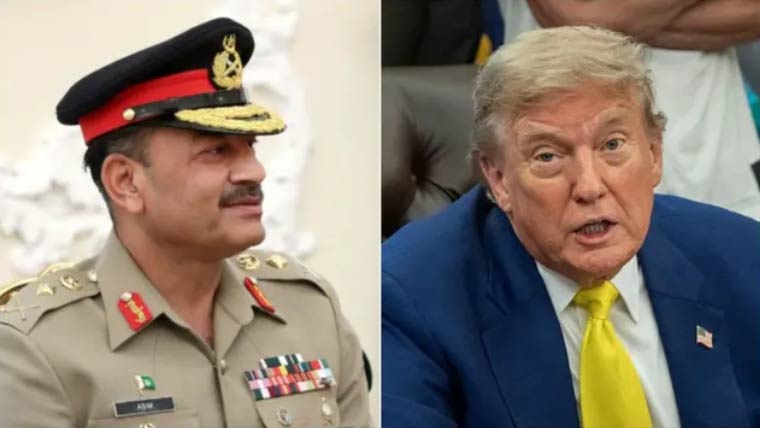
Adding another layer of geopolitical complexity to the stabilization calculus is the reported consideration of Pakistani military contingents. The Times of Israel has asserted that the inclusion of forces from Pakistan—a nation that does not formally recognise the State of Israel—remains a topic of discussion in the planning phase.
The report, which cites Israeli defence officials, suggests that the deployment plan is still under iterative discussion. The prospect of deploying Pakistani troops is profoundly significant, as it would represent an unprecedented alignment of security interests in a highly sensitive zone. While Pakistan has traditionally been a consistent supporter of the Palestinian cause, its potential contribution is framed as a logistical necessity to stabilise the territory, with the caveat that the presence of such contingents would require stringent guarantees regarding their mandate and area of operation, undoubtedly complicating the rules of engagement.
Conclusion
The decisive refusal by Israel to permit the involvement of Turkish troops in the prospective Gaza stabilization force highlights the core tension between establishing legitimate, internationally-backed security arrangements and upholding Israeli security doctrines. While the United States continues its tireless diplomatic work to forge a broad coalition of contributors, including states like Indonesia, the UAE, and potentially Pakistan, the Israeli veto against Turkey underscores a critical reality: the path to post-conflict stability in Gaza is governed by the absolute necessity of satisfying the security concerns of one party.
The success of the International Stabilization Force hinges not merely on securing troop commitments but on navigating a delicate mosaic of historical animosities and competing regional interests. If the proposed stabilization mechanism is to achieve its objectives of disarming militant groups and facilitating a transitional government, the mediating powers must urgently address the inherent contradiction of asking countries deemed ‘hostile’ by Israel to secure its border. The controversy surrounding Turkey’s exclusion confirms that the political vetting process for the peacekeeping mission will be as challenging as the mission itself, demanding exceptional diplomatic agility to translate international intent into reliable on-the-ground stability.