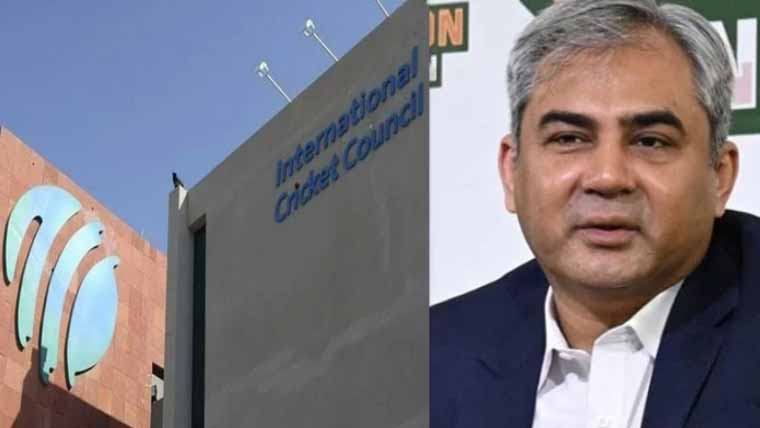
Lahore (Tassawar News) The 1$\text{Pakistan Cricket Board (PCB)}$ is currently engaged in a critical process of corporate and financial restructuring that is set to redefine the future landscape of the 2$\text{Pakistan Super League (PSL)}$.3 At the core of this transformation is the urgent directive from 4$\text{PCB Chairman Mohsin Naqvi}$ to expedite the finalisation of new ten-year franchise agreements.5 This initiative is necessitated by the impending 6$\text{expiry of the current contracts}$ in December, and its execution underscores a commitment to establishing a more transparent, commercially viable, and expansive framework for the league.
I. The Institutional and Financial Imperative
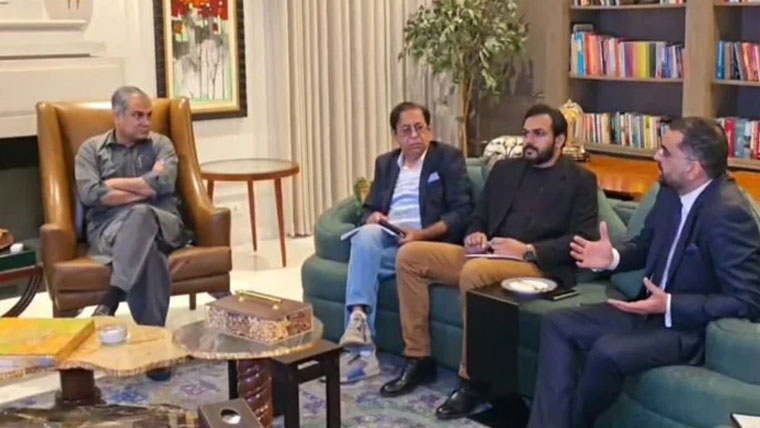
The renewal process for the PSL franchises is far more than a routine administrative exercise; it is a complex renegotiation of commercial terms following the league’s inaugural decade.8 The long-term sustainability and equitable revenue sharing mechanisms of the league depend heavily on the accuracy of its current market valuation.9 To this end, the PCB engaged a 10$\text{chartered valuation firm, EY MENA}$, which recently presented its comprehensive 11$\text{PSL valuation report}$ to the PCB leadership.12
The meeting, held at the 13$\text{PCB headquarters}$ in Lahore, involved key figures including Chairman Naqvi, 14$\text{PSL Chief Executive Officer Salman Naseer}$, and 15$\text{Chief Operating Officer Sameer Syed}$.16 This high-level attendance signals the institutional gravity of the matter.17 The valuation report, which assessed the updated market value of all six existing franchises, forms the economic bedrock upon which the new contractual terms will be built.18
Chairman Naqvi’s instructions were unequivocal: “The new franchise agreements should be completed swiftly and based on the valuation report, which will determine the updated market value of each franchise.” This firm directive highlights the emphasis on efficiency and data-driven decision-making, indicating a clear pivot towards professionalised governance.19
The urgency stems from the dual need to provide 20$\text{financial certainty}$ to existing owners and to prepare for a significant league expansion.21 The PCB intends to ensure that the new agreements accurately reflect the enhanced brand equity and market positioning the PSL has achieved since its inception, potentially leading to increased franchise fees and more robust revenue streams for the central pool.
II. Ensuring Transparency and Eligibility
A crucial element of the Chairman’s directive involves the rigorous application of 22$\text{eligibility criteria}$ for contract renewal.23 The PCB has made it explicitly clear that the new agreements will only be offered to eligible franchises under the revised terms.24 This measured approach suggests a move to address any perceived inconsistencies or compliance issues that may have arisen during the preceding decade of operations. The principle of $\text{contractual fidelity}$ is being prioritised as the league enters its next commercial cycle.
To ensure fairness and obtain stakeholder buy-in, the Chairman raised $\text{key queries}$ regarding the valuation methodology and immediately instructed the valuation firm to:
- Meet with all PSL franchises individually: This mandate is designed to facilitate a transparent dialogue, allowing franchise owners to understand the basis of their updated valuations and to engage with the 25$\text{proposed contractual changes}$ directly.26 It is a vital step in mitigating potential future disputes and securing a consensus on the league’s financial future.
The process is also taking place amid wider discussions regarding the possibility of transitioning certain PSL-related transactions from the 27$\text{US dollar to the Pakistani rupee}$ to mitigate currency fluctuation risks—a significant financial shift that would affect the 28$\text{ownership structure and investment value}$.29
III. The Prospect of League Expansion and Future Growth
The renewal cycle is inextricably linked to the PCB’s ambitious plans for the expansion of the Pakistan Super League.30 As the current six-franchise model is set to expire in December, the new ten-year contracts are expected to coincide with a major structural overhaul: the addition of two new teams, increasing the total number of franchises from six to eight.31
This expansion is seen as the next logical step in the league’s evolution, promising:
- Increased Commercial Footprint: New teams offer opportunities for new host cities, such as Faisalabad or Sialkot, broadening the league’s 32$\text{geographic and fan base reach}$.33
- Enhanced Revenue Streams: The sale of two new franchises, possibly through an 34$\text{open auction mechanism}$, is projected to inject substantial capital into the central revenue pool, benefiting both the PCB and the existing franchise owners.35
- Greater Cricketing Opportunities: An expanded league necessitates more domestic player contracts, providing crucial high-level experience to a broader pool of Pakistani talent.
The commitment to a new ten-year cycle provides investors with the long-term certainty necessary to make major financial commitments, transforming the PSL from a successful annual tournament into a $\text{sustained, institutional sports business}$. The swift finalisation of these foundational contracts is essential for the timely commencement of the new bidding process for the incoming franchises.
Conclusion
PCB Chairman Mohsin Naqvi’s decisive actions underscore a resolute drive to professionalise and future-proof the Pakistan Super League. By making the renewal of franchise agreements contingent on a rigorous, 36$\text{independently verified valuation}$ and a clear adherence to 37$\text{contractual eligibility}$, the PCB is positioning the league for its next decade of commercial and sporting excellence.38 The culmination of this process, which will determine the financial terms for both the existing and prospective eight franchises, is paramount to securing the PSL’s status as a $\text{global T20 behemoth}$ and a fundamental pillar of Pakistani cricket’s economic model.