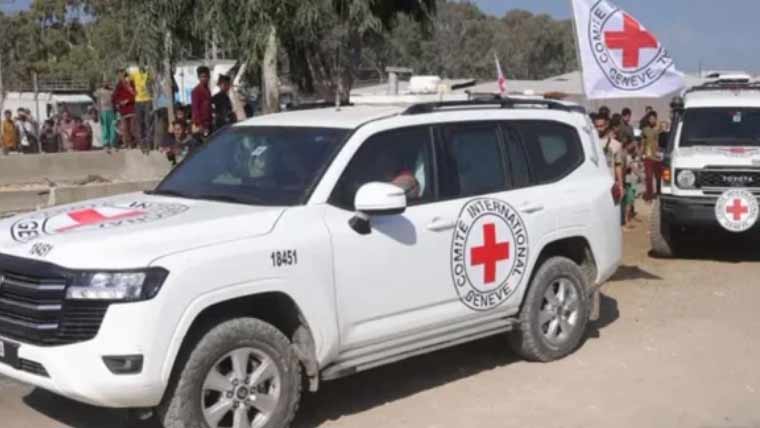
Gaza (Web Desk) In a deeply distressing but critical development, the Israeli Defense Forces (IDF) have confirmed the retrieval of the body of another hostage, which was handed over by Hamas via the neutral auspices of the International Committee of the Red Cross (ICRC). This incident represents another somber yet essential step in the continuous humanitarian exchanges taking place amidst the severely heightened geopolitical and security tensions within the Gaza region.
The transfer, according to official Israeli military statements, was executed through meticulously coordinated efforts involving Red Cross personnel and relevant Israeli security agencies. To ensure adherence to established international regulations and ethical guidelines, the handover occurred under international supervision, upholding necessary humanitarian protocols. The primary goal of such operations is the alleviation of human suffering and the dignified handling of all affected individuals, irrespective of the ongoing conflict’s political dimensions.
Forensic Identification and Ongoing Custody
Following the handover, Israeli media reported that the remains were immediately transported under police escort to the Abu Kabir Forensic Institute in Tel Aviv. A critical phase is now underway, where specialized forensic experts are conducting a detailed identification procedure. This process, which incorporates sophisticated forensic and DNA testing, is expected to span up to two days to confirm the identity of the deceased individual with absolute certainty. This rigorous approach is standard protocol designed to provide definitive closure for the bereaved families.
The latest retrieval brings the total number of hostages’ bodies returned to Israel by Hamas since the commencement of these exchanges to at least 17. Tragically, Israeli authorities estimate that the bodies of 12 additional deceased individuals are still believed to be held in Hamas’s custody, underscoring the pressing need for continued recovery efforts.
Israeli government spokespersons publicly acknowledged and commended the crucial, impartial role played by the Red Cross in facilitating this sensitive handover. They further confirmed that ongoing cooperation is a strategic priority, aimed specifically at the location and recovery of all remaining hostages and casualties. The statement reaffirmed the government’s commitment to exhausting all available avenues:
“All necessary humanitarian channels are being utilized to ensure the safe retrieval of the missing and deceased.”
Regional Cooperation and Political Detachment
In a move highlighting the complexity of regional diplomatic involvement in this humanitarian crisis, Israeli Prime Minister Benjamin Netanyahu has reportedly authorized a technical Egyptian team to enter the Gaza Strip. The mandate of this specialist team is to assist in the complex task of identifying and locating the bodies of deceased hostages. These Egyptian specialists are expected to operate under the coordination of the Red Cross, collaborating closely with both local and international agencies to advance the recovery efforts. The involvement of regional partners like Egypt and Qatar is viewed as indispensable for creating the necessary channels for communication and coordination in an otherwise hostile environment.
Crucially, government sources in Tel Aviv were emphatic in stressing that no formal political negotiations were linked to this particular handover. They intentionally described the exchange as a “purely humanitarian operation,” aiming to draw a clear distinction between the necessary human rights obligations of all parties and the broader, highly sensitive political and military negotiations that remain stalled. This clarification is vital for preserving the neutrality and effectiveness of the humanitarian corridors.
The Red Cross, through a public reiteration of its stance, affirmed its neutral and humanitarian role, confirming that such operations are strictly conducted to “alleviate human suffering and uphold the dignity of all affected individuals.” This organizational stance is essential for maintaining the trust required to operate effectively across the entrenched lines of conflict.
Analytical Perspective on Conflict Management
From an analytical standpoint, this most recent exchange is viewed as a continuation of essential humanitarian efforts to manage the devastating aftermath of recent military escalations. While the broader conflict remains fundamentally unresolved and political differences are stark, the actions of both Hamas and the IDF demonstrate a limited but significant degree of cooperation when mediated by authoritative international humanitarian organizations and key regional actors.
Observers note that the sustained involvement of third-party facilitators—particularly the ICRC and the technical teams from regional states—is a positive indicator. This involvement could potentially pave the way for a more structured and reliable framework for humanitarian coordination in the challenging weeks and months ahead. Nonetheless, the overall situation remains exceptionally delicate; both sides continue to maintain strong, non-negotiable political positions despite sustained international pressure for restraint and constructive dialogue.
The Israeli Defense Forces have committed to releasing public updates once the sensitive identification process is fully concluded. Meanwhile, the families of the missing persons continue to advocate relentlessly, urging all involved parties and the broader international community to elevate the prioritization of humanitarian access, the comprehensive body retrieval process, and the imperative of establishing accountability for all missing persons. Their advocacy highlights the enduring human cost of the conflict and the profound ethical obligation to address the fate of every individual caught in the crossfire.
Conclusion: The Imperative of Dignity
The latest exchange of a deceased hostage’s body in the Gaza region is a chilling reminder of the tragic human toll of the enduring conflict. While the political and military deadlock persists, the successful, though profoundly sorrowful, facilitation of this retrieval by the Red Cross and regional partners like Egypt underscores the vital importance of neutral humanitarian engagement. The process, detached from the fraught political negotiations, serves as a crucial mechanism for upholding the dignity of the deceased and offering a measure of closure to their grieving families. As identification procedures continue, the international focus must remain squarely on ensuring the unhindered utilization of all humanitarian channels until the fate of every missing person is accounted for, irrespective of the ultimate political settlement.