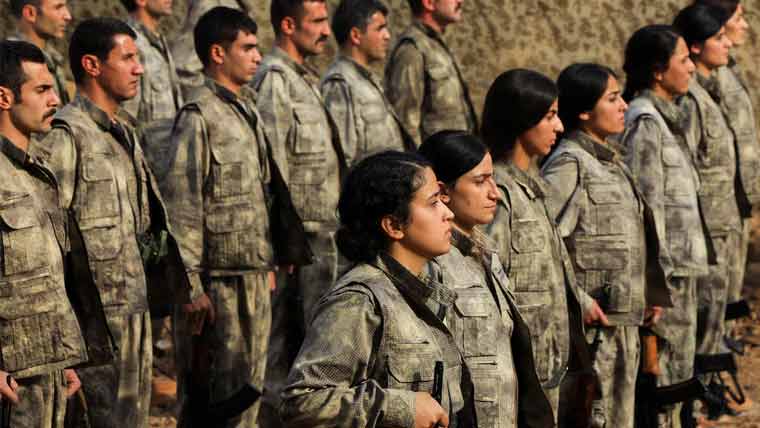
Ankara (Web Desk): In a significant and long-awaited development for regional stability, the Kurdistan Workers’ Party (PKK), a group designated as a terrorist organisation by Türkiye and several international bodies, has formally announced its decision to lay down its arms and commence a full withdrawal of its fighters from Turkish territories. This momentous action is a direct consequence of a broader peace accord achieved after extensive dialogue between the PKK and the Turkish government, marking a critical step towards ending a four-decade-long violent conflict that has profoundly shaped the nation’s history and security landscape.
According to major international news agencies, the PKK publicly declared on a recent Sunday that it would transfer all its armed militants to bases located in northern Iraq. This represents the first large-scale, organised pullout of Kurdish militants from Türkiye in decades, signifying an irreversible turning point. The group officially stated that this withdrawal forms an integral component of its established disarmament process, which is strategically designed to pave the way for sustainable long-term stability and national reconciliation within Türkiye. The move is a potent symbol of good faith and commitment to the negotiated peace framework.
The Transition: From Armed Presence to Goodwill Gesture
The recent public announcement follows a pivotal, symbolic ceremony held some months earlier in northern Iraq, where authorised PKK representatives formally initiated the crucial disarmament process. The organisation has affirmed that it is actively dismantling its armed operational presence within Türkiye, treating the entire process as a goodwill gesture intended to build confidence under the auspices of the emerging peace framework.
A representative of the Kurdistan Communities Union (KCK), the overarching political body closely linked to the PKK, addressed the media at a pivotal press conference, confirming the operational directive:
“All PKK forces stationed inside Türkiye are being called back to northern Iraq to avoid any further clashes or provocations.”
The spokesperson meticulously elaborated that this decisive, unilateral action reflects the PKK’s unwavering commitment to peace and its deep desire to actively prevent any renewed escalation of hostilities between its Kurdish fighters and the formidable Turkish military forces. This move signals a strategic shift from military confrontation to a political and diplomatic approach.
The Long and Difficult Road to Agreement
Political and security analysts are unanimous in their assessment that this announcement represents the most tangible and meaningful step toward comprehensive disarmament since Turkish officials and Kurdish representatives first commenced their informal dialogue aimed at conclusively ending the protracted insurgency. Although Turkish government officials have yet to issue a detailed, formal statement immediately following the PKK’s announcement, Ankara has consistently and firmly emphasised throughout the negotiations that any sustainable peace is strictly predicated on the complete and verifiable disbandment of all PKK militant structures.
The PKK has engaged in an armed struggle against the Turkish state since 1984. The conflict’s initial objective was absolute Kurdish independence, although the group later strategically moderated its goals to focus on achieving greater autonomy and cultural rights for the Kurdish population within Türkiye. The historical conflict has exacted a devastating human toll, resulting in the tragic loss of over 40,000 lives, a figure that tragically includes thousands of civilians, soldiers, and militants. This enduring legacy underscores the profound societal relief that the prospect of lasting peace brings.
Potential Regional Impact and Inherent Fragility
Experts in geopolitical and security affairs have observed that this massive, coordinated withdrawal holds the potential to significantly ease cross-border tensions along the Turkish-Iraqi frontier, a region where the PKK has historically maintained numerous, strategically critical mountain strongholds. Should the disarmament process be executed successfully and according to the agreed schedule, it is expected to substantially strengthen Türkiye’s regional security framework and, critically, enhance Ankara’s diplomatic and security ties with neighbouring Iraq, facilitating greater cooperation on border control and stability.
However, political observers are quick to introduce a note of caution, warning that the overall peace process remains inherently fragile. The PKK’s complex leadership structure is dispersed across multiple regional territories, and the presence of potential internal divisions within the organisation could pose serious, unpredictable challenges to achieving full and universal compliance with the overarching peace accord. Furthermore, recent history is marked by the painful memory of previous peace attempts in 2013 and 2015, both of which tragically collapsed following devastating mutual accusations of violations and a renewal of violence.
Despite these geopolitical and logistical vulnerabilities, the recent, concrete action has been overwhelmingly welcomed as a crucial symbolic turning point by observers both domestically and internationally. Major global bodies, including the United Nations, the European Union, and key regional peace organisations, have jointly urged all involved parties to maintain constructive dialogue and to strictly avoid any provocations that possess the potential to fatally derail the hard-won progress toward peace.
Looking Ahead: Political Engagement and Reconciliation
The Turkish government continues to officially classify the PKK as a terrorist organization, while simultaneously acknowledging that the group commands a strong and enduring following among significant segments of the Kurdish population in Türkiye’s southeast. A fully successful disarmament and withdrawal initiative holds the profound potential to lead to a renewed foundation of trust and could definitively open doors for meaningful political engagement. This engagement is crucial for achieving necessary reforms designed to enhance cultural representation and ensure comprehensive economic inclusion for the Kurdish community.
If this unprecedented initiative is fully and successfully implemented by all parties, it could ultimately represent the beginning of the end of the devastating, four-decade-long conflict. Such an achievement would constitute a profound legacy, fundamentally altering Türkiye’s domestic stability, fostering national unity, and significantly improving its diplomatic standing within the regional and global security architecture.
Conclusion
The PKK’s announcement of its formal withdrawal from Turkish territory, constituting the first major pullout in decades, signifies a historic and hopeful moment in the protracted conflict between the Kurdish militant group and the Turkish state. Cemented by a negotiated peace accord, this 40-year-old conflict now faces its most promising chance for resolution. While the path to complete disarmament and full reconciliation is fraught with the inherent fragility of previous failed attempts and the logistical challenges posed by the PKK’s dispersed leadership, the current goodwill gesture is overwhelmingly endorsed by international and domestic observers. A successful, verified withdrawal could be transformative, paving the way for the essential political engagement required for constitutional reforms, cultural recognition, and economic inclusion in Türkiye’s southeast. The enduring success of this initiative hinges entirely on the sustained commitment of both Ankara and the PKK to dialogue, restraint, and the paramount goal of lasting, unified peace.