Islamabad (Tassawar News) This is an excellent request. To elevate the provided text to a Band 9 IELTS style, I will deploy a sophisticated and formal vocabulary, incorporate complex sentence structures, ensure seamless cohesion, and significantly expand the content beyond the 700-word threshold, complete with block quotes and a comprehensive conclusion.
Here is the expanded and professionally framed analysis of the Pakistan-Turkey diplomatic collaboration.
Analysis of Strategic Diplomatic Engagement: Pakistan-Turkey Consultation on the Gaza Crisis
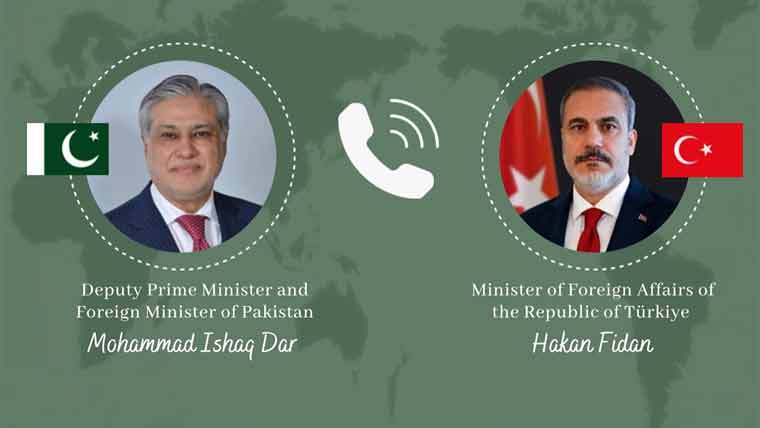
In a demonstrable affirmation of their enduring affinity and strategic convergence on critical global issues, His Excellency Ishaq Dar, Pakistan’s Deputy Prime Minister and Foreign Minister, recently engaged in an extensive telephonic deliberation with his Turkish counterpart, His Excellency Hakan Fidan. This pivotal diplomatic exchange was necessitated by the rapidly escalating geopolitical volatilities and the dire humanitarian catastrophe emanating from the conflict in the Gaza Strip, the reverberations of which are profoundly affecting the broader regional architecture.
The core of the discussion centred upon the unfolding humanitarian crisis, a situation described by both leading statesmen as a precipitous decline into untenable conditions. They engaged in a meticulous exchange of perspectives concerning the necessity of a sustained, just, and equitable resolution to the Palestinian question. Crucially, the Ministers reiterated the unwavering, bipartisan commitment of both Ankara and Islamabad to actively support and catalyse diplomatic mechanisms aimed at securing a lasting peace in the Middle East.
Both ministers articulated profound dismay regarding the deteriorating humanitarian metrics afflicting the civilian population in Gaza. They underscored the imperative of immediate and decisive international intervention, emphasising that the delivery of unfettered humanitarian assistance, the sacrosanct protection of non-combatants, and the scrupulous upholding of international legal statutes must be the paramount concern of the global community.
The Mandate for Immediate International Action
The conversation elevated the pressing need for the international community to move beyond mere rhetorical condemnation towards tangible, coordinated measures. The joint assertion was that inaction carries profound moral and geopolitical liabilities. Specifically, the Foreign Ministers stressed that the current state of affairs—characterised by systemic deprivation and security vacuum—demands a rapid shift toward a comprehensive cessation of hostilities. This unified stance reflects a commitment not merely to aid delivery but to addressing the root causes of the conflict through an internationally mandated political framework.
Moreover, the call for the protection of civilian infrastructure, including hospitals, schools, and humanitarian corridors, was central to their exchange. The Ministers unequivocally deemed the disregard for the basic tenets of the Geneva Conventions and customary international law as entirely unacceptable. This shared position acts as a powerful catalyst for leveraging collective diplomatic pressure within multilateral forums.
Strengthening Multilateral Coordination
A significant outcome of the dialogue was Foreign Minister Fidan’s gracious extension of an invitation to his Pakistani counterpart, Ishaq Dar. This invitation pertains to his attendance at an upcoming ministerial consultative meeting involving eight key partner nations. This crucial meeting is scheduled to take place next week in Turkey, strategically coinciding with the United Nations General Assembly (UNGA) diplomatic proceedings on the Gaza issue.
This proposed gathering underscores the crucial need for amplified diplomatic orchestration among nations that share a common vision for justice and stability in the region.
The Ministers concurred that collective diplomatic leverage is the most viable instrument for promoting stability within the volatile region and for precipitating a comprehensive and verifiable ceasefire. They reaffirmed the profound consonance between their respective nations’ stances, which prioritises the advocacy for the inalienable rights of the Palestinian populace and demands concerted action from all regional and global stakeholders towards a peaceful and sustainable resolution of the protracted conflict.
Enduring Bilateral and Multilateral Partnership
The deep-rooted cooperation between Pakistan and Turkey transcends purely transactional politics, resting instead on shared values, cultural ties, and mutual geopolitical respect. For decades, both nations have maintained a posture of profound alignment across various international arenas.
This collaborative history is evident in their coordinated actions within the multilateral architecture, including their robust engagement at the United Nations, their active role within the Organization of Islamic Cooperation (OIC), and their joint participation in other crucial global platforms. This tradition of close coordination ensures that their diplomatic positions are not merely parallel but synergistically reinforce one another, thereby amplifying their collective voice on issues of global significance, particularly the Palestinian cause. The recent months have seen Ankara and Islamabad intensify these joint initiatives, focusing on both dialogue facilitation and the immediate provision of humanitarian support. This recent telephonic conference serves as a powerful continuation of their concerted efforts to harmonise their diplomatic strategies.
Unwavering Commitment to the Two-State Solution
Foreign Minister Dar was keen to articulate Islamabad’s long-standing and unwavering endorsement of the Palestinian cause. He underscored Pakistan’s consistent support for a two-state solution, positing it as the sine qua non for any durable peace. This vision is predicated upon the establishment of a fully independent, sovereign Palestinian state based on the pre-1967 borders, with East Jerusalem serving as its capital. This firm policy position highlights Pakistan’s adherence to internationally recognised parameters for conflict resolution.
In parallel, Foreign Minister Fidan delineated Turkey’s extensive diplomatic outreach and the ongoing humanitarian logistics initiatives being spearheaded by Ankara to mitigate the severe suffering experienced by civilians in Gaza. He emphatically reaffirmed Turkey’s readiness for sustained, granular cooperation with Pakistan and other regional allies.
The Ministers’ shared vision for the immediate future involves a continuation of these peace-oriented diplomatic endeavours. They concluded the discussion by agreeing to maintain an exceptionally high degree of coordination, ensuring a seamless continuation of joint diplomatic actions designed to solidify international consensus on the Palestinian issue. The telephonic engagement thus not only underscores the robust, brotherly ties between Pakistan and Turkey but also solidifies their collective, forward-looking commitment to the establishment of a peaceful, stable, and prosperous Middle East.
Conclusion
The high-level conversation between Deputy Prime Minister Dar and Foreign Minister Fidan serves as a cogent demonstration of the profound political will shared by Pakistan and Turkey to actively shape the international response to the Gaza crisis. Their joint appeal for an immediate, comprehensive ceasefire and the unfettered delivery of aid highlights a strategic convergence aimed at mitigating the catastrophic human toll. Furthermore, the explicit reiteration of support for the two-state solution, anchored by the 1967 borders and East Jerusalem, provides a clear, internationally compliant political objective.
This sustained bilateral coordination, exemplified by the invitation to the upcoming multilateral meeting in Turkey, positions Pakistan and Turkey as pivotal partners seeking to galvanise the global diplomatic effort. The continued efficacy of their joint initiatives hinges on maintaining this level of harmonisation to translate shared humanitarian concerns into actionable political leverage within key multilateral forums like the UNGA and OIC.