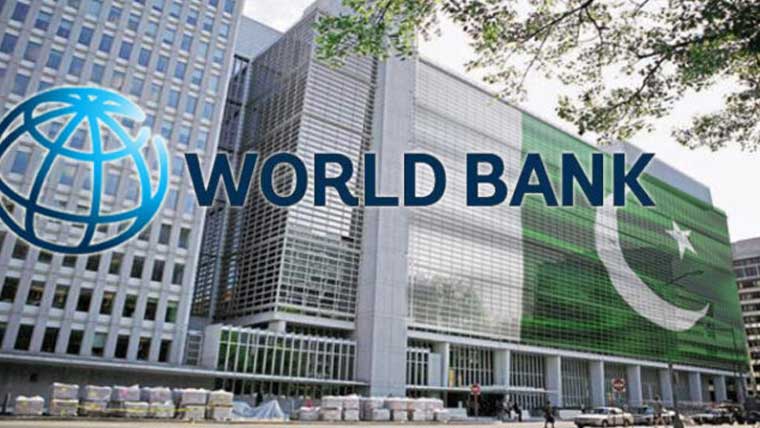
Islamabad (Tassawar News): The recently published Pakistan Development Report 2025 by the World Bank delivers a comprehensive, albeit cautious, assessment of the nation’s economic landscape, primarily highlighting the enduring and significant fiscal consequences stemming from the catastrophic recent flood events. The institution issues a strong admonition that Pakistan is likely to contend with elevated and sustained inflationary pressures, a direct repercussion of the widespread devastation inflicted upon critical infrastructure, the agricultural base, and the broader spectrum of citizen livelihoods across the country. The report serves as a crucial document, delineating the heavy financial toll exacted on the national economy by the floods and projecting the persistence of these inflationary trends well into the forthcoming fiscal cycle.
Macroeconomic Stability and Growth Trajectories
The World Bank’s analysis suggests a marginally improved, yet still subdued, economic growth rate. The data indicates that the economy expanded at 3 per cent in 2025, representing a slight betterment over the 2.6 per cent recorded in the preceding year, 2024. However, the institution is careful to point out that this growth performance remains significantly below Pakistan’s inherent potential, a shortfall attributed to persistent structural weaknesses within the economy and the unpredictable recurrence of severe environmental shocks. Looking ahead, the World Bank optimistically forecasts that growth will stabilise at 3 per cent in 2026, with a further, more ambitious acceleration to 3.4 per cent projected by 2027. This positive trajectory is critically contingent upon the government’s unwavering commitment to its reform agenda and the successful maintenance of macroeconomic stability.
While the industrial and services sectors have demonstrated a laudable degree of resilience and moderate recovery, allowing for the marginal overall economic improvement, the agricultural sector remains deeply troubled. The report identifies this sector as being under considerable duress, primarily due to the ongoing repercussions of flood damage coupled with persistently rising input costs. This dichotomy underscores the urgent need for targeted intervention to protect Pakistan’s agricultural foundation.
Regarding the inflation outlook, the report projects that the rate will hover around 7.2 per cent during the current fiscal year. A modest easing is anticipated in the subsequent year, with inflation tentatively projected to settle at 6.8 per cent.
Inflationary Risks and the Nexus of Climate and Fiscal Policy
The World Bank acknowledges that efforts toward fiscal discipline have been instrumental in preventing inflation from spiralling further out of control, thereby maintaining a degree of containment. Nonetheless, the institution issues a pointed caution that exogenous shocks, particularly those linked to climate-related disasters, continue to present a substantial and immediate risk to price stability.
The Report explicitly draws attention to the cyclical nature of these vulnerabilities:
“The recurrent major flood events of 2022 and 2025 caused severe, extensive damage to essential crops, national infrastructure, and rural livelihoods. Crucially, the combination of persistent supply chain disruptions and Pakistan’s continuing reliance on imports has severely limited the scope for achieving sustainable price stability.”
In light of these findings, the World Bank’s central fiscal recommendation remains the sustained intensification of fiscal consolidation efforts. This must be accompanied by a robust strategy to strengthen public sector reforms and, fundamentally, a concerted drive to expand the national tax base. These actions are deemed indispensable to curtailing the nation’s systemic reliance on both domestic and external borrowing, thereby building a financial buffer against future shocks.
Trade, Investment, and External Vulnerability Reduction
A core theme of the report centres on the necessity of re-engineering Pakistan’s trade and investment dynamics. The World Bank explicitly critiques the notion that tariff reforms alone are inadequate to generate the necessary boost in national exports. To effect meaningful change, the government is strongly urged to unequivocally prioritise export growth at the apex of its national development agenda. This involves not only ensuring the comprehensive implementation of the National Tariff Policy, as outlined in the federal budget, but also streamlining the entire export value chain.
The report also highlights the strategic significance of remittance inflows. These transfers from the Pakistani diaspora are identified as a vital mechanism capable of helping to narrow the critical gap between exports and imports, which in turn leads to a healthier current account balance. The World Bank underscores the urgency of this external rebalancing:
“Increasing vital remittance inflows, strategically expanding export production capacity, and aggressively attracting sustainable foreign direct investment are all critical, non-negotiable elements required to significantly reduce Pakistan’s inherent external vulnerabilities.”
The institution calls for a package of comprehensive, cross-sectoral reforms, placing a high degree of urgency on tax policy restructuring, fundamental governance improvements within state-owned enterprises (SOEs), and significant investment in processes designed to genuinely facilitate and expedite investment.
Employment, Poverty, and the Human Capital Imperative
The demographic profile of Pakistan presents both a challenge and a massive opportunity. The report highlights that approximately 1.6 million young people enter the labour market annually, a statistic that powerfully underscores the absolute necessity for inclusive economic growth and the strategic creation of sustainable employment opportunities.
The report projects that the national poverty rate will remain relatively stable at around 21.5 per cent for the current fiscal year. Only modest improvements are anticipated in the near term, and these are directly predicated on the government’s continued commitment to the reform process and the successful management of inflationary pressures. The World Bank makes clear the long-term levers for social development:
“Sustained, equitable economic growth, significant improvements in the quality of governance, and targeted investment in developing human capital are all essential requirements for achieving a meaningful reduction in national poverty and securing a substantial improvement in the living standards for millions of Pakistani citizens.”
The comprehensive set of policy recommendations provided in the Pakistan Development Report 2025 coalesces around several non-negotiable imperatives: the continuation of the economic reform agenda to establish fiscal sustainability, the broadening and equitable generation of the tax base, the acceleration of privatization and governance enhancements within public sector enterprises, the fostering of a genuinely business-friendly environment, and, critically, significant investment in climate resilience and the modernization of agriculture to mitigate future disaster-related risks.
Concluding Assessment
The World Bank’s assessment provides a stark, yet instructive, roadmap for Pakistan. The report functions as a powerful affirmation that the nation’s trajectory towards durable economic stability is inextricably linked to three key pillars: consistent, disciplined policy implementation, the cultivation of strong, accountable public institutions, and the development of highly effective disaster management capabilities. While Pakistan must continue to navigate persistent and severe challenges, including the acute threat posed by climate change, unrelenting inflation, and chronic fiscal pressures, the World Bank maintains a position of measured optimism. This optimism is strategically rooted in the conviction that through sustained, deep-seated structural reforms, the country possesses the necessary resources and demographic potential to successfully restore its growth momentum and, most importantly, tangibly enhance the quality of life for its vast population. The report strongly implies that the current moment is not merely one of recovery, but one of profound national economic recalibration, demanding political consensus and persistent action to translate planned reforms into material reality.