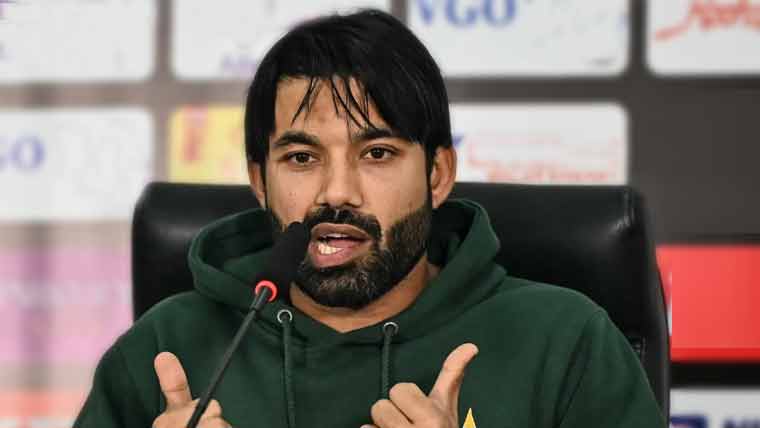
Lahore (Tassawar News) In a truly unexpected turn of events, the internal affairs of Pakistan cricket have been thrown into the spotlight following reports that the country’s most prominent wicketkeeper-batsman, Mohammad Rizwan, has declined to affix his signature to the new central contract offered by the Pakistan Cricket Board (PCB) for the 2025–26 season. This unprecedented refusal from a foundational player has ignited considerable debate within national and international cricketing circles, particularly at a juncture where the national team structure has undergone a series of significant and often controversial overhauls.
According to reliable, well-placed sources, Rizwan has formally communicated his profound reservations regarding specific clauses embedded within the contractual documentation. He is now seeking a comprehensive elucidation and transparent dialogue with the board before arriving at a definitive conclusion concerning his professional commitment. The fact that, as confirmed by these same sources, all other contracted players have already executed their agreements only serves to underscore the singularity and seriousness of Rizwan’s current posture.
The Context of Dissatisfaction and Demotion
Rizwan’s hesitation is particularly noteworthy given the backdrop of recent administrative decisions affecting his standing in the national setup. The PCB’s renewed approach to contracts and leadership roles has seen Rizwan experience several setbacks in his international career trajectory over the past year. These include his removal from the One-Day International (ODI) captaincy and his conspicuous omission from the T20 International (T20I) squad earlier in the current season.
Under the new financial and performance-based framework for 2025–26, Mohammad Rizwan was categorised in Category B of the central contract list. This category designation dictates the player’s retention fee, financial benefits, and the accompanying performance expectations. Crucially, in the preceding contractual cycle (2024–25), Rizwan had occupied the top-tier Category A alongside former captain Babar Azam, who has also faced a similar demotion to Category B.
Some analysts and informed insiders firmly believe that the effective demotion from Category A to B, which entails a reduction in financial compensation and perceived status, is a key factor fuelling Rizwan’s discontent. While the player has maintained a professional silence and has not issued any public declaration on this specific matter, the timing of his refusal strongly suggests a correlation between the category reallocation and his current dissatisfaction.
Seeking Clarity: Rizwan’s Conditions and the PCB’s Firm Stance
The core of the dispute appears to lie in the player’s demand for greater transparency and accountability in the board’s decision-making processes. Sources close to the prominent wicketkeeper-batter indicate that he is primarily demanding:
- Clarity on Selection Criteria: A clear and unambiguous explanation of the methodology employed for both squad selection and the permanent exclusion of senior players from specific formats.
- Transparency in Leadership Decisions: A detailed understanding of the rationale behind abrupt leadership changes, particularly his removal from the ODI captaincy.
- Fair Match Fees: An assurance regarding the equitable distribution and structure of match fees across all international formats.
- Process of Category Allotment: An open book on the process and criteria used by the board to determine and assign player categories within the new central contract structure.
In response, the PCB has adopted an unyielding and uncompromising position. The board has reportedly declined to accommodate Rizwan’s individual demands, maintaining that the overarching contract framework was meticulously developed following extensive consultation and is fundamentally designed to reward attributes such as consistent performance, professionalism, self-discipline, and availability for all national duties.
Board officials have emphasised the necessity of maintaining absolute uniformity and fairness across the entire contracted roster, thus setting a precedent against making individual, player-specific exceptions. Their message is clear: the collective institutional framework must take precedence over personal demands.
The Broader Implications for Pakistan Cricket
This highly visible contractual standoff carries significant implications for Pakistan cricket as the next international season rapidly approaches. Mohammad Rizwan is universally acknowledged as one of Pakistan’s most valuable and bankable assets on the global stage. His recent stellar performances in both domestic tournaments, like the Pakistan Super League (PSL), and international fixtures continue to highlight his unwavering consistency, exceptional leadership qualities, and exemplary sportsmanship. Losing a player of his calibre, or having him play under duress, would represent a substantial blow to the team’s stability and morale.
Reflecting on the situation, many prominent analysts and veterans of the game remain optimistic, expressing a strong conviction that a mutually acceptable resolution is still attainable. The necessity of retaining a player of Rizwan’s pedigree is a compelling argument that is expected to eventually force the two parties towards a negotiated middle ground.
“The challenge for the PCB now is to balance institutional integrity with the commercial and sporting value of their biggest stars,” commented one former international player. “You cannot afford to alienate a world-class performer who wears his commitment on his sleeve.”
The coming days will therefore be critical, determining whether Rizwan and the PCB can successfully reconcile their respective differences to ensure that one of Pakistan’s most reliable and influential players continues to offer his services unhindered at the peak of international competition.
Conclusion
Mohammad Rizwan’s decision to withhold his signature from the new PCB central contract is more than a simple contractual disagreement; it is a moment of significant institutional confrontation that underscores the broader tensions within Pakistan cricket regarding administrative transparency, selection accountability, and the rewarding of elite talent. The central issues revolve around his demotion from Category A and his demand for clarity on performance-based decisions that have affected his leadership and selection. While the PCB insists on maintaining contractual uniformity, the sheer importance of Rizwan to the national team structure suggests that the resolution of this impasse is vital for the team’s stability. Fans and experts alike will be watching closely, hoping that professionalism prevails and that this disagreement does not result in the permanent sidelining of an indispensable figure in the national sport.
Would you like to know the current financial difference between a PCB Category A and Category B contract for the 2025-26 season?