Muzaffarabad (Tassawar News) The political landscape in Azad Jammu and Kashmir (AJK) has recently descended into a protracted state of volatility, characterized by profound constitutional uncertainty and a high-stakes standoff between the incumbent government and a coalescing opposition. This nascent instability has manifested in an extraordinary procedural impasse: the government’s leadership remains in place, yet neither has the Prime Minister tendered his resignation nor has the anticipated motion of no confidence been formally lodged in the legislative assembly. This ambiguous situation threatens to lead to administrative paralysis and requires an immediate, decisive resolution rooted in parliamentary protocols.
Authoritative sources suggest that this period of constitutional indeterminacy is drawing to a close, with the formal motion of no confidence projected to be filed within the next forty-eight hours. The principal opposition faction, the Pakistan Muslim League (Nawaz) or PML-N, has reportedly solidified its position, with key members already appending their signatures to the document initiating the move to unseat the current administration. This procedural commitment signals a clear and concerted effort by the opposition to trigger the necessary parliamentary action, thereby ending the present administrative stagnation.
The Opposition’s Legislative Calculus and Internal Deliberations
The entire dynamic of the power reshuffle hinges upon the delicate parliamentary arithmetic within the fifty-two-member legislative House. To successfully elect a new chief executive or secure the removal of the sitting Prime Minister, a simple majority of twenty-seven votes is the requisite threshold. The Pakistan People’s Party (PPP), a vital component of the prospective new coalition, has asserted, with confidence, that it commands the allegiance of thirty-six assembly members—a comfortable margin well above the simple majority required for constitutional change.
Crucially, while the procedural mechanism of the no-confidence motion appears imminent, the PPP is currently engaged in internal, high-level deliberation to finalise its nominee for the prime ministerial post. This step is pivotal, as the choice of leader will define the ideological and administrative trajectory of the prospective new government. The names of senior leaders, including Chaudhry Yasin and Latif Akbar, are understood to be under stringent consideration, reflecting the party’s strategic approach to selecting a candidate capable of navigating the precarious political environment and ensuring stability.
The complexity of the current governmental formation process was underscored by the direct involvement of the central party leadership. Senior PPP leader Faryal Talpur journeyed to Kashmir House in Islamabad, where she engaged in a detailed and consequential meeting with the President of Azad Kashmir, Barrister Sultan Mahmood Chaudhry. The agenda of this summit focused intensely on the intricacies of government formation and the development of a coherent political strategy designed to ensure a seamless transition of power following the expected vote. Such consultations highlight the reliance of AJK’s political entities on the guidance and strategic direction provided by their counterpart political parties operating within Pakistan’s federal framework.
“The PPP’s asserted support of thirty-six members, against a required twenty-seven in the fifty-two-member House, suggests a potentially overwhelming mandate for the planned vote of no confidence, positioning the opposition for a decisive shift in administrative control.”
The Incumbent’s Defiance and the Pursuit of a Fresh Mandate
In direct contrast to the opposition’s active preparation for a governmental change, the current Prime Minister, Chaudhry Anwar-ul-Haq, has adopted an unyielding stance. He has adamantly refused to tender his resignation, maintaining his firm position that he will “continue to perform his duties” despite the evident loss of majority support and the shadow of the imminent no-confidence motion. This resolute refusal forces the opposition to adhere strictly to the constitutional process of a parliamentary vote, eliminating the possibility of a smoother, administrative handover of power. The Prime Minister’s position underscores his belief in the constitutional longevity of his mandate until such time as he is legally unseated by the assembly.
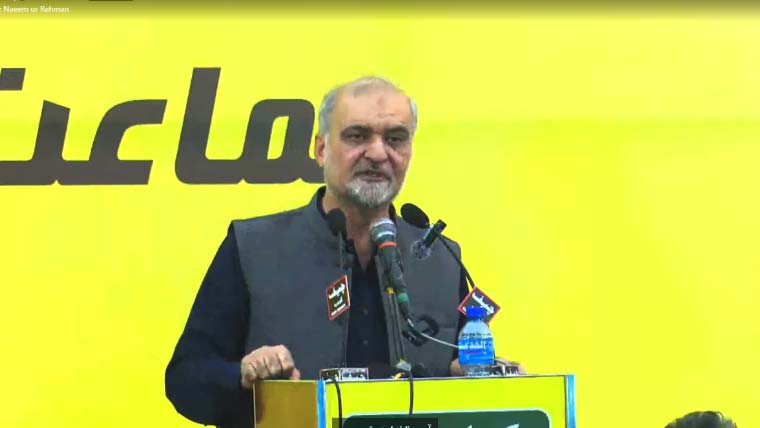
Amidst this intense parliamentary maneuvering, an alternative, arguably more radical, solution has been proposed by Jamaat-e-Islami. The party has counselled the Prime Minister to consider dissolving the assembly forthwith and initiating fresh general elections. This advice is predicated on the notion that a complete reset of the electoral mandate would be the most effective mechanism to restore genuine political stability to the region, circumventing the ongoing factional infighting and the short-term, coalition-driven instability. A new mandate, derived directly from the populace, is often viewed as the most robust way to secure legitimate governance and public trust.
However, the path of assembly dissolution is fraught with its own set of complexities and inherent risks, including the potential for a prolonged period of caretaker administration and heightened political agitation during the electoral campaign. The decision rests on a fundamental strategic choice: whether to pursue a rapid, internal parliamentary reshuffle, or to seek a comprehensive, but potentially protracted, public endorsement through a general election.
Conclusion: The Imperative for Decisive Resolution
The evolving situation in Azad Kashmir remains a crucible of intense, high-stakes political manoeuvring within political and administrative circles. The current state of flux—defined by an unfiled motion and an unyielding incumbent—creates a dangerous vacuum in political authority. While the opposition, led by the PML-N and the PPP, appears to possess the requisite parliamentary strength to effect a change in leadership, the delay in formally submitting the motion prolongs the ambiguity.
The ultimate need of the hour is a decisive and constitutionally compliant resolution to the crisis. Whether the outcome is an orderly transition following a successful no-confidence vote, or a constitutional crisis necessitating the dissolution of the assembly, the volatility demands that the political actors involved conclude their concerted manoeuvring and establish a stable, legitimate government. The future trajectory of governance and political confidence in AJK depends intrinsically on the swift and responsible execution of parliamentary duties, ensuring that the supremacy of the constitutional framework is upheld throughout this period of political ferment.