Tehran: (Tassawar News) Russia has publicly declared its readiness to actively assist in de-escalating the persistent crisis surrounding Iran’s nuclear programme, while simultaneously underscoring the critical necessity for a diplomatic and long-term solution.1 This commitment signals Moscow’s continued involvement in one of the most volatile geopolitical issues of the current era.
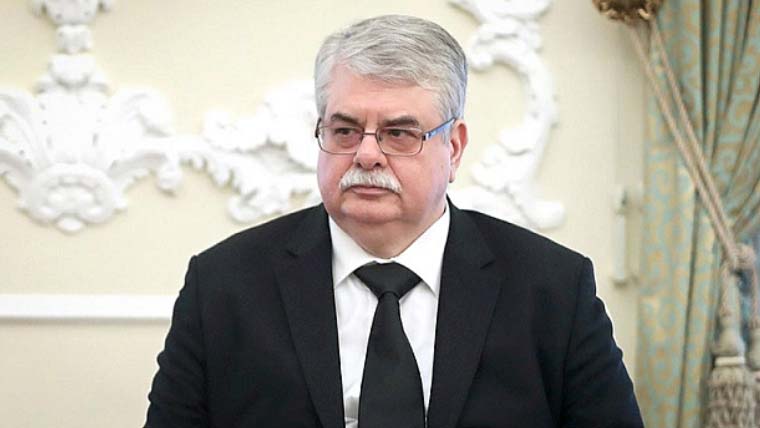
The statement was delivered by Alexey Dedov, the Russian Ambassador to Iran, during a recent media interview.2 Ambassador Dedov confirmed that both Moscow and Tehran maintain constant, high-level contact regarding this sensitive file. He directly attributed the emergence of the current precarious situation to the “flawed policies of certain Western countries,” thereby framing the crisis not as an Iranian transgression but as a consequence of external political pressure.
Russia’s Role in Sustainable Resolution
Ambassador Dedov elaborated on Russia’s proactive stance, asserting that his country is providing comprehensive political and diplomatic assistance specifically tailored to achieve a sustainable resolution to the nuclear issue.3 He affirmed that this support is ongoing and will be sustained until a viable solution is reached.
To this end, he highlighted the establishment of multi-level consultative mechanisms between Russia and Iran.4 These consultations are being held at multiple levels to meticulously explore all possible avenues for formulating an effective diplomatic off-ramp. This collaborative approach underscores Russia’s commitment to facilitating a negotiated settlement that addresses the concerns of both Iran and the international community.
“Russia remains fully committed to providing comprehensive political and diplomatic assistance to help achieve a sustainable, long-term resolution to the complexities surrounding Iran’s nuclear programme,” stated Ambassador Dedov.5 “We firmly believe that the crisis is a direct consequence of ill-conceived policies by specific Western powers, and we are working exhaustively through multi-level consultations to forge an effective diplomatic pathway.”
Legal Rejection of Sanctions Reinstatement
A significant point of divergence from Western policy was articulated by the Ambassador regarding the push for renewed sanctions.6 Ambassador Dedov specifically noted that Russia considers the actions initiated by European nations—which are conspicuously backed by the United States—to reinstate UN Security Council sanctions on Iran as both “legally and procedurally unacceptable.”
This categorical rejection indicates that Russia will not recognize the validity of any attempt to utilize the snapback mechanism or similar measures to reimpose international sanctions.7 This position offers Iran substantial diplomatic shielding within the United Nations framework and further isolates the United States and its European allies on this particular policy track. Russia’s stance is predicated on a particular legal interpretation of the Joint Comprehensive Plan of Action (JCPOA) and its mechanisms.
Conclusion: The Primacy of Diplomacy
The declaration by Russian Ambassador Alexey Dedov emphatically underscores Moscow’s firm commitment to leveraging its diplomatic influence to mediate a resolution to Iran’s nuclear crisis.8 By explicitly attributing the current instability to the policies of Western nations and simultaneously rejecting the legality of efforts to reinstate UN sanctions, Russia effectively positions itself as a critical ally to Tehran in this geopolitical standoff. The sustained, multi-level consultative process outlined by the Ambassador suggests that the diplomatic engagement, supported by comprehensive political backing, remains the designated and prioritized pathway for achieving a sustainable and peaceful resolution to the complex nuclear challenge.9