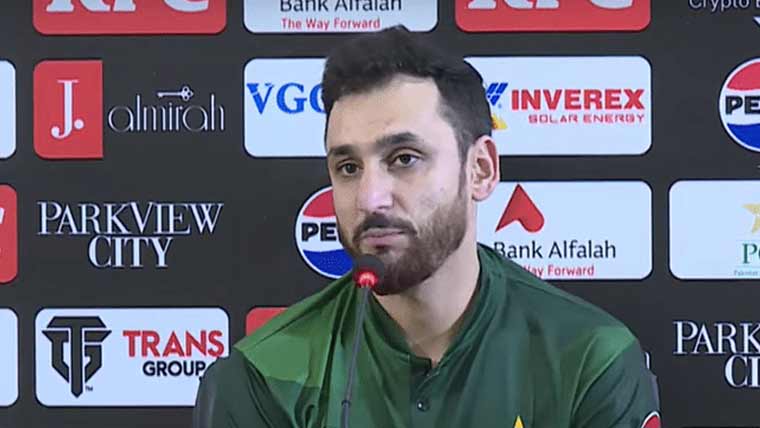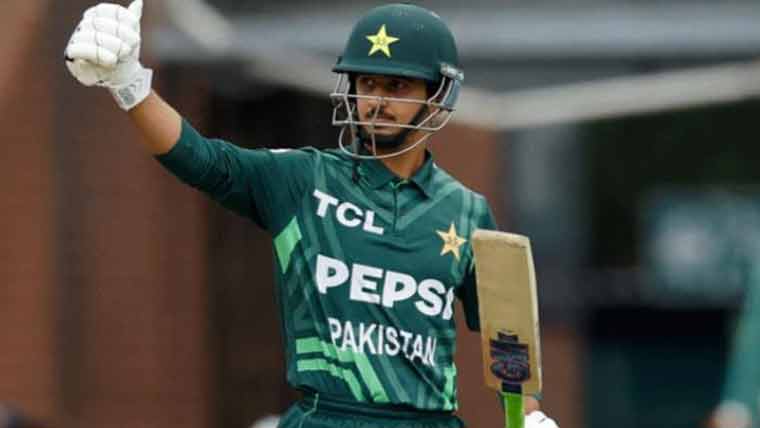
Rawalpindi: (Tassawar News) Following Pakistan’s recent defeat against South Africa in the inaugural Twenty20 International (T20I) in Rawalpindi, the burgeoning young opening batter, Saim Ayub, offered a candid self-assessment, acknowledging that his personal batting form has been subpar. Despite this recognition of his current performance deficit, he affirmed a strong determination to improve and contribute more effectively to the team’s success.
Speaking to the press after the match, the left-handed opener provided a nuanced analysis of the game’s dynamics, attributing the loss largely to the opposition’s superior adaptation to the local environment. Ayub conceded that South Africa’s bowlers demonstrated better execution in accordance with the conditions, a challenge that Pakistan’s batting lineup failed to adequately counteract.
Meteorological Factors and Tactical Decisions
Ayub elaborated on the tactical rationale behind Pakistan’s decision at the toss, highlighting the critical influence of meteorological factors. He explained that the significant “dew factor” present in the stadium was the decisive consideration that prompted the team to elect to field first. This strategic choice aimed to mitigate the challenges that wet conditions often pose to bowlers later in the game.
He stressed that the team’s focus should transcend individual performances and concentrate on collective improvement:
“There is a palpable heavy dew present in the stadium environment, which logically informed our tactical choice to field first,” observed Saim Ayub. “Rather than fixating on the negative outcome of being bowled out, our collective energy must now pivot toward enhancing our overall execution and operational efficiency as a unit.”
Assessing Unit Progress Despite Loss
Despite the immediate disappointment of the defeat, the young batter offered an optimistic perspective regarding the overall trajectory of the batting unit. He noted that when contrasted with the team’s performance in the preceding series, Pakistan’s batting contingent has exhibited a measurable degree of improvement, managing to register higher aggregate totals even in the context of the loss. This observation suggests that while the unit is still refining its execution, it is demonstrating an upward curve in its scoring capabilities.
Ayub’s comments reflect a mature understanding that cricket, particularly in the shortest format, demands continuous adaptation and a strategic focus that integrates environmental variables and team synergy over individual metrics. His recognition of the need for both personal and collective enhancement sets a constructive tone for the remainder of the series.
$\star$ Conclusion: Commitment to Rectification
Saim Ayub’s post-match comments present a balanced view, recognizing his own immediate shortcomings in form while providing an insightful, tactically grounded analysis of the team’s defeat. His emphasis on South Africa’s effective bowling, the crucial influence of the dew factor on fielding choices, and the collective need for improved execution signals a constructive commitment to rectification. Although the first T20I ended in a loss, the young opener’s focus on demonstrable improvements in the batting unit’s overall scoring capacity provides a cautious optimism for Pakistan’s prospects in the forthcoming matches.