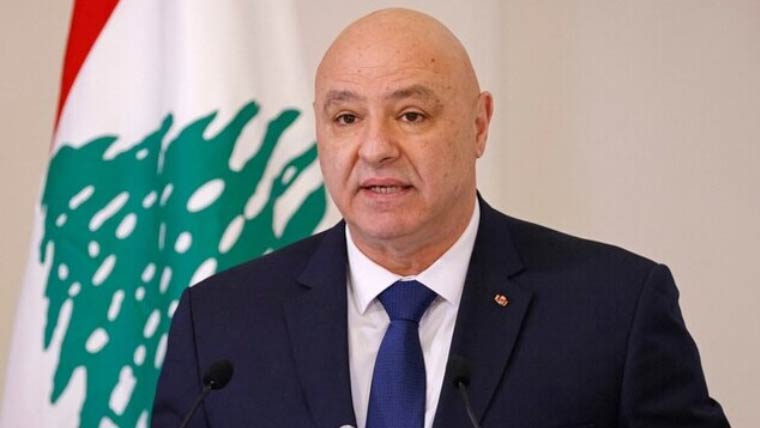
Beirut: (Tassawar News) Lebanon has intensified its diplomatic efforts by issuing a direct and urgent appeal to the United States to intervene concretely and halt the ongoing Israeli strikes on Lebanese territory. This critical intervention, made by Lebanese President Joseph Aoun during a meeting with U.S. Middle East envoy Morgan Ortagus between October 28 and 30, 2025, underscores Beirut’s deep concern over the erosion of the November 2024 truce and the dire humanitarian consequences affecting its southern border regions.
Demand to Activate the Ceasefire Monitoring Committee
The central focus of President Aoun’s appeal was the immediate and effective activation of the Ceasefire Monitoring Committee (CMC), the mechanism established as part of last year’s truce agreement to oversee compliance. During his meeting at Baabda Palace, Aoun stressed that this committee, which includes influential international partners such as the United States and France, must be effectively mobilised to curb what he explicitly described as repeated Israeli violations of Lebanese sovereignty.
According to a statement from the Lebanese Presidency, the Head of State insisted that the CMC should adopt a “more robust role in halting attacks and ensuring implementation of UN Resolution 1701.” This resolution, which remains the foundational framework for stability along the Blue Line, mandates a cessation of hostilities and the deployment of the Lebanese Armed Forces (LAF) throughout the South. The repeated calls for the CMC’s full engagement reflect Lebanon’s limited unilateral leverage and its reliance on the international architecture to compel adherence to the truce.
“The monitoring mechanism — established to oversee the November 2024 truce — must be mobilized effectively to curb what he described as repeated Israeli violations,” the Lebanese Presidency affirmed, underscoring the legal and diplomatic grounds of their demand.
Analysts suggest that Aoun’s direct appeal to Washington reflects a strategic belief that U.S. engagement possesses the unique weight necessary to “press Israel to respect the truce.” The presence of U.S. envoy Morgan Ortagus in Beirut, part of a regional tour aimed at de-escalating tensions, confirms Washington’s recognition of the growing risks to the ceasefire framework. Ortagus is reportedly expected to attend meetings of the monitoring committee itself, suggesting that the diplomatic channel remains active, though its immediate efficacy is still under scrutiny.
The Humanitarian and Security Imperatives
Beyond the immediate cessation of strikes, President Aoun meticulously highlighted the pressing humanitarian and security imperatives that necessitate urgent international action. The prolonged conflict and recent attacks have resulted in a significant population displacement and substantial damage to civilian infrastructure in southern Lebanon.
Aoun was resolute in his insistence on two core humanitarian rights:
- The right of displaced families in southern Lebanon to return home.
- The need for the reconstruction of homes damaged by strikes to be enabled before winter.
The urgency of the approaching winter season was central to the President’s argument. Life in tents or temporary accommodations would become “especially harsh,” making rapid, internationally supported rebuilding efforts essential to averting a deeper humanitarian crisis. Humanitarian agencies operating in the region have also warned that the current situation will inevitably lead to growing humanitarian needs unless clear international steps are taken to prevent further violations. Regional and international actors have consistently urged restraint while simultaneously calling for rapid humanitarian access to the affected communities to address the immediate shortages and trauma.
Furthermore, President Aoun addressed the key security dimension outlined in Resolution 1701, urging that concrete steps be taken to permit the Lebanese army to complete its deployment along the southern border. This final deployment is seen as a crucial step to “enhance security and stability” by creating a unified security presence along the Blue Line, thereby reducing the potential for localised conflict and ensuring a clear chain of command on the Lebanese side.
Renewed Fears and Regional Stability
The recent Israeli strikes have rekindled profound fears across Beirut and southern Lebanon that the current escalation could completely unravel the fragile calm established after the difficult ceasefire negotiations of last year. Lebanese officials argue that without a clear and demonstrated international commitment to prevent violations, “lives and infrastructure will continue to be at risk.” The current climate of instability is not merely a bilateral issue but a regional priority; any significant escalation could easily draw in other non-state and state actors, leading to a catastrophic regional conflict.
The coming days are therefore viewed by observers as a critical barometer for the efficacy of international mediation. The key question remains: Will the Ceasefire Monitoring Committee, backed by the pressure of the U.S. envoy’s presence, take sufficiently stronger and more decisive action? Or, will the current pattern of strikes continue, further eroding trust in the international mechanisms designed to maintain peace? Diplomatic sources suggest that the success or failure of the U.S.-led engagement in the coming week will be instrumental in determining whether further strikes can be prevented and if the safe return and rebuilding of the devastated southern towns can be genuinely enabled before the harsh winter sets in. This period will demonstrate the true limits of international pressure in managing the protracted and complex conflict along the Israeli-Lebanese border.
Conclusion
President Joseph Aoun’s urgent appeal to the United States highlights Lebanon’s pressing need for robust international protection and the effective enforcement of the existing truce. The immediate imperative is the full mobilisation of the Ceasefire Monitoring Committee to halt Israeli strikes and secure the implementation of UN Resolution 1701. Beyond de-escalation, the humanitarian needs of displaced southern residents—specifically the rights to return and to rebuild before winter—must be addressed as a humanitarian priority. The success of U.S. diplomatic efforts and the willingness of the international committee to exert decisive pressure will ultimately determine whether the region returns to stability or succumbs to a dangerous, potentially wider, escalation.