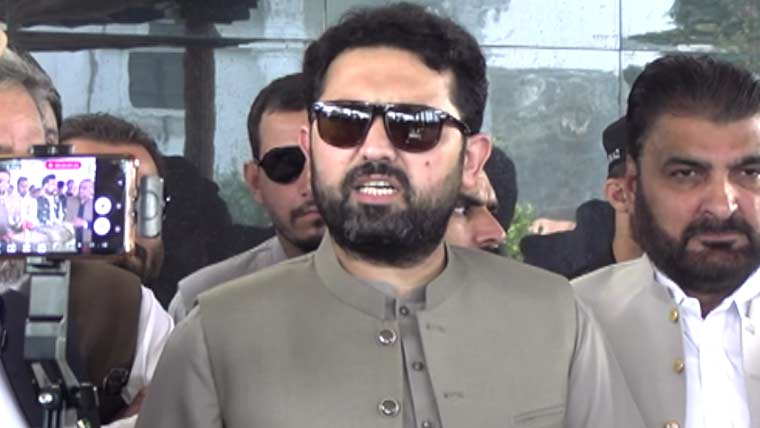
Peshawar (Tassawar News) The political atmosphere in Khyber Pakhtunkhwa (KP) has recently been dominated by the measured yet assertive statements of Chief Minister Sohail Afridi. Addressing the media in Peshawar, the Chief Minister sought to quell burgeoning speculation regarding internal instability by emphatically stating, “We are all on the same page.” This proclamation of internal cohesion and shared political vision serves as a strategic projection of stability, crucial amidst the fluid and often fractious political environment currently prevailing across Pakistan. Afridi’s press interaction, therefore, was not merely a routine briefing but a carefully calibrated effort to reinforce the strength and singularity of purpose within the provincial leadership and the ruling party structure.
Assertions of Unity and Collective Governance
Chief Minister Afridi’s dismissal of any alleged internal rift or factionalism within the provincial cabinet or party is a key element of his political messaging. The insistence on unity is particularly salient in a province like Khyber Pakhtunkhwa, which is characterized by its significant ethnic diversity and a historically vibrant and competitive political landscape. Maintaining internal cohesion is paramount not only for the smooth functioning of the administration but also for the effective prosecution of the government’s reform agenda.
Furthermore, the Chief Minister underscored a commitment to democratic norms by articulating that all future political and administrative decisions will be the outcome of comprehensive party consultations. This collective decision-making process is designed to ensure that policies are representative of broader consensus and align with democratic principles, thereby mitigating the risk of decisions being perceived as arbitrary or the product of individual authority. This approach is intended to signal a degree of political maturity and institutional respect, essential for long-term governance stability.
“His statement, ‘We are all on the same page,’ reflects an effort to project stability and confidence amid ongoing political discourse across Pakistan.”
This focus on unity and consultation is perceived by observers as a strategic move to reassure both the public electorate and dedicated party members of the government’s unwavering determination to advance its mandated reform platform, particularly across essential sectors such as education, healthcare, infrastructure, and social welfare. The requirement for enhanced coordination among provincial departments was also stressed as being vital for transparent and efficient delivery of results.
The Critical Standoff: Federal-Provincial Financial Disparity
A prominent and recurring theme of the Chief Minister’s discourse was the chronic issue of financial resource allocation from the federal government to Khyber Pakhtunkhwa. Afridi highlighted that the province has yet to receive its rightful and constitutional share of resources, a disparity that continues to fuel tensions in federal-provincial relations. This financial shortfall poses a significant constraint on the provincial government’s ability to execute its comprehensive development agenda and fulfill its obligations to the populace.
The Chief Minister, however, stressed a preference for institutional dialogue over outright confrontation. He affirmed that his government is committed to resolving these financial disparities through constitutional and legal channels, seeking cooperation rather than antagonism with the federal authorities.
“The Chief Minister highlighted that the federal government has yet to allocate Khyber Pakhtunkhwa its rightful share of financial resources, an issue that has been at the centre of federal-provincial relations in recent years.”
This balanced stance—asserting provincial rights while maintaining a measured tone and institutional respect—is a delicate political manoeuvre. It positions Afridi as a responsible leader who is navigating the challenging political and fiscal terrain with an emphasis on institutional and legal frameworks. The future plan of action concerning these financial grievances is slated to be finalized only after thorough internal party deliberations, underscoring a disciplined approach to a high-stakes constitutional matter.
Judicial and Procedural Complexities
An important, yet separate, development noted by legal expert Advocate Salman Akram Raja added another layer of complexity to the political narrative. Raja publicly commented that the Chief Minister’s planned meeting with the party’s founder had once again been postponed or not facilitated, “despite prior court directives.” This procedural entanglement draws attention to the ongoing legal and judicial oversight influencing political engagements and highlights the challenges faced when political interactions intersect with court mandates.
This detail serves as a reminder that the political environment in KP is not solely defined by intra-party dynamics or federal-provincial negotiations, but is also subject to the directives and complexities of the judicial process. The legal framework thus acts as a crucial parameter within which the provincial leadership must operate, adding an element of procedural scrutiny to their political activities.
Conclusion: Maturity and Multi-Dimensional Governance
In conclusion, Chief Minister Sohail Afridi’s recent press conference in Peshawar was a multifaceted exercise in political communication and strategic governance. It effectively reinforced the key messages of internal unity, commitment to collective decision-making, and a policy-driven approach to administration. By simultaneously addressing allegations of internal divisions and raising the critical issue of federal financial allocation, Afridi demonstrated a sophisticated attempt to reassure the public while asserting the province’s constitutional rights.
The overall tone of the interaction was one of political maturity and institutional responsibility. The government’s determination to advance its reform agenda, coupled with its commitment to pursuing financial equity and resolving political engagements through constitutional and legal means, suggests a disciplined leadership style. As Khyber Pakhtunkhwa navigates its political and fiscal challenges, the emphasis on cohesion and coordinated action will be vital for the integrity and stability of Pakistan’s provincial governance framework, ensuring that the development goals and the welfare of its diverse populace remain at the forefront of the administration’s efforts.