Moscow (Web Desk): The pronouncement by the former U.S. President, Donald Trump, regarding the potential resumption of nuclear weapons testing has elicited an immediate, yet carefully calibrated, retort from the Kremlin. This rhetoric, delivered without prior official consultation, has thrust the delicate architecture of global strategic stability back into the spotlight, compelling Moscow to outline a clear, conditional, and ultimately alarming policy trajectory. The response from the Russian Federation underscores the profound geopolitical imperative of maintaining the decades-long international moratorium on nuclear detonations, while simultaneously signaling an unwavering resolve to match any perceived threat in kind.
The Kremlin’s Position: Conditional Reciprocity and Preemptive Clarity
Speaking to journalists, Kremlin spokesperson Dmitry Peskov articulated a stance defined by circumspection and strategic reciprocity. He emphasised that Russia has, to date, meticulously upheld the prevailing international norms, having refrained from conducting any nuclear tests since the collapse of the Soviet Union. However, this commitment, he cautioned, is inherently conditional upon the behaviour of other principal nuclear powers, most notably the United States.
Peskov unequivocally stated that should the United States elect to deviate from its current policy and proceed with a test, Moscow would be instantaneously compelled to act in kind. This is not merely a threat of retaliation, but rather a doctrine of proportionate measures, designed to ensure the maintenance of strategic parity. The conditional nature of this response serves as a direct diplomatic warning: Russia will not be the instigator of a renewed nuclear arms race, but it will certainly not allow its national security interests to be compromised by an erosion of the existing non-proliferation consensus.
“The spokesperson underscored that Russia’s policy of non-testing is contingent upon the adherence of other nuclear states to the current de facto moratorium. If the United States changes its current policy, Moscow will be forced to respond accordingly, thereby escalating global strategic tension.”
Furthermore, the Kremlin highlighted a significant procedural breach: the distinct absence of any antecedent official communication from Washington concerning a revised nuclear strategy prior to President Trump’s public assertion. This procedural lapse not only suggests a potential breakdown in established diplomatic protocols but also reinforces Russia’s narrative that the U.S. announcement was, perhaps, more about rhetorical posturing than a fully formulated strategic decision.
Fact, Fiction, and the Integrity of Intelligence
A crucial component of the Kremlin’s rebuttal was the challenge directed at President Trump’s unsubstantiated claim that other nations were already engaged in nuclear testing. Peskov was categorical in asserting that Moscow possessed no credible evidence corroborating such activities. This refutation serves a dual purpose: it questions the factual basis of the American decision-making process and reaffirms Russia’s own commitment to the principles of transparency and international monitoring.
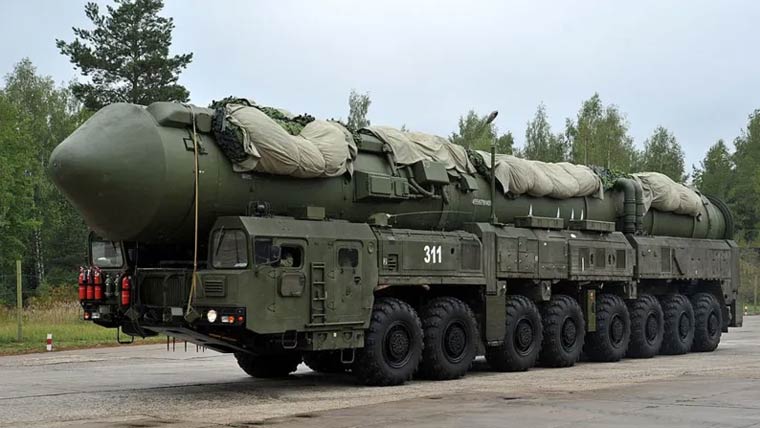
The spokesperson also provided a necessary technical distinction, addressing recent Russian developments that might be misconstrued as nuclear tests. He clarified that the tests involving the Burevestnik cruise missile and the Poseidon nuclear-powered torpedo were exercises related to delivery systems and propulsion technology, not the detonation of nuclear warheads. This precision is vital for decoupling the development of next-generation nuclear delivery capabilities from the abandonment of the testing moratorium, a difference central to upholding the spirit of the international ban.
Historical Context and the Erosion of Strategic Stability
The gravity of restarting nuclear testing cannot be overstated, particularly when viewed through the lens of Cold War history. The Soviet Union conducted its last test in 1990, followed by the United States in 1992 and China in 1996. The subsequent quarter-century of restraint has created a norm that reinforces the Comprehensive Nuclear-Test-Ban Treaty (CTBT), despite its non-entry into force. The resumption of testing by any one of these major nuclear powers would precipitate a domino effect, potentially collapsing the entire framework of nuclear non-proliferation and signalling the definitive end of the post-Cold War restraint era.
Such an action would send a destabilizing message globally, suggesting that major powers are prioritising the quantitative improvement and verification of their arsenals over strategic risk reduction. The ensuing arms race would inevitably consume vast resources and elevate the spectre of nuclear confrontation to levels not witnessed since the 1980s. The international community, therefore, views this debate not as a bilateral spat, but as an existential threat to the collective security framework.
The Multifaceted Geopolitical Ramifications
The strategic debate initiated by the U.S. rhetoric carries several profound implications for global security dynamics:
- Disintegration of Treaties: A concrete step towards testing could effectively dismantle the remaining pillars of the arms control regime, including the New START Treaty, even if implicitly. It signifies a move away from verifiable, negotiated limits toward unilateral, technological competition.
- Provocation of Secondary Powers: The action of the nuclear “Big Three” would provide justification for secondary nuclear states or threshold countries to accelerate their own programs, citing the collapse of the established rules of the game. This further complicates regional security scenarios, particularly in volatile areas.
- Diplomatic Capital Expenditure: For the United States, such a move would entail a massive expenditure of diplomatic capital, alienating key non-proliferation allies and undermining its credibility as a proponent of global nuclear disarmament.
Conclusion
The Kremlin’s measured yet unwavering statement—that it reserves the right to take proportionate measures if any nation withdraws from the agreement—serves as a critical juncture in contemporary geopolitics. It confirms that the enduring commitment to the global test ban remains a cornerstone of Russian foreign policy, but simultaneously underscores the precarious nature of this commitment. The potential resumption of nuclear testing, driven by rhetorical posturing rather than verifiable strategic necessity, risks unravelling decades of painstaking effort to curb the nuclear menace. The path to strategic stability demands not only adherence to existing agreements but also clear, respectful, and established channels of communication between nuclear-armed peers. The imperative for diplomatic clarity and verifiable restraint has rarely been more acute, lest the world slide back into the dangerous complexities of a renewed nuclear competition.