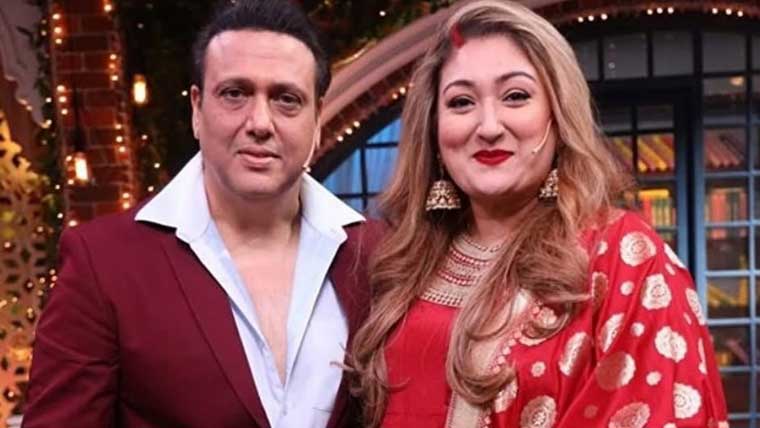
Mumbai (Web Desk): The recent incident in Mumbai, involving Gauri Suresh, the partner of Bollywood icon Aamir Khan, and an unrelenting pursuit by photojournalists, has reignited the enduring debate regarding celebrity privacy, media ethics, and the psychological burden of unsolicited public scrutiny. The widespread dissemination of a video clip, which vividly captures Ms. Suresh’s distress and visible annoyance, serves as a compelling microcosm of the intensifying, often aggressive, paparazzi culture that characterizes the Indian entertainment landscape.
The reported details describe a scene of unflagging media surveillance commencing the moment Ms. Suresh emerged in a public space. This immediate and sustained attention prompted a rare, explicit expression of frustration from an individual associated with the inner circle of a major star but not intrinsically a public figure herself. Her rhetorical challenge to the photographers—“Who calls you people? Please leave me alone”—is not merely an emotional outburst, but a crucial articulation of the desire for autonomy in the face of what she clearly perceived as an egregious invasion of her personal space.
The Ethical Imperative of Privacy vs. Public Interest
The core of this ethical quandary lies in the tension between the public’s insatiable appetite for celebrity gossip and the fundamental human right to privacy, as enshrined in constitutional principles, notably in the Indian context under Article 21. For an individual like Gauri Suresh, whose primary public association stems from her romantic relationship with a superstar, the sudden, intense media glare represents an unjustifiable imposition. While Aamir Khan, due to his professional stature, has implicitly accepted a certain degree of surveillance as an unavoidable concomitant of fame, his partner is a private citizen thrust into the harsh glare of the spotlight through no direct professional choice.
The persistent nature of the photographers, who continued their pursuit despite Ms. Suresh’s overt requests for cessation, underscores a profound breakdown in journalistic decorum. The question she posed to an aide—“Who invites them?”—reflects the common knowledge within the industry that these photographic engagements are frequently orchestrated, if not directly by the celebrity, then by their publicity apparatus. However, in this instance, the target was demonstrably an unwilling participant, turning the situation from a possible photo opportunity into a clear instance of harassment and intrusion.
A leading media ethicist commented on the phenomenon: “The aggressive pursuit of a non-professional public figure, particularly after a direct and visible plea to desist, represents a deleterious erosion of ethical boundaries. The commerce of candid celebrity imagery should never supersede the individual’s right to psychological comfort and physical space. This level of relentless surveillance transforms reportage into stalking for profit.”
Contextualising the Relationship and the Sudden Scrutiny
The timing of this incident is highly significant, coinciding with the recent formalisation of her relationship with Aamir Khan. The actor publicly acknowledged his partner during his 60th birthday celebrations in March 2025. This public affirmation, following a reported relationship development over the preceding eighteen months, placed Gauri Suresh firmly within the parameters of persons of interest for the media.
Their relationship is predicated on a long-standing familiarity, having known each other for over twenty-five years, a factor that highlights the shift from a private, long-term acquaintance to a high-profile public partnership. This transition, while welcome in the public domain, effectively dismantled the protective shield of anonymity Gauri Suresh had previously enjoyed. The paparazzi’s sudden, concentrated focus is a direct consequence of the star’s public confirmation, treating her instantly as an extension of his commercial and media profile. This exemplifies the zero-sum game of celebrity; a star’s revelation immediately cedes control over the private life of the associated partner.
The Viralisation and Societal Implications
The subsequent viral spread of the video footage on the internet further compounds the infringement. While the clip documents the invasion, its continuous circulation effectively perpetuates the very discomfort Ms. Suresh sought to escape. This dynamic creates a vicious cycle: the aggressive action of the photographers generates newsworthy content, and the public’s consumption validates the aggressive methodology, creating a robust financial incentive for future, equally intrusive acts.
This incident is particularly telling in the context of the evolving Indian legal framework, which, following the landmark Puttaswamy judgement, has afforded the right to privacy the status of a fundamental right. While India lacks specific anti-paparazzi legislation common in other jurisdictions, the conduct witnessed could theoretically fall under general provisions concerning harassment or nuisance. The reluctance of many celebrity associates to pursue legal recourse often stems from the fear of protracted legal battles that would only guarantee further media attention, effectively turning the attempt to reclaim privacy into a source of further publicity.
Conclusion: Navigating the Trade-Off of Association
The highly publicised incident involving Gauri Suresh and the Mumbai paparazzi serves as a powerful contemporary critique of the intrusive demands of modern celebrity culture. It highlights a critical distinction: the media obligation of a prominent public figure like Aamir Khan does not automatically confer a corresponding public obligation upon his private partner, regardless of his own willingness to share his personal life. The core issue remains the non-consensual nature of the interaction, which transforms legitimate newsgathering into a form of psychological pressure and professional harassment. For the wider society, this occurrence necessitates a crucial examination of the ethical responsibilities of media outlets and the moral boundaries that must be strictly maintained to ensure that the public’s ‘right to know’ does not entirely eclipses the individual’s right to be left alone.
Would you like a comparative analysis focusing on how Indian law addresses paparazzi harassment versus the legal frameworks in the United States or the United Kingdom?