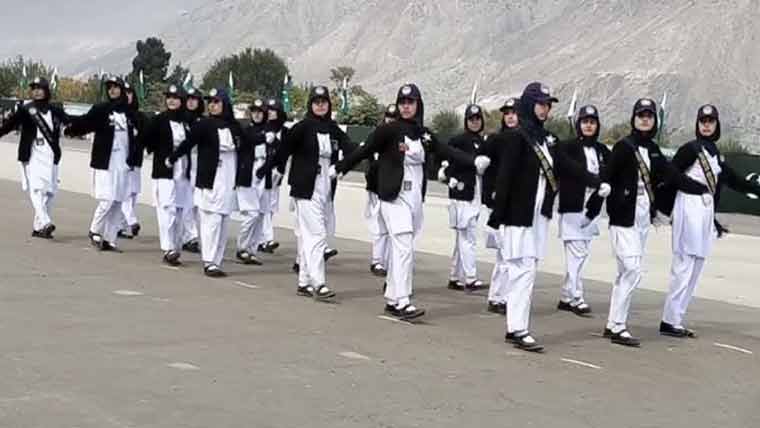
Gilgit: (Tassawar News) The annual observance of Independence Day in Gilgit-Baltistan on November 1st is an event of profound historical and national significance, commemorating a period of unflinching courage and strategic mobilisation that culminated in the end of the Dogra regime’s authoritative control. This commemoration does more than simply recall a date; it symbolises the deep-seated, unwavering national aspirations of the region’s populace for self-determination and eventual integration with Pakistan. The successful uprising, orchestrated by the Gilgit Scouts and indigenous freedom fighters, constitutes one of the most remarkable and pivotal chapters in the region’s socio-political narrative.
The Zenith of Resistance: The Uprising of November 1st
The historical narrative of November 1st, 1947, is a compelling study of a well-executed, yet inherently challenging, internal revolt. The Gilgit Scouts, a locally recruited military force, played the linchpin role in the execution of the liberation movement. Their strategic defection and coordinated assault against the ruling establishment demonstrated not only exceptional martial discipline but also a deep alignment with the popular desire to dismantle the existing administrative structure. This decisive action precipitated the collapse of the Dogra control in Gilgit, initiating a cascade of events that would ultimately redefine the geopolitical status of the region.
The motivation driving the Scouts and the local populace was complex, rooted in a rejection of foreign governance and an impassioned yearning to align their political future with the emerging state of Pakistan. The liberation was neither instantaneous nor without bloodshed; rather, it was the culmination of sustained pressure and a calculated military manoeuvre.
“The events of November 1st represent a powerful paradigm of indigenous self-assertion. It was a clear, unambiguous declaration by the people of Gilgit that the destiny of their homeland was not negotiable and would be determined solely by their collective will.”
This victory in Gilgit served as an immediate catalyst, providing a tangible example of successful resistance and injecting immense moral impetus into the adjoining territories. The subsequent administration of the liberated territory, under the temporary leadership of the local forces, further solidified the local commitment to the ideals of freedom and unity.
The Continuation of the Struggle: Baltistan’s Year-Long Campaign
While the liberation of Gilgit was achieved with dramatic speed, the complete expulsion of the Dogra forces from the broader Gilgit-Baltistan territory required a protracted and often gruelling struggle. Following the initial success in Gilgit, the campaign shifted eastward, necessitating a sustained military effort in the challenging, high-altitude terrain of Baltistan. The freedom fighters in this area endured an arduous, year-long struggle, marked by intense conflict, logistical hardships, and environmental extremes.
The strategic importance of Baltistan’s geographical position necessitated a thorough and patient campaign. The eventual triumph in Baltistan, which culminated in the achievement of independence on August 14, 1948, serves as a powerful corollary to the November 1st uprising. This date, coinciding with Pakistan’s Independence Day, symbolically underlined the desired outcome of the entire regional movement: the complete political alignment and integration with the nascent nation.
“The perseverance demonstrated by the Balti people, who maintained their resistance through twelve months of relentless military pressure and operational complexity, underscores the depth of the commitment to their cause. Their final liberation completed the tapestry of freedom for the entire northern expanse.”
The dual chronology of liberation (November 1st for Gilgit and August 14th for Baltistan) highlights the fragmented yet unified nature of the movement, where different geographical segments fought their battles while sharing the same fundamental objective of sovereignty.
Enduring Significance: The Multi-Faceted Importance of Gilgit-Baltistan
Beyond its historical and sentimental value, the hard-won independence of Gilgit-Baltistan holds immense and multi-faceted significance for Pakistan, a factor that continues to influence national policy and strategic planning. The region’s unique attributes can be categorised into several crucial domains:
Strategic and Defensive Imperatives
Owing to its geographical contiguity with major geopolitical flashpoints and its location at the junction of several international borders, Gilgit-Baltistan holds a preeminent defensive significance. Its mountainous terrain provides a natural, formidable barrier, making its strategic control vital for the protection of Pakistan’s northern frontier. The High-Altitude Warfare School and other military installations in the area attest to its crucial role in national defence strategy.
Economic Potential and Connectivity
The region’s economic significance has been fundamentally enhanced by its role as the northern gateway to the China-Pakistan Economic Corridor (CPEC). The Karakoram Highway (KKH), a masterpiece of engineering, connects Gilgit-Baltistan with China, transforming the area into a pivotal hub for regional trade and connectivity. This economic corridor is poised to unlock immense potential, driving infrastructural development and generating employment opportunities across the northern territories.
Cultural and Tourism Appeal
Gilgit-Baltistan is renowned globally for its spectacular natural beauty, encompassing four of the world’s fourteen highest peaks, including K2 . Its landscape, featuring vast glaciers, pristine lakes, and deep valleys, makes it a premier destination for adventure tourism, mountaineering, and trekking. Furthermore, the region boasts a rich tapestry of distinct ethnic groups, languages, and ancient archaeological sites, offering unparalleled cultural and historical depth. The preservation of this unique cultural heritage is paramount for national identity.
Conclusion: A Legacy of Courage and National Unity
The Independence Day of Gilgit-Baltistan serves as an annual, powerful reaffirmation of the sacrifices rendered by its brave citizens in their triumph over the Dogra forces. This victory was not merely an act of revolt but a defining political assertion—a decisive move toward forging a unified destiny with Pakistan.
The continuing strategic, economic, and cultural importance of Gilgit-Baltistan ensures that the legacy of the Gilgit Scouts and the local freedom fighters remains deeply relevant in the modern context. Their successful struggle is a perpetual source of national pride, underscoring the enduring principle that sovereignty is inseparable from the people’s will. The celebrations today are thus a commitment to honouring the past while actively investing in a future where the region’s unique potential is fully realised within the broader national framework.
Would you like a detailed analysis of the geopolitical impact of the CPEC project on the socio-economic structure of Gilgit-Baltistan?