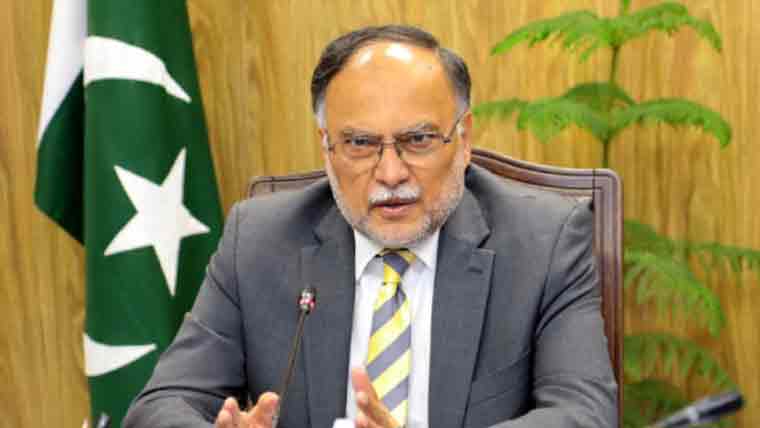
Lahore: (Tassawar News) The Government of Punjab has recently unveiled a comprehensive and rigorous security framework, demonstrating an unwavering commitment to the preservation of peace and public order across the province. This decisive policy direction, which mandates the strictest enforcement of the existing Loudspeaker Act, emerged from the seventh consecutive high-level security meeting, convened and chaired by Chief Minister Maryam Nawaz Sharif. The outcome of this sustained deliberation is a meticulously outlined roadmap for law and order, emphasizing the necessity of immediate and decisive action to fortify public safety and institutional stability.
The Digitalisation of Enforcement: The Loudspeaker Act and Surveillance
The intensified implementation of the Loudspeaker Act is poised to be significantly bolstered by the integration of advanced digital surveillance mechanisms. Under the new policy blueprint, the utilization of loudspeakers in public and private spaces will be subject to continuous and meticulous oversight through an extensive network of CCTV cameras and sophisticated digital surveillance systems. This initiative represents a profound technological shift, moving enforcement from reactive policing to proactive, evidence-based monitoring.
The primary objective is not the arbitrary restriction of religious expression, but the prevention of misuse. The provincial administration has unequivocally stated that any attempt to leverage loudspeakers for the dissemination of hate speech or the incitement of disorder will trigger strict and immediate legal action. This move is strategically designed to depoliticize public discourse and establish firm boundaries against the propagation of extremist narratives.
“The deployment of digital monitoring for the Loudspeaker Act constitutes a critical evolution in maintaining socio-religious equilibrium. It fundamentally ensures that freedom of expression is exercised within the defined parameters of civil conduct, preventing the acoustic space from being exploited for the malicious purpose of spreading communal discord or extremist ideologies.”
The Punjab government took considerable pains to clarify the precise scope of these restrictions, asserting that no religious organization operating within the established bounds of the law and code of conduct will face punitive restrictions. The strict measures are directed solely toward “extremist and divisive elements” who attempt to spread hatred under the guise of religious activity. This nuanced approach seeks to insulate legitimate religious practice from the legal consequences reserved for those deliberately challenging public peace.
Administrative Transparency and Welfare Initiatives
Complementing the enhanced security measures is a parallel initiative focused on administrative transparency and the welfare of religious leadership. The government has initiated the digital mapping of mosques across the entire province. This ambitious undertaking is specifically designed to ensure complete transparency and equity in the process of stipend distribution for the province’s extensive network of over 65,000 prayer leaders, or Aima Karam.
This welfare-oriented reform addresses a longstanding administrative challenge, providing a reliable and verifiable system for compensating religious scholars. The digital infrastructure will not only ensure that funds reach the intended recipients efficiently but will also provide a precise demographic and geographic registry of religious institutions, a resource invaluable for both welfare and security planning.
Asserting State Authority: Weapons and Immigration
Chief Minister Maryam Nawaz Sharif further underscored the government’s commitment to consolidating state authority by addressing two critical security domains: illegal weaponry and unauthorized foreign nationals. The Chief Minister expressed a degree of satisfaction with the public’s cooperation during the recent campaign for the voluntary surrender of illegal weapons. However, this acknowledgment was immediately followed by a stern warning: “strict action will be taken against those possessing or concealing unlicensed arms.” The policy reflects a non-negotiable stance against armed illegality, viewing the presence of unlicensed weapons as a direct threat to public safety and state sovereignty.
In a related move addressing demographic security, the administration announced the implementation of tough penalties for individuals found guilty of aiding or sheltering illegal foreign nationals. This decisive measure aligns with federal policy mandates aimed at regulating and repatriating undocumented migrants, ensuring the integrity of the nation’s borders and legal residency status.
“The government’s message is unequivocal: the rule of law must be absolute. Whether it concerns the possession of clandestine weapons or the facilitation of illegal residency, any act that undermines the established legal and constitutional order will be met with the full, uncompromising force of the legal system.”
The Digital Battlefield: Combating Hate Speech and Disinformation
Recognizing that modern conflict often transpires in the digital realm, the Punjab government is concurrently focusing on policing the online space. The provincial administration has reaffirmed its intention to vigorously prosecute all forms of hate speech and disinformation propagated on social media platforms, leveraging the punitive provisions enshrined in the Prevention of Electronic Crimes Act (PECA).
To effectively manage this digital threat landscape, special monitoring units have been activated. These units are tasked with the continuous tracking and analysis of digital hate content, functioning as an intelligence and enforcement arm in the cyber domain. According to the provincial administration’s stated objective, these measures are vital for ensuring that “Punjab remains a cradle of peace rather than a field of discord,” preventing the online dissemination of rhetoric from translating into tangible, real-world violence or unrest. The strategy acknowledges the interconnectedness of online rhetoric and offline behaviour, aiming to neutralize malicious digital campaigns before they can materially destabilize the populace.
Conclusion: A Unified Approach to Stability
The series of high-level decisions emanating from the security review meetings chaired by Chief Minister Maryam Nawaz Sharif represents a unified and comprehensive approach to stability. The strategy effectively integrates technological surveillance for rigorous law enforcement (Loudspeaker Act), administrative reform for transparency and welfare (digital mapping of mosques), and strict legal sanctions against both conventional (illegal arms) and contemporary (online hate speech) threats. By tackling these issues concurrently and deploying digital tools for governance and monitoring, the Punjab government aims to establish a sustainable architecture of peace and public order. This multifaceted strategy signals a clear resolve to govern decisively, ensuring that the province’s developmental trajectory is neither hampered by internal discord nor threatened by security vulnerabilities.
Would you like an analysis of the legal and technical challenges involved in implementing digital surveillance for the Loudspeaker Act across a province the size of Punjab?