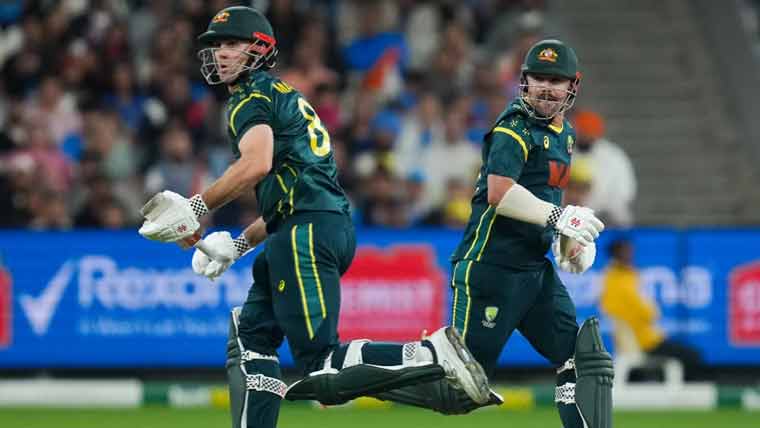
Melbourne :(Tassawar News) The ongoing Twenty20 International (T20I) series between India and Australia witnessed a definitive shift in momentum following the second match, contested at the iconic Melbourne Cricket Ground (MCG). Demonstrating a clinical all-round performance, Australia decisively defeated India by four wickets, thereby establishing a valuable 1–0 lead in the five-match series. The victory was largely predicated on a superlative bowling display that severely restricted the visitors, followed by a commanding chase led by the Australian captain.
India’s Innings: A Sub-Par Total and the Lone Shining Light
Having been invited to bat first, the Indian side experienced a precipitous top-order collapse, failing to compile a competitive or formidable total. The Australian pacers exploited the conditions meticulously, ensuring that the Indian innings never gathered the requisite momentum for a strong finish. The Indian batting line-up was eventually dismissed for a modest 125 runs in just 18.4 overs.
The primary architect of India’s batting woes was the veteran Australian quick, Josh Hazlewood, who delivered a masterclass in powerplay bowling. His phenomenal figures of three wickets for only 13 runs effectively dismantled the Indian top order, leaving the team reeling at a perilous position early on. The damage was compounded by the valuable contributions from fellow Australian bowlers, Xavier Bartlett and Nathan Ellis, who both chipped in with two wickets apiece.
Amidst the ruins of the top-order collapse, a singular, valiant effort emerged from the Indian camp. Opener Abhishek Sharma stood tall against the relentless pace attack, registering a brilliant 68 runs off just 37 deliveries, an innings marked by both aggression and composure. His partnership of 56 runs for the sixth wicket with Harshit Rana (35) was instrumental in salvaging a degree of respectability for the total, preventing an even more embarrassing capitulation.
“A score of 125 on a pitch like the MCG, even a slightly challenging one, is unequivocally a non-competitive total in the modern T20 era. While Abhishek Sharma’s innings demonstrated exceptional talent and character under immense pressure, the collective failure of the senior batting unit to navigate the opening spells ultimately dictated the outcome of the match, placing an insurmountable burden on the bowling attack.”
Australia’s Response: A Captain’s Knock Ensures Clinical Chase
Faced with a highly attainable target of 126 runs, the Australian response was characterized by aggressive intent and calculated risk-taking. The chase was initiated with remarkable impetus by the opening pair, who established a foundation that effectively neutralised any prospect of an Indian comeback.
Captain Mitchell Marsh led the charge with a blazing knock of 46 runs off just 26 balls. His innings was an exhibition of power-hitting, setting a blistering pace that drastically shortened the duration of the chase. He was ably supported by Travis Head, who contributed a quick-fire 28 runs to establish a 51-run opening stand that firmly wrested control of the match in favour of the hosts. Subsequent contributions came from Josh Inglis (20) and Mitchell Owen (14), ensuring the required runs were procured with a considerable number of deliveries to spare. Australia ultimately reached the target at the loss of six wickets, completing the chase in just 13.2 overs, demonstrating their dominance in the run-scoring phase.
“The rapidity of the Australian run-chase was not merely a matter of intent, but a pragmatic recognition that securing the target quickly would completely extinguish any flicker of hope for the Indian bowlers. Mitchell Marsh’s aggressive forty-six, particularly his dismantling of the spin options, served as the decisive statement, ensuring the required run-rate was never a factor of concern for the batting line-up.”
The Indian Bowling Effort: Late Resistance Proves Insufficient
Despite defending a meagre total, the Indian bowlers showed commendable character and skill, managing to claim six Australian wickets and offering fleeting moments of tension towards the conclusion of the innings. The spin duo, Varun Chakravarthy and Kuldeep Yadav, alongside the pace spearhead Jasprit Bumrah, each managed to secure two wickets. Chakravarthy, in particular, delivered a highly economical spell for his two wickets. Bumrah’s late intervention, which included two wickets in successive deliveries when Australia was just two runs away from victory, momentarily tightened the screws but ultimately served only to delay the inevitable. Their collective effort, while demonstrating individual quality, was ultimately undermined by the deficit of runs they were asked to defend.
Conclusion: A Commanding Series Lead and Forward Implications
The decisive four-wicket victory grants Australia a 1–0 advantage in the five-match T20I series, setting a challenging tone for the remainder of the tour. The result was a stark demonstration of the difference in quality and execution between the two teams on the day, with Australia’s superior application with the ball and aggressive intent with the bat proving overwhelming.
For India, this defeat necessitates an immediate and profound strategic reassessment of their batting approach, especially concerning the vulnerability of the top order against quality pace bowling in challenging conditions. Conversely, Australia will take significant confidence from their captain’s leadership and the clinical efficiency of their bowling unit, positioning them strongly to maintain their series lead in the upcoming matches.
Would you be interested in an analytical breakdown of Josh Hazlewood’s bowling spell, detailing the specific line and length that caused India’s top-order collapse?