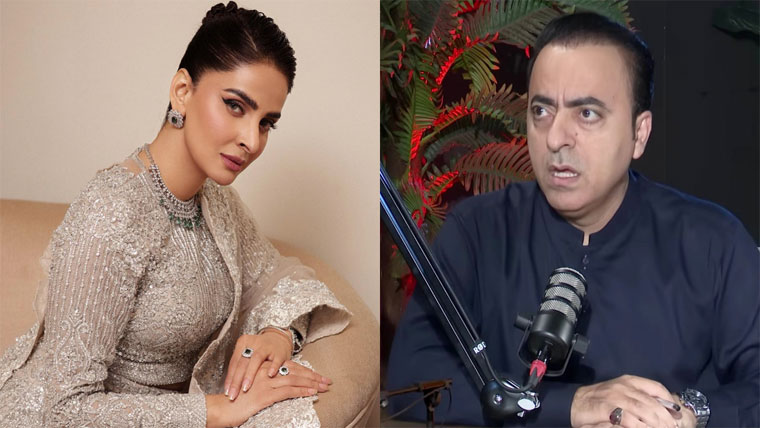
Lahore: (Tassawar News) The contemporary digital landscape frequently grapples with the proliferation of unverified claims, and a recent high-profile case involving renowned Pakistani actor Feroze Khan and his spouse, Dr. Zainab, serves as a pertinent illustration. Initial speculation regarding an alleged marital separation, which gained considerable traction across various social media platforms, has been categorically and unequivocally refuted by the couple. This development underscores the precarious nature of information dissemination in the age of instantaneous connectivity, particularly when dealing with the private lives of public figures.
The genesis of the rumours appears to have been fabricated digital evidence—specifically, screenshots purportedly showing a story posted by Dr. Zainab indicating she had initiated divorce proceedings. In a decisive move to quell the mounting speculation, Dr. Zainab utilized her official Instagram channel to issue a detailed clarification. Her statement meticulously dismantled the circulating narrative, asserting that the screenshots were “completely false and fabricated” by certain online entities intent on generating engagement at the expense of veracity.
“I wish to state, with absolute clarity, that I never posted any such story. The viral screenshot circulating across numerous entertainment pages is a meticulously edited and misleading piece of digital manipulation. It was never visible on my official account, nor was it viewed by my legitimate follower base,” she stated, providing an unambiguous denial that addressed the core of the misinformation.
This official repudiation serves as a critical counter-narrative, establishing the authentic record against a tide of digitally-induced falsehoods.
The Mechanism of Digital Fabrication and Virality
The incident offers an important perspective on the sophisticated yet often insidious methods employed to create and amplify digital misinformation. The rapid dissemination of an edited screenshot highlights a significant vulnerability within social media ecosystems: the ease with which visual ‘evidence’ can be manufactured and distributed without immediate content moderation or critical fact-checking. Such fabricated content often exploits the public’s inherent curiosity about celebrity life, thereby leveraging emotional appeal to achieve maximum virality.
Furthermore, Dr. Zainab’s appeal serves as a powerful reminder of the ethical responsibility incumbent upon social media users and, more pressingly, entertainment news pages. The pursuit of clicks and high engagement metrics frequently overrides the journalistic duty to confirm sources and verify information. These entertainment portals, by sharing the unauthenticated screenshot, acted as unwilling—or perhaps negligent—conduits for the lie, contributing directly to the rumour’s widespread acceptance. The phenomenon illustrates how even a single piece of spurious digital content can metastasise into a broadly accepted ‘fact’ within hours.
Societal Impact and Plea for Digital Responsibility
Beyond the immediate personal distress caused to the couple, the episode raises broader ethical concerns about the mental and psychological impact of unverified online content. Dr. Zainab explicitly highlighted this dimension, noting that such “false claims can cause unnecessary mental distress” and contribute to a generally misinformed public sphere. The constant need for public figures to defend their private lives against manufactured crises represents a significant form of digital harassment and emotional burden.
Her concluding remarks transition from a personal defence to a public service announcement, urging both fans and the wider digital community to exercise media literacy and critical thinking.
“I implore all our dedicated supporters and followers to exercise discernment and not to give credence to unauthentic online pages that thrive on generating sensationalised and inaccurate reports. We also respectfully request supporters to report pages actively spreading this fake news about our family, as collective action is necessary to curb this reckless spread of digital deception,” she concluded, advocating for a proactive community response to digital falsehoods.
This call to action underscores a developing consensus that combating misinformation requires not just official refutations but also active digital citizenship—a commitment from users to critically evaluate their sources and report malicious content.
Conclusion: A Mandate for Veracity in the Digital Age
The incident involving Feroze Khan and Dr. Zainab is symptomatic of a larger global challenge: the struggle for veracity in the digital age. It offers a succinct, real-world case study on the mechanics of celebrity rumour cycles, from digital fabrication and rapid virality to the ultimate need for official intervention to establish the truth. The couple’s firm denial and subsequent request for pages to be reported reinforces the necessity of stricter ethical boundaries for content creators and a greater degree of media literacy for the consuming audience. Until such standards are universally adopted, the private lives of public figures will remain susceptible to the whims of digital rumour-mongering and the damaging effects of unverified content.