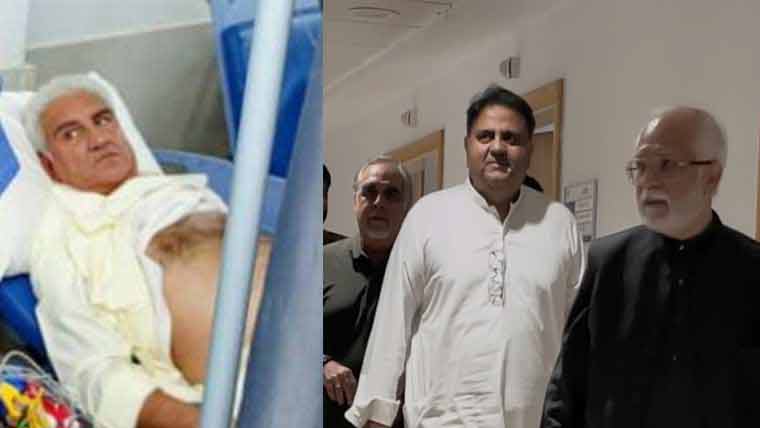
Lahore (Tassawar News) The recent developments in Lahore, revolving around a high-profile hospital meeting between senior Pakistan Tehreek-e-Insaf (PTI) figure Shah Mahmood Qureshi and a consortium of former party stalwarts, have shed considerable light on a strategic recalibration within the party’s political outlook. This internal alignment, as detailed by party sources, signifies a pivotal shift away from confrontation towards a concerted effort focused on dialogue and national reconciliation, primarily aimed at securing the release of the PTI founder, Imran Khan.
I. The Impetus for the “Release Imran Khan” Campaign
The central outcome of the hospital meeting, which occurred during Shah Mahmood Qureshi’s hospitalization for a gallbladder condition, was the consensus to launch a nationwide “Release Imran Khan” movement. This campaign is not merely a public mobilization effort but is underpinned by an intricate political strategy designed to engage all major stakeholders.
A distinctive feature of this emerging faction is its composition, including prominent political veterans who have previously held high office or key organizational roles. The movement is set to be spearheaded by influential figures such as Fawad Chaudhry, Imran Ismail, Ali Zaidi, Mahmood Molvi, and Sibtain Khan, among others. Their collective decision to take charge stems from a shared conviction, explicitly noted in the intelligence from party sources, that “the current party leadership is unable to secure Imran Khan’s release.” This statement represents a direct challenge to the incumbent PTI structure and suggests a potential rift or a move by senior leaders to assert a more pragmatic, results-oriented direction for the party.
The very act of consolidating a new front outside the established party hierarchy underscores the urgency felt by these leaders regarding the prolonged incarceration of the PTI founder. It reflects an acknowledgement that traditional street power alone has not yielded the desired political relief, necessitating a multi-pronged approach involving both public pressure and closed-door negotiations.
II. A Strategic Pivot Towards Dialogue and De-escalation
The most significant policy decisions emanating from this gathering indicate a clear intention to abandon the long-standing strategy of uncompromising resistance in favour of political engagement and de-escalation. The former PTI leadership has articulated a comprehensive plan to initiate contact across the political and institutional spectrum of the country.
1. Engagement with the Establishment and PML-N
Central to their new strategy is the commitment to “initiate contact with the establishment” and concurrently “hold meetings with senior PML-N leaders to reduce the country’s political tensions.”
The necessity of engaging with the establishment—often referred to as the ‘power brokers’ in Pakistani politics—reflects a pragmatic understanding of the political landscape, where enduring political solutions often require consensus from all state organs. Similarly, the decision to seek dialogue with the Pakistan Muslim League-Nawaz (PML-N), the key constituent of the federal government, signals a willingness to set aside political acrimony for the greater goal of lowering the prevailing political temperature.
This proposed shift from confrontation to conciliation is viewed by analysts as a crucial step towards creating a more conducive environment for negotiations surrounding the release of political detainees.
“The former leaders’ decision to approach both the establishment and the primary governing party, the PML-N, is a tacit admission that political gridlock cannot be broken without a commitment to broad-based reconciliation. This move effectively sidelines the rhetoric of resistance in favour of a more diplomatic strategy.”
2. Outreach to JUI-F and Government Officials
Furthermore, the new faction has decided to expand its outreach efforts significantly:
- Engagement with Government Ministers: A general decision was made to “engage with government ministers,” suggesting a readiness to use official channels to secure relief for imprisoned party workers and leaders.
- Meeting with Maulana Fazlur Rehman: A specific and high-level engagement was announced, with a three-member delegation led by Fawad Chaudhry set to meet Maulana Fazlur Rehman to discuss national reconciliation efforts. This meeting is particularly noteworthy, as Maulana Fazlur Rehman, the chief of Jamiat Ulema-e-Islam-Fazl (JUI-F), has historically been a fierce opponent of the PTI. The proposed meeting highlights the faction’s focus on building a wide political consensus for stability and reconciliation.
III. The Mediating Role of Senior Incarcerated Leaders
The meeting also involved discussions with other prominent incarcerated leaders, including former Senator Ejaz Chaudhry, ex-provincial minister Mian Mahmood-ur-Rasheed, and former Punjab Governor Omar Sarfraz Cheema. Their participation, even if only through the exchange of views during the hospital visit, lends credibility and weight to the decisions made by the group.
Shah Mahmood Qureshi’s Potential as a Mediator
A key element of the political solution being pursued is the role envisioned for Shah Mahmood Qureshi himself. Sources indicate that efforts are being made to secure his release and to persuade him to play a mediating role in dialogue efforts. Given his diplomatic experience as a former Foreign Minister and his senior position within the PTI, Qureshi possesses a unique profile that could be instrumental in bridging the trust deficit between the PTI and the establishment.
The public affirmation of mutual support for these initiatives was provided by Fawad Chaudhry, who stated that several “productive meetings” have been held, underscoring a commitment to initiatives aimed at securing the release of political detainees. This statement effectively validates the new faction’s agenda and its willingness to negotiate.
IV. Conclusion: Implications for Pakistan’s Political Future
The Lahore hospital meeting represents more than just an internal reshuffle; it marks the formal emergence of a powerful, pragmatic faction within the broader PTI movement. This group is prioritizing political dialogue and engagement over ideological confrontation, driven by the immediate goal of securing Imran Khan’s release.
This strategic pivot towards national reconciliation, demonstrated by the planned outreach to the PML-N, government ministers, and Maulana Fazlur Rehman, contrasts sharply with the inflexibility that has characterized much of the political discourse in Pakistan over the past few years. If successful, this new approach has the potential to:
- De-escalate political tensions by opening direct, high-level channels of communication.
- Facilitate a degree of political relief for Imran Khan and other imprisoned PTI workers.
- Redefine the political trajectory of the PTI itself, potentially making it a more centrist and compromising political force.
Ultimately, the success of this “Release Imran Khan” movement hinges not just on public mobilization, but on the ability of this emerging leadership to successfully navigate the complex, multi-layered negotiations with both the political government and the country’s powerful establishment. Their efforts, aiming to forge national unity through dialogue, will be a defining feature of Pakistan’s political landscape in the coming months.
Would you like a detailed analysis of the political background and previous attempts at dialogue that led to this current shift in strategy?