Lahore: (Tassawar News) The recent elections for the Punjab Bar Council (PBC) have resulted in a significant victory for the Independent Group led by Ahsan Bhoon, marking a crucial shift in the representation and governance of the legal community across the province. The Saturday poll, held for a five-year term, saw an intense contest that has yielded unofficial results strongly favouring the independent-minded lawyers over politically affiliated groups.
I. Electoral Outcome and Group Performance
The unofficial and unconfirmed results released following the election day indicate a decisive triumph for the Ahsan Bhoon-led Independent Group (often aligned with the Asma Jahangir legacy). This faction has secured a clear majority by winning 45 seats out of the 75 seats contested across the entire province. This performance confirms the group’s dominance in shaping the administrative and policy direction of the Punjab Bar Council for the upcoming term.
Conversely, the performance of the candidates backed by the Pakistan Tehreek-e-Insaf (PTI) was notably subdued. According to initial reports, PTI-supported lawyers managed to secure only 15 seats, with vote counting still underway for another 15 contested seats. This outcome highlights the challenges faced by PTI in galvanizing support within the specialized professional body, despite its widespread political influence elsewhere. The final, official results are anticipated to be formally announced on November 17, which will solidify the final composition of the Council.
The Federal Law Minister, Azam Nazeer Tarar, wasted no time in publicly acknowledging the clear trend, offering his congratulations to the victorious Independent Group.
“The decisive margin secured by the Independent Group signifies a renewed mandate for an autonomous bar that prioritises the professional interests and welfare of lawyers. The legal fraternity has clearly voted for experience and non-partisanship in the highest regulatory body for advocates in Punjab.”
II. Scale of the Electoral Exercise
The Punjab Bar Council elections represent one of the most substantial exercises of franchise within a professional body in the country.
A. A Province-Wide Contest
The elections were held across Punjab for 75 seats, featuring a robust democratic contest between the Ahsan Bhoon-led Independent Group and the Hamid Khan Professional Group. This intense rivalry is reflective of the ideological and organizational differences within the legal fraternity, particularly concerning the bar’s degree of independence from political influence.
- Voter Participation: Over 132,000 lawyers across the province were eligible to and did exercise their right to vote, demonstrating a high level of engagement in electing their professional representatives.
B. The Lahore Epicentre
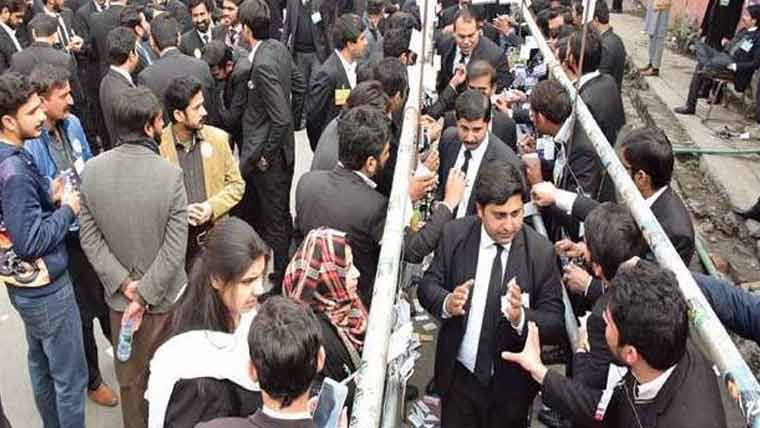
The provincial capital, Lahore, served as a crucial hub for the election. Out of the total seats, 16 were contested in Lahore, attracting a large number of candidates and voters:
- Candidacy: A total of 77 candidates vied for the 16 available seats in Lahore.
- Voter Turnout: More than 31,000 lawyers cast their votes within the city.
The list of participants included highly esteemed legal personalities who actively took part in the voting process, such as Chaudhry Aitzaz Ahsan, Ahsan Bhoon, Hamid Khan, Ashfaq Bhullar, and Sardar Latif Khosa, underscoring the prestige and significance of the PBC elections within Pakistan’s legal and political spheres.
III. Polling Administration and Security Measures
The administration of the election was marked by strict adherence to procedural fairness and stringent security protocols, ensuring a smooth and disciplined voting process:
- Polling Logistics: A total of 52 polling booths were established within the premises of the Lahore High Court.
- Supervision: The entire process was meticulously supervised by judicial officers who served as presiding officers, lending institutional credibility to the proceedings.
- Timeline: Polling commenced punctually at 8:30 AM and concluded at 5:30 PM, with a designated one-hour recess during the day.
Security and Discipline
To guarantee order and prevent undue influence, exceptionally strict security and disciplinary measures were enforced:
- Prohibited Activities: Campaigning, slogan-chanting, and gatherings were strictly prohibited inside the polling stations.
- Traffic Management: Key arteries around the High Court premises, including Fan Road, Turner Road, and Supreme Court Registry Road, were closed to general traffic to manage congestion and enhance security.
- Access Control: Entry to the polling stations was tightly controlled, permitted only upon the presentation of a valid ID card, with access restricted to the Mosque Gate, Mall Road Gate, and Turner Road Gate.
IV. Pre-Result Confidence and Subsequent Implications
Prior to the announcement of the preliminary results, the atmosphere was thick with competing claims of victory from the key contenders. Ahsan Bhoon, leveraging his group’s track record—including his own past electoral success as President of the Supreme Court Bar Association—confidently projected a win:
“Just as in the Supreme Court Bar elections, our group will also emerge victorious in the Punjab Bar Council elections. This mandate is a continuation of the bar’s desire for a truly independent and non-politicised council.”
Conversely, the Professional Group leaders, Hamid Khan and Asif Naswana (President of the Lahore High Court Bar), maintained their belief that their group was poised for victory. However, the initial unofficial results have clearly favoured the Independent Group.
Conclusion: Significance of the Result
The unofficial victory of the Ahsan Bhoon-led Independent Group in the Punjab Bar Council elections is a powerful indicator of the preference among a substantial segment of the legal community for a leadership that operates independently of major national political parties. The significant win, especially when contrasted with the relatively lower seat count for PTI-backed candidates, signals a desire within the bar for professional rather than purely political governance. The PBC plays a crucial role not only in regulating the conduct of advocates but also in matters concerning legal education and judicial appointments in Punjab, making this electoral outcome a defining moment for the future direction of the provincial judiciary and legal structure. The final, official confirmation on November 17 will formalize this new chapter of bar leadership.
Would you like an overview of the constitutional functions and powers of the Punjab Bar Council, given the significance of this election?