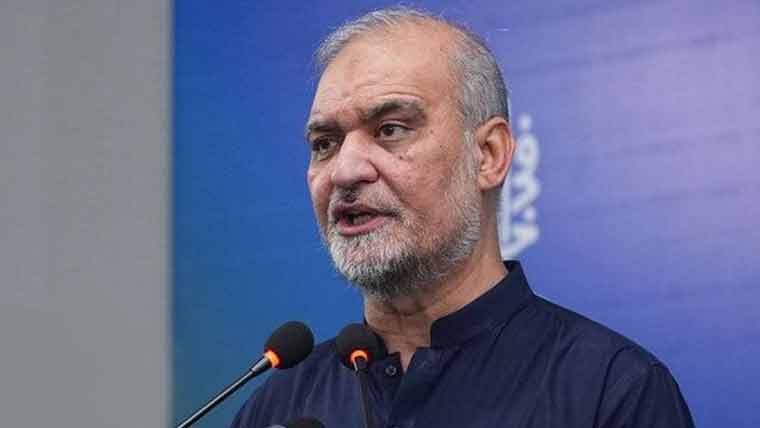
Karachi: (Tassawar News) During a recent public gathering in Karachi, Hafiz Naeem ur Rehman, the Chief of Jamaat-e-Islami (JI), delivered a scathing critique of the city’s prevailing governance structure while presenting his party as the sole viable alternative for urban rejuvenation. His address was characterised by a dual focus: condemning the current state of lawlessness and corruption and showcasing the institutional and ideological readiness of JI to assume civic control.
The Critique of Incumbency and Governance Failure
Hafiz Naeem ur Rehman’s central thesis rested upon a decisive assertion regarding the potential of his party to dramatically enhance the quality of life in Pakistan’s largest metropolis. He proclaimed that if Jamaat-e-Islami had been permitted to form the government in Karachi, “the city’s situation would have been very different today.” This statement not only served as an expression of political confidence but also as an implied indictment of the established political order.
The JI chief specifically targeted the ruling party in the province, the Pakistan Peoples Party (PPP), for its alleged incompetence and mismanagement of urban affairs. He argued that the PPP’s prolonged tenure had led to its rejection by the city’s inhabitants:
“The Pakistan Peoples Party (PPP) has become known as an ‘anti-Karachi party,’ and the people have rejected its governance in the city.”
He did not mince words in attributing the city’s pervasive issues—particularly “the ongoing lawlessness and corruption”— directly to the incumbent provincial government. He strongly maintained that the situation was a direct result of the governing party’s failure to prioritise the interests of the city’s populace. He unequivocally stated:
“If Jamaat-e-Islami had taken charge, we could have changed Karachi’s conditions. The need for continued struggle to improve the city’s situation is paramount.”
The Assertion of Mandate and Civic Responsibility
Expressing profound gratitude to the citizens for their demonstrated “trust and confidence in Jamaat-e-Islami,” Hafiz Naeem ur Rehman stressed that the political process in Karachi must transcend mere electoral participation. He called for an active commitment to democratic vigilance, urging the populace to protect their political rights and choices:
“The citizens of Karachi will not only cast their votes but also protect their mandate.”
This appeal for mandate protection underscores the political tensions surrounding the local government structure in the city, where the JI has historically engaged in significant political contestation and debate over electoral fairness and the transfer of power. His message was clearly designed to empower the voters and assure them of the party’s continued dedication to their electoral will.
The Economic Vision: The ‘Bano Qabil’ Initiative
Beyond critique, a significant portion of the address was devoted to outlining JI’s proactive, governance-in-waiting approach, highlighted by the ‘Bano Qabil’ program. This initiative is presented as a practical solution to Karachi’s widespread issue of youth unemployment and lack of technical skills.
The JI leader shared impressive statistics regarding the program’s reach, noting that “1.2 million people have been registered under the ‘Bano Qabil’ program, aimed at empowering Karachi’s youth with job opportunities.” This large-scale skill development effort aims to equip the city’s burgeoning young population with market-relevant technical competencies, thereby preparing them for the modern economy.
This initiative acts as a tangible example of the party’s alternative governance model, contrasting sharply with the Sindh government’s alleged mismanagement:
The JI chief accused the Sindh government of deliberately wanting “to maintain its corrupt system of mismanagement,” promising in contrast that his party “will introduce a new system that creates employment opportunities.”
Policy Reforms and Regulatory Overhaul
Finally, Hafiz Naeem ur Rehman addressed the immediate economic hardships facing the city’s residents due to what he termed punitive financial policies. He demanded a policy recalibration by the provincial authorities, specifically concerning regulatory charges and penalties:
- Reconsideration of Fines and Penalties: He urged the Sindh government to “reconsider the heavy fines and penalties imposed in Karachi.”
- Employment Opportunities: He linked the current regulatory environment directly to economic deprivation, stating that the city’s residents “are being deprived of fair employment opportunities.”
These demands place the JI firmly in the camp of advocating for economic relief and an end to what is perceived as exploitative taxation and regulation of the local populace.
Conclusion: The Promise of Change
Hafiz Naeem ur Rehman’s address was a comprehensive political performance, successfully merging sharp criticism of the existing governance with a compelling articulation of Jamaat-e-Islami’s alternative, reform-driven agenda. The speech painted the Pakistan Peoples Party as an entity actively detrimental to Karachi’s progress, while positioning JI as the party of change, demonstrated by both its principled electoral resistance and its practical, large-scale initiatives like ‘Bano Qabil’. The ultimate promise delivered to the public was the replacement of the existing “corrupt system of mismanagement” with a new framework that guarantees civic improvements, fair governance, and, critically, abundant employment opportunities for the youth.
Would you like to know more about the practical details and scope of the ‘Bano Qabil’ program or the history of the political rivalry between JI and PPP in Karachi?