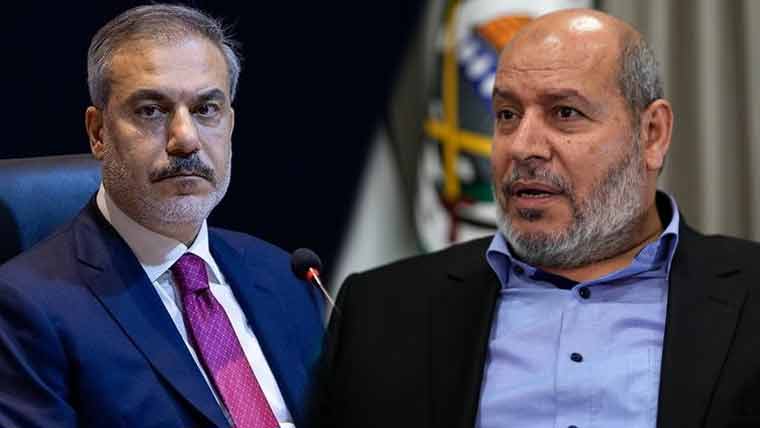
Istanbul: (Tassawar News) The recent high-level diplomatic engagement in Istanbul, featuring a crucial meeting between Khalil al-Hayya, a senior leader of the Hamas delegation, and the Turkish Foreign Minister, Hakan Fidan, represents a pivotal moment in the ongoing, fraught international efforts to broker a sustainable peace and facilitate effective humanitarian relief in the Gaza Strip. This rendezvous, while ostensibly focused on procedural matters, powerfully underscores Turkey’s strategic and persistent role as a principal mediator in the intensely complex regional dynamics of the Middle East. The discussions were not merely a preliminary exchange; they constituted a deep dive into the most pressing regional developments and were directly preparatory to the imminent Foreign Ministers’ Summit dedicated to the Gaza peace agreement, scheduled to convene in Istanbul on Monday.
The Strategic Agenda: Humanitarian Aid and Regional Geopolitics
The core of the deliberations between al-Hayya and Fidan centred on two immediate, critical concerns: the next phase of humanitarian aid delivery into Gaza and the necessary preparations for the upcoming foreign ministers’ conference. The logistics and security surrounding the mass delivery of humanitarian assistance—food, medicine, and fuel—into the besieged enclave remain fraught with political and operational hurdles. Turkey, possessing significant logistical capabilities and a history of aid delivery in the region, is clearly positioning itself to play a leading role in overcoming these obstacles.
The discussion likely encompassed detailed planning for aid corridors, coordination with international bodies like the United Nations, and establishing protocols that can withstand the volatility on the ground. This meticulous focus on implementation highlights the gravity of the humanitarian catastrophe:
“The immediate challenge, as articulated by diplomatic observers, transcends mere political rhetoric; it is a profound logistical and ethical undertaking to secure unhindered access for millions of desperately needy civilians. The bilateral talks in Istanbul were critical in aligning operational strategies to ensure that the ‘next phase’ of aid delivery can be executed with maximum efficacy and security, thus mitigating the worst effects of the ongoing crisis.”
Furthermore, the preparations for the ministers’ conference signal an attempt to elevate the peace discussions from tactical ceasefires to a more enduring political framework. Minister Fidan’s involvement suggests Turkey is leveraging its considerable diplomatic capital and its unique relationships with diverse regional actors to forge a consensus on the future political architecture of Gaza. This is a testament to Ankara’s enduring commitment to its foreign policy of active, non-aligned engagement in critical regional conflicts.
The Hostage Dilemma: A Contentious and Sensitive Backdrop
The broader regional context surrounding this diplomatic initiative is inescapably shaped by the contentious issue of the Israeli hostages. Concurrently with the reports of the high-level meeting, media outlets conveyed claims from Israel regarding the status of its citizens held in Gaza. Specifically, it has been asserted that the remains of eleven Israeli hostages are yet to be recovered from the territory. This profoundly sensitive and emotionally charged issue casts a long shadow over any discussions of peace or aid delivery.
The matter of the unrecovered bodies is not merely a humanitarian concern for Israel; it is a potent political and psychological factor that fundamentally influences its negotiating posture and public support for any potential peace deal. While the Istanbul meeting was focused on future aid and peace talks, the presence of this unresolved issue underscores the immense complexity facing mediators:
“The humanitarian dimension of the conflict is acutely felt on all sides. Reports confirming that the bodies of eleven Israeli hostages are still to be recovered from Gaza introduce a layer of intense emotional and political complexity to the peace negotiations. Any comprehensive agreement must, therefore, grapple with these profoundly painful residuals of the conflict, demanding a level of delicate diplomacy and mutual trust that is currently in extremely short supply.”
The success of any broader peace agreement is, in part, predicated on a satisfactory resolution to all hostage-related issues, including the recovery of remains. This reality ensures that even discussions ostensibly focused on humanitarian logistics cannot entirely detach themselves from the volatile exchanges surrounding the captives.
Turkey’s Diplomatic Imperative and Future Prospects
The confluence of these events—the bilateral high-level meeting, the preparation for the ministers’ summit, and the sombre reports regarding the hostages—reaffirms Turkey’s continued diplomatic engagement as a critical stabilizing force. Turkey’s efforts are geared toward two symbiotic outcomes: the facilitation of peace through sustained dialogue and the coordination of humanitarian relief. Its ability to host a Hamas leader while maintaining channels with other key international and regional players is indicative of a sophisticated and indispensable mediating role.
The upcoming Foreign Ministers’ Summit in Istanbul is, therefore, expected to be a crucible for regional policy, aiming to solidify a collective diplomatic approach that pressures for a lasting cessation of hostilities and establishes a functioning mechanism for reconstruction. The success of this summit, heavily influenced by the preliminary work conducted by Minister Fidan, will serve as a crucial barometer for the international community’s capacity to transition from managing a crisis to building a sustainable peace.
Conclusion
The meeting between Hamas leader Khalil al-Hayya and Turkish Foreign Minister Hakan Fidan in Istanbul represents far more than a routine diplomatic exchange; it is a crucial component of a broader, concerted international attempt to navigate the unprecedented humanitarian and political complexities of the Gaza conflict. The agenda, which meticulously addressed the forthcoming phases of aid delivery and the crucial preparations for the regional foreign ministers’ conference, underscores the practical and strategic imperatives driving Turkey’s diplomacy. However, the shadow of the unrecovered Israeli hostages serves as a poignant reminder of the profound human cost that continues to impede progress toward a comprehensive solution. Ultimately, Turkey’s sustained and active involvement is indispensable to generating the requisite consensus for both a viable peace agreement and the successful, large-scale coordination of humanitarian support, thus offering a fragile yet vital pathway out of the current impasse.