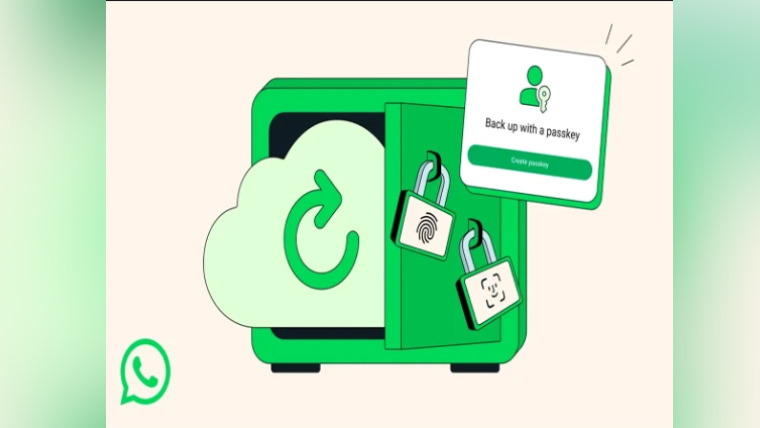
California: (Web Desk) The global leader in instant messaging, WhatsApp, has recently announced a significant enhancement to its security architecture: the implementation of passkey authentication for accessing encrypted chat backups. This cutting-edge feature represents a crucial evolution in digital security, moving beyond traditional, vulnerable passwords and cumbersome encryption keys to embrace modern, highly secure authentication methods. The integration of passkeys aims to streamline the data recovery process while simultaneously elevating the level of protection afforded to users’ sensitive communication histories.
The Mechanics of Passkey Integration
According to WABetaInfo, a reputable source tracking WhatsApp developments, the introduction of passkeys provides users with a superior mechanism for restoring their chat history even in the event of device loss or damage. This new methodology leverages built-in device authentication protocols, granting access to a user’s cloud backup via established and secure biometric or device-level verification.
The passkey system effectively eliminates the reliance on manually managed credentials, which are often prone to human error or cyber-attacks. Instead, users can now securely authenticate their identity using one of three primary device-based methods:
- Fingerprint Recognition (Biometric): Utilizing the device’s integrated biometric scanner.
- Facial Recognition (Biometric): Employing the device’s front-facing camera for facial mapping authentication.
- Device Screen Lock Code: Utilizing the PIN, pattern, or alphanumeric password already established for the device’s lock screen.
This development ensures that the user’s data remains both accessible and highly secure, as the passkey is fundamentally tied to the device’s hardware and operating system’s cryptographic capabilities. It shifts the burden of security from the user’s memory to the device’s advanced authentication system.
“This feature means that if a user’s device is lost, they can still access their WhatsApp backup using fingerprint, facial recognition, or their device’s screen lock code,” WABetaInfo affirmed, underscoring the improved accessibility and disaster recovery capability offered by the new system.
Evolution of Backup Security: From Unprotected to Passkey-Secured
The introduction of passkeys builds upon WhatsApp’s existing, sophisticated security measures. Historically, WhatsApp chat backups were stored without the benefit of end-to-end encryption (E2EE) on cloud services such as Google Drive or iCloud. While convenient for data recovery, this lack of encryption posed a potential vulnerability, as the security of the backup relied heavily on the security of the respective cloud provider.
Recognizing the need for comprehensive protection, Meta—WhatsApp’s parent company—addressed this gap in 2021 by introducing end-to-end encrypted backups. This landmark feature allowed users to secure their backup data using one of two manual methods:
- A User-Defined Password: A conventional password chosen by the user.
- A 64-Character Encryption Key: A lengthy, complex, and highly secure cryptographic key requiring careful manual management.
While these 2021 E2EE backups represented a major security milestone, the new passkey system refines the user experience by mitigating the inherent challenges associated with manual key or password management. Remembering a complex password or safely storing a 64-character key is often cumbersome and can lead to data loss if forgotten or misplaced. The passkey system simplifies this process significantly.
The core objective of this innovation is clear: “The new passkey system eliminates the need for remembering passwords or managing encryption keys manually. Instead, users can securely restore their data using biometric or device-level authentication,” confirming the shift towards a seamless, user-friendly security paradigm.
Global Implementation and Forward-Looking Security
The deployment of this advanced security feature is not confined to a single region or platform. WhatsApp has confirmed that the passkey authentication for encrypted chat backups will be rolled out globally in the coming weeks and months. This phased global implementation ensures that the vast user base, currently exceeding two billion individuals worldwide, will soon benefit from this enhanced protection, irrespective of their geographical location or operating system.
Users have been strongly advised to stay updated on the availability of the feature on their specific devices, highlighting the iterative nature of software deployment. The move to passkeys aligns WhatsApp with a broader industry trend towards modern authentication standards, collectively known as FIDO (Fast IDentity Online), which seek to displace passwords entirely due to their inherent security risks and usability issues. By integrating passkeys, WhatsApp is adopting a system that is cryptographically resistant to phishing and credential stuffing attacks, thus future-proofing the security of its chat backups. This decisive step solidifies WhatsApp’s commitment to providing not only private, end-to-end encrypted communication but also a robust and accessible method for data recovery and preservation.
conclusion
WhatsApp’s integration of passkey authentication for encrypted chat backups represents a critical juncture in the evolution of consumer messaging security. By replacing the vulnerability and complexity of manual passwords and keys with the streamlined, highly secure methods of biometric and device-level verification, WhatsApp has significantly enhanced both the security and usability of its data recovery process. This global rollout over the coming months reinforces the platform’s dedication to robust, next-generation security standards, ensuring that users’ sensitive communication data is protected via an authentication method that is inherently resistant to common cyber threats.