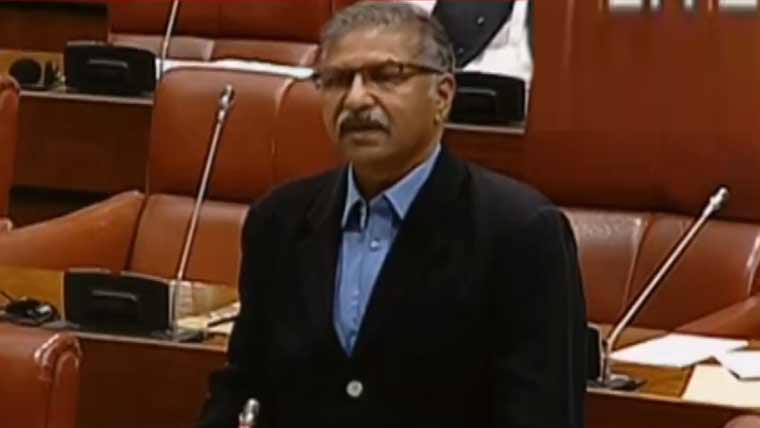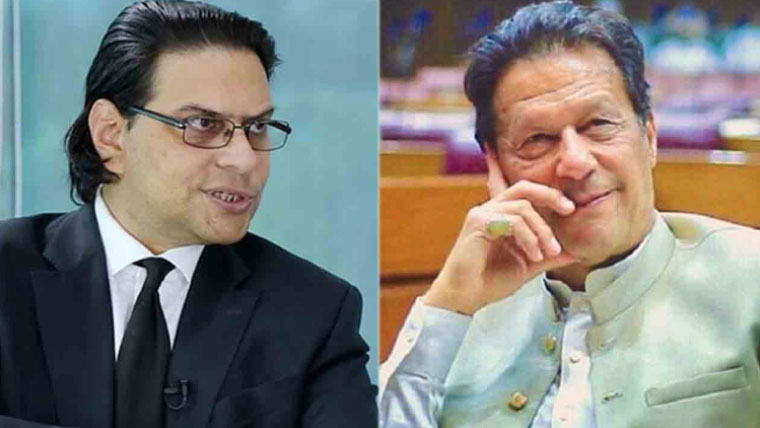
Islamabad: (Tassawar News) The Islamabad High Court (IHC) recently intervened decisively to address persistent issues concerning legal access for the founder of Pakistan Tehreek-e-Insaf (PTI), Imran Khan, currently incarcerated. In a significant directive issued by Justice Arbab Muhammad Tahir on Monday, jail authorities were instructed to immediately arrange a meeting between the former Prime Minister and his senior counsel, Advocate Salman Akram Raja. This order, delivered during the hearing of a petition seeking to block Khan’s official “X” (formerly Twitter) account, underscored the court’s concern over the repeated obstruction of attorney-client consultation rights, a foundational pillar of legal justice. This essay will analyze the procedural and ethical dimensions of the court’s intervention, the arguments presented regarding the necessity of immediate access, and the broader implications of judicial directives being disregarded by executive authorities.
The Imperative of Unfettered Legal Consultation
During the proceedings, Advocate Salman Akram Raja appeared on behalf of his client, accompanied by Khan’s sister, Aleema Khan. The core of Raja’s contention was the absolute impossibility of adequately representing the PTI founder without direct and private consultation. He explicitly stated that he was unable to formulate a response to the court in the matter of the “X” account petition without “sit[ting] with the PTI founder and discuss[ing] the matter.”
Justice Tahir inquired whether Raja possessed the independent authorization to proceed without his client’s direct input, but the senior lawyer firmly reiterated the necessity of personal consultation to ensure proper legal representation. This emphasizes a crucial ethical and procedural tenet: a lawyer’s duty to his client is contingent upon full, informed, and confidential communication, especially in high-stakes legal and political cases.
The gravity of the situation was compounded by Raja’s revelation that the impediments to access were not new. He pointed out that a full bench of the IHC had previously issued an order allowing meetings with the PTI founder, yet this directive had not been implemented by the relevant authorities.
“Even with the full bench’s order, our meeting has not been arranged.”
This specific complaint moved the focus of the hearing from the technicalities of the “X” account petition to the more fundamental issue of contempt for judicial authority and the violation of the rights of the accused.
Judicial Scrutiny of Administrative Delays
Justice Arbab Muhammad Tahir expressed palpable concern and frustration over the jail authorities’ consistent failure to facilitate the lawyer-client meetings. While the Judge questioned whether the counsel’s office had properly applied for a written copy of the previous full bench order—remarking, “If you did not receive a copy, perhaps your office did not apply for it properly”—the overarching judicial displeasure at the recurrent delays remained evident.
Raja confirmed that his team had, in fact, applied for the document but had not received it, prompting him to file a fresh application. He then forcefully urged the court to issue explicit, written orders to ensure the meeting would proceed “immediately” and prevent any further administrative stonewalling.
The dialogue between the bench and the bar illuminated a troubling pattern of executive non-compliance with judicial mandates. Raja articulated his deep-seated frustration that court orders had been “repeatedly ignored over the past seven to eight months,” constituting a clear and sustained violation of judicial directives. The legal system depends on the principle that the executive branch respects and executes the judgments of the judiciary; any deviation threatens the constitutional separation of powers.
The Final, Unequivocal Directive
After hearing the detailed arguments and acknowledging the history of non-compliance, Justice Arbab Muhammad Tahir settled the matter with a clear and immediate instruction. He ordered the jail authorities to ensure Salman Akram Raja meets Imran Khan on the same day (Monday) without fail.
To bypass further bureaucratic inertia, the Judge took the unusual step of ordering the Deputy Attorney General and the State Counsel to communicate the directive to the relevant prison officials via phone, thereby guaranteeing instantaneous official notification and pre-empting any claims of delayed paperwork. Although the Judge initially observed that the meeting should take place “Whether today or the coming Tuesday,” upon Raja’s insistence for an immediate resolution, the final order was made explicit for “today (Monday) without fail.”
“The court ultimately granted permission for Salman Akram Raja to meet with Imran Khan, allowing him time to consult his client before the next hearing.”
Advocate Raja’s remark—that although previous court orders had not been implemented, he would “keep trying until the door opens”—captured the weariness and determination of counsel fighting for fundamental rights against administrative resistance. The court’s definitive action here serves as a powerful affirmation of the inviolable right to legal counsel and an attempt to reassert the authority of the judiciary against administrative overreach. The case was subsequently adjourned until the PTI founder and his counsel have had sufficient time to confer and prepare their arguments.
Conclusion
The Islamabad High Court’s order to immediately facilitate a meeting between Advocate Salman Akram Raja and Imran Khan is a crucial victory for the principles of due process and attorney-client privilege within Pakistan’s legal framework. The recurring pattern of administrative delays in granting legal access, as highlighted during the hearing, poses a significant challenge to the rule of law. Justice Tahir’s decisive intervention, including the instruction for immediate telephonic communication of the order, reflects the judiciary’s commitment to safeguarding the constitutional rights of all citizens, regardless of their political standing. This ruling underscores the judiciary’s vital role in ensuring that the executive branch adheres to judicial mandates and preserves the integrity of the legal defence process.
Would you like me to provide a summary of the legal arguments typically used in cases attempting to restrict social media accounts like the one referenced here?