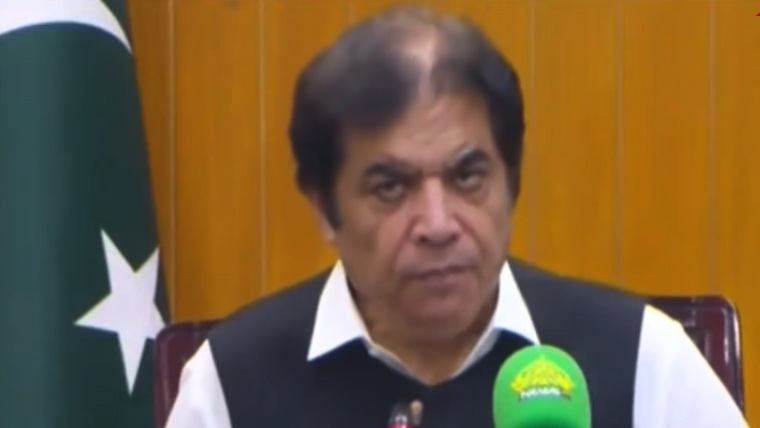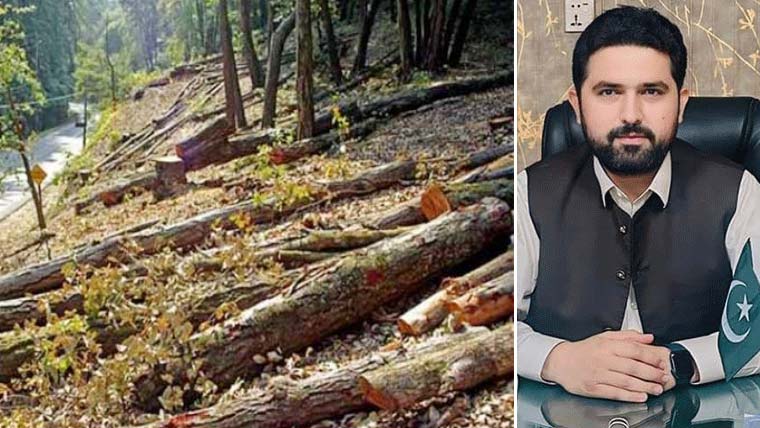
Peshawar: (Tassawar News) Chief Minister Muhammad Sohaib Afridi of Khyber Pakhtunkhwa (KP) has inaugurated a new, stringent era of environmental governance by announcing a zero-tolerance policy against illegal tree cutting and directing immediate, resolute action against the entrenched timber mafia. This decisive mandate emerged from a high-level meeting focused on environmental protection, forestry, and wildlife, signaling a firm governmental commitment to safeguarding the province’s crucial natural assets. The Chief Minister’s declaration elevates the protection of forests and wildlife from a mere departmental task to a core issue of national security and public trust. This essay will critically examine the scope of Afridi’s directive, the rationale behind the proposed legal reforms, and the potential impact of this crackdown on KP’s ecological and economic future, particularly in the context of climate resilience.
Forests as a Sacred National Trust
CM Afridi’s rhetoric clearly defined the moral and legal standing of the province’s forest wealth. He passionately declared that forests are a “national trust” and emphatically stated that their exploitation would not be condoned under any pretext. This statement aims to shift the public perception of forestry from a renewable resource to a sacred, non-negotiable asset.
“Forests are a national trust and that their exploitation would not be tolerated under any circumstances. Anyone involved in the illegal cutting of trees will face criminal charges.”
The Chief Minister’s strong warning—that individuals engaging in illegal logging will face criminal charges—underscores the government’s intent to move beyond administrative penalties toward punitive justice. He framed the actions of the timber mafia as an act of “betraying national interests,” thereby justifying the deployment of the state’s full legal and administrative machinery against the offenders. Directives were issued to the Departments of Climate Change, Forests, and Wildlife to initiate immediate legal action and to actively coordinate with law enforcement agencies to ensure the identification and prosecution of all individuals and organised groups involved in the illegal logging trade. This collaborative approach is vital, as the timber mafia often operates with sophisticated networks that transcend departmental jurisdictions.
Extending Protection to Vulnerable Wildlife
The directive was not limited to forest conservation; it extended its scope to include a comprehensive crackdown on illegal hunting and the wildlife trade across Khyber Pakhtunkhwa. This dual-focus approach recognizes the interconnectedness of forest and fauna ecosystems. The Chief Minister stressed that every individual involved in the capture, trade, or killing of endangered species must be apprehended and prosecuted “without delay.”
This policy aligns KP’s environmental obligations with global conservation standards. CM Afridi emphasized that “wildlife preservation is not just an environmental obligation but a moral responsibility toward future generations.” By raising the stakes from a regulatory matter to a moral imperative, the Chief Minister aims to foster a stronger societal stewardship ethic towards the province’s rich biodiversity. The protection of iconic and endangered species, many of which are endemic to the northern regions of Pakistan, is essential for maintaining ecological balance and strengthening the province’s potential for eco-tourism.
The Necessity of Legal and Administrative Overhaul
Perhaps the most significant long-term policy announcement was the intention to introduce strong legal reforms designed to permanently fortify the defense of forests and wildlife. CM Afridi candidly acknowledged that loopholes in current laws have permitted powerful timber networks to “exploit national resources with impunity.”
The proposed legislative amendments are set to include a range of measures:
- Harsher Penalties: To ensure that the financial gains from illegal logging are outweighed by the potential legal costs and prison sentences.
- Stricter Monitoring Mechanisms: Likely involving the use of technology, such as satellite imagery and drone surveillance, to detect and prevent unauthorized logging in remote areas.
- Enhanced Accountability: Focusing on eliminating corruption and negligence within the forest management institutions themselves.
“Such exploitation of our forests and wildlife is unacceptable and will be stopped through decisive legal and administrative action.”
The directive for relevant departments to “identify weaknesses in existing legislation” and submit new policy recommendations signals a comprehensive overhaul of environmental governance. This proactive legislative approach is crucial for creating a sustainable deterrent that can withstand legal challenges and political shifts, moving beyond temporary crackdowns to institutionalizing environmental protection.
Conclusion: A Step Towards Sustainable Environmental Governance
Chief Minister Afridi’s firm declaration marks a crucial and necessary step toward restoring ecological balance and addressing the escalating challenge of environmental degradation in Khyber Pakhtunkhwa. By declaring illegal logging a criminal activity and coupling this with a commitment to legal and administrative reforms, the KP government is attempting to align its environmental policies with global sustainability goals, particularly those concerning climate resilience and biodiversity conservation. Environmental experts have rightly praised this firm stance, recognizing that effective implementation of these reforms could significantly help Pakistan reduce its national deforestation rates, strengthen its climate adaptation efforts, and unlock the vast potential of its northern regions for sustainable eco-tourism. The success of this policy will hinge entirely on the sustained political will to overcome bureaucratic inertia and the powerful resistance of the timber mafia, turning this announced zero-tolerance policy into a tangible reality on the ground.
Would you like me to find out more about the environmental policy recommendations for Khyber Pakhtunkhwa, specifically regarding climate resilience?