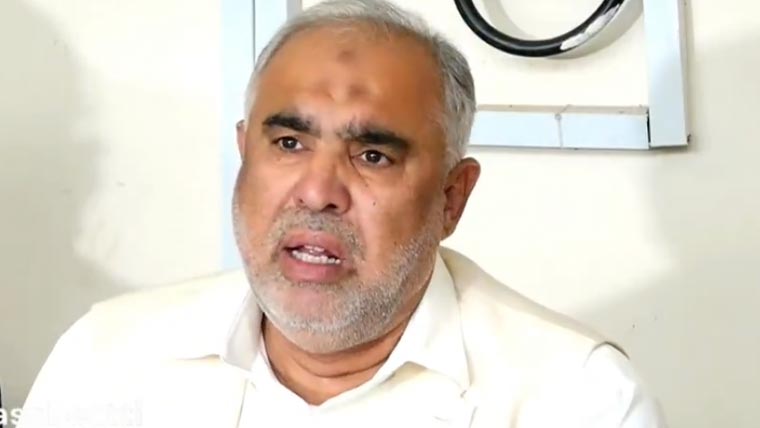
Former Speaker of the National Assembly and prominent leader of the Pakistan Tehreek-e-Insaf (PTI), Asad Qaiser, has escalated the political discourse concerning the proposed 27th Constitutional Amendment, positing that the entire legislative process is a calculated “political drama” designed to “mislead the public.” Speaking at a joint press conference with leaders of the Tehreek Tahafuz-e-Aeen Pakistan (Movement for the Protection of the Constitution), Qaiser offered a scathing critique of the ruling coalition’s approach, asserting that the substantive details of the amendment have already been predetermined and settled away from public scrutiny.
Accusations of Collusion and Pre-emptive Finalisation
Qaiser’s central allegation is that the process surrounding the constitutional changes is disingenuous, lacking the transparency expected in a democratic legislative environment. The opposition convened an emergency meeting to address what Qaiser dramatically termed the “opening of Pandora’s box”—a clear allusion to the unpredictable and potentially damaging consequences of the proposed constitutional alterations. This metaphorical framing underscores the gravity with which the opposition views the potential ramifications of the amendment on the nation’s institutional balance of power.
The most forceful condemnation was reserved for the Pakistan Peoples Party (PPP), whom Qaiser accused of active complicity in what he views as a staged political event. The PTI stalwart expressed profound “disappointment” and concern over a recent public communication by PPP Chairman Bilawal Bhutto-Zardari, suggesting that the party’s public reservations are merely a façade.
“The decision regarding the 27th Amendment has already been made. What’s happening now is merely for public display,” Qaiser stated emphatically, directly challenging the integrity of the ongoing legislative consultation process. He further contended that the ruling coalition is engaged in a “topi drama”—a local idiom for a theatrical or deceptive show—to manufacture a spurious impression of democratic deliberation and consensus-building. This allegation suggests a deep-seated distrust in the genuine commitment of the current political establishment to constitutional supremacy and institutional fidelity.
A Lament for Democracy: The Erosion of Foundational Values
The PTI leader drew a stark and poignant contrast between the historical legacy of the PPP and its contemporary actions, framing the current leadership as betraying the party’s founding principles. Qaiser evoked the constitutional and democratic credentials of the party’s predecessors to lend weight to his criticism of the present-day political maneuvering.
“There once was a PPP led by Zulfikar Ali Bhutto that laid the foundation of the Constitution. Then came Benazir Bhutto, who sacrificed her life for democracy. But the present-day PPP is working to bury that same democracy,” Qaiser lamented, invoking a powerful historical narrative to decry the perceived erosion of democratic commitment within the party.
Furthermore, Qaiser extended his censure to the leadership of the Pakistan Muslim League-Nawaz (PML-N), specifically targeting Nawaz Sharif and his previous commitment to democratic accountability. Qaiser directly referenced the widely propagated slogan, “Vote Ko Izzat Do” (Respect the Vote), questioning the moral consistency of the PML-N leadership in the current political climate.
“Where has that slogan gone now? Those who claimed to defend the people’s mandate are now silent,” he posed rhetorically, thereby linking the opposition’s perceived silence or compliance on the 27th Amendment to a fundamental contradiction in their proclaimed political ideology.
Unwavering Commitment to Constitutional Supremacy
Despite the allegations of political manipulation, Asad Qaiser unequivocally reaffirmed the PTI’s unwavering commitment to the preservation of democratic values and the supremacy of the Constitution of Pakistan. This commitment is framed as a foundational principle of the party’s resistance to the current legislative push.
In a display of internal party cohesion and strategic alignment, Qaiser confirmed that the party has already conveyed its detailed recommendations and principled stance to the founder of PTI. This move suggests a unified and coordinated opposition strategy to challenge the amendment both inside and outside the parliamentary domain.
Qaiser articulated a firm resolve to maintain a visible and sustained protest, stating: “We are determined to take our message to the people and record strong protest in Parliament as well.” This dual strategy—combining a public outreach campaign with formal parliamentary resistance—indicates a comprehensive effort to mobilize both public opinion and institutional mechanisms against the proposed changes.
In his concluding remarks, Qaiser issued a stern warning to all political stakeholders, urging them to prioritize the “national interest over power politics.” He cautioned that any perception of constitutional manipulation could have severe, long-term consequences, ultimately serving to “erode public trust in democratic institutions.” This serves as a final, overarching plea for political leaders to act with integrity and foresight.
Political Context and Conclusion
The pervasive controversy surrounding the 27th Constitutional Amendment vividly illuminates the profound and entrenched political divisions that characterise Pakistan’s political landscape. While proponents of the amendment argue for its necessity in promoting governance stability, critics, particularly the PTI and its allies, maintain that the proposed changes risk fundamentally altering the balance of power between key state institutions in an undemocratic manner.
Asad Qaiser’s forceful assertions serve as a crucial touchstone for the opposition’s narrative, framing their resistance as a principled stand against opaqueness and an alleged betrayal of democratic ideals. His rhetoric highlights the urgency for transparency in legislative reforms and underscores the significant trust deficit that currently plagues political dealings in the country. The escalating exchange of accusations among major political actors suggests that the unfolding process will be a crucial determinant of the nation’s political trajectory, potentially either strengthening democracy through rigorous debate or further deepening the existing political crisis through continued institutional mistrust. The coming period will thus test the resilience of Pakistan’s constitutional order and the genuine commitment of its political class to genuine democratic consultation.
Would you like me to elaborate on the historical context of the 27th Constitutional Amendment or provide a neutral overview of arguments both for and against such constitutional changes in Pakistan?