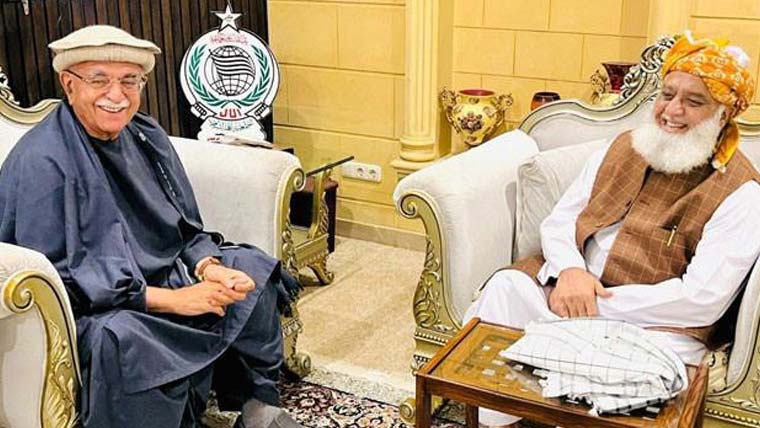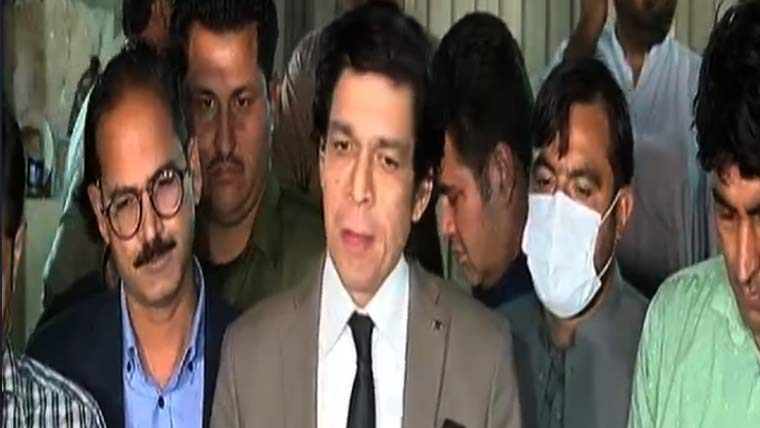
Islamabad: (Tassawar News) A significant political development in Islamabad saw Senator Faisal Vawda, a senior figure in the national political arena, engage in high-level consultations with the head of the Jamiat Ulema-e-Islami (JUI), Maulana Fazl-ur-Rehman. The meeting, which focused on the impending 27th Constitutional Amendment and broader national political affairs, was followed by a press briefing where Vawda articulated a highly optimistic forecast regarding the amendment’s passage and laid out a strategic roadmap for political reconciliation and enhanced national security. Vawda’s remarks are critical, as they underscore a concerted political effort to secure parliamentary consensus while simultaneously mitigating potential anxieties concerning core constitutional principles.
Political Prognosis and the Quest for Unanimity
Senator Vawda commenced his post-meeting briefing by emphasising the formidable and influential stature of his interlocutor in the national political domain. He stressed that “Maulana Fazl-ur-Rehman has an important role in national politics,” signalling the perceived necessity of securing the JUI chief’s assent—or at least his non-opposition—for smooth legislative progression. Crucially, Vawda conveyed an air of confidence, predicting that the 27th Constitutional Amendment is likely to be “approved without major obstacles.” This upbeat assessment suggests a strong belief within certain political circles that the requisite parliamentary numbers and political momentum are aligned for the amendment’s successful enactment.
However, this optimism was strategically tempered by a strong appeal for inclusive politics. Vawda explicitly urged the political establishment to bring key opposition actors, notably the Pakistan Tehreek-e-Insaf (PTI), into the consultative fold. This plea for dialogue—“PTI should be taken into confidence”—reflects an understanding that constitutional changes, to be enduring, require legitimacy derived from the broadest possible political representation. Excluding a major parliamentary force risks delegitimising the resulting legislative framework and exacerbating the existing political polarisation.
“The political imperative to secure consensus for any constitutional reform necessitates dialogue with all significant parliamentary forces. Vawda’s call to take the PTI into confidence is a recognition that sustainable legislative change must transcend partisan divides.”
A Strong Defence of Foundational Constitutional Principles
Perhaps the most significant aspect of Vawda’s briefing was his unequivocal reassurance regarding the fate of the 18th Amendment. This constitutional landmark, passed in 2010, fundamentally altered the federal-provincial power dynamic by granting significant autonomy to Pakistan’s provinces. Recognising the sensitivity surrounding any potential dilution of this autonomy, Vawda made an assertive and direct commitment: “The 18th Amendment is not being abolished.”
This statement serves a dual purpose. Firstly, it attempts to assuage the deep-seated concerns of smaller provinces and regional parties—like the MQM-P (as seen in prior discussions) and others who jealously guard provincial autonomy—that the 27th Amendment is not a surreptitious attempt to recentralise power. Secondly, it strategically isolates the focus of the current reforms to specific areas—likely governance, institutional coordination, or defence—rather than undermining established federal-provincial arrangements. Vawda confirmed that while constitutional change is under discussion, it does not mean undoing hard-won federal-provincial arrangements, though he noted that Maulana Fazl-ur-Rehman retains the right to make his own determinations regarding support or reservations.
The Scourge of Obstructionist Politics and the Path to Unity
Vawda did not shy away from criticising what he termed negative, obstructionist tactics within the political landscape. He employed powerful, figurative language to draw a stark contrast between constructive participation and confrontational politics. He suggested that those who opt for disruptive rhetoric and personal attacks—as opposed to collaboration—must accept the consequential fallout. He warned that such behaviour would not contribute to the national interest.
His welcoming of Sohail Afridi’s appointment as Chief Minister of Khyber Pakhtunkhwa served as an implicit call for inclusive politics and stability, particularly in the strategically vital and often politically volatile province of KP. The underlying message is a pragmatic one: stability and legislative progress require politicians to sublimate personal grievances and confrontational strategies to the greater need for national coherence.
“Personal attacks and disruptive rhetoric would not help the national interest. Vawda’s condemnation of obstructionist tactics underscores a governmental desire to shift the political narrative away from personality clashes and toward tangible legislative and governance achievements.”
Integrating Constitutional Reform with National Security
Moving beyond domestic political strategy, Senator Vawda addressed the critical domain of defence and national security. He framed the strengthening of the armed forces’ morale and capabilities as an urgent national priority. He explicitly stated that any necessary constitutional or legislative changes required to strengthen defence will be considered. His rallying cry—**”We must energize our armed forces. Amendments required to strengthen defence should be carried out”—**underscores a belief that institutional resilience and defence preparedness may necessitate amendments, affirming that there should be “no ambiguity on national security matters.”
Furthermore, Vawda provided a modern, nuanced understanding of conflict, noting that contemporary warfare has expanded far beyond traditional military arenas. He wisely observed: “War is not only fought on land, sea, and air; cyber warfare, narrative battle and economic struggle are real theatres of conflict.” This recognition of hybrid warfare necessitates a multi-faceted and resilient institutional response. Therefore, strengthening the military while improving the overall institutional capacity to resist non-conventional threats is deemed vital to national defence. This dimension of his comments introduces a potentially vast area for constitutional consideration within the 27th Amendment, extending its scope beyond mere governance reforms to issues of national security infrastructure.
Conclusion: A Strategic Push for Legislative Breakthrough
Senator Faisal Vawda’s briefing following his strategic consultation with Maulana Fazl-ur-Rehman encapsulates the current political administration’s dual strategy: securing a legislative consensus for the 27th Constitutional Amendment while simultaneously reassuring the political landscape regarding the permanence of core federal principles. His optimistic prediction regarding the amendment’s passage, coupled with the explicit safeguarding of the 18th Amendment, suggests a carefully calibrated political move aimed at minimising opposition from regional parties. Moreover, by framing potential reforms within the context of necessary national security and hybrid warfare preparedness, Vawda elevates the legislative debate beyond narrow partisan politics. The emphasis on constructive collaboration, even with the PTI, highlights the recognition that political unity is the necessary precursor for enduring constitutional development. As Islamabad progresses towards tabling the amendment, Vawda’s statements will be viewed as a crucial barometer of the prevailing optimism and a strategic attempt to shape the narrative toward successful legislative consolidation.