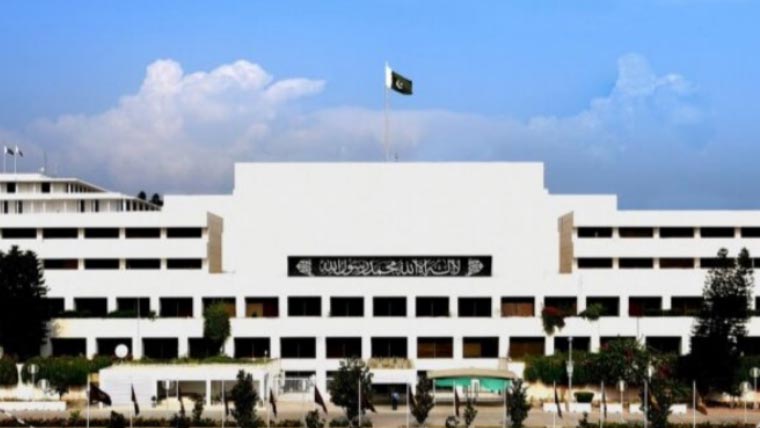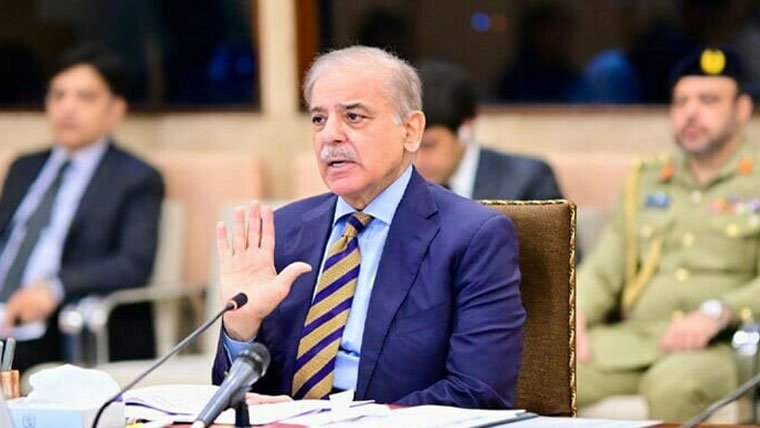
Islamabad: (Tassawar News) The political atmosphere in Islamabad has intensified significantly following the decisive intervention of Prime Minister Shehbaz Sharif regarding the impending 27th Constitutional Amendment. In a highly unusual and demonstrative move, the Prime Minister has mandated the cancellation of all scheduled foreign trips for federal ministers and members of parliament, effectively confining them to the capital to dedicate their energies to the legislative priorities at hand. This directive underscores the extraordinary political urgency and high stakes associated with securing the smooth and timely passage of the constitutional bill through the National Assembly.
The Imperative of Legislative Discipline
The cancellation of all overseas engagements by federal lawmakers is interpreted by political analysts as a robust measure designed to enforce legislative discipline and preclude the possibility of last-minute absenteeism. Constitutional amendments in Pakistan require a formidable two-thirds majority in both houses of parliament, making every single vote critical to the success of the governmental agenda. By restricting movement, the Prime Minister is signaling that the 27th Amendment is not merely a piece of routine legislation, but a national priority warranting the undivided attention of the ruling coalition. This strategic move aims to eliminate any potential procedural pitfalls that could arise from a razor-thin margin.
Official sources have explicitly confirmed that the primary objective of this instruction is to “build national consensus” on the proposed amendment, reflecting the government’s determination to present a united front. This focus on internal political cohesion is paramount, particularly given the magnitude of the proposed changes, which reportedly extend beyond simple governance reforms.
“The government’s decision to cancel all foreign tours highlights a deep-seated commitment to legislative certainty. It is a calculated move to ensure that the necessary quorum and two-thirds threshold are met without external distraction or internal dissent, thereby symbolising democratic continuity amid competing political narratives.”
Strategic Outreach and the Dialogue Mechanism
Central to the government’s strategy is the deployment of Speaker of the National Assembly, Sardar Ayaz Sadiq, who has been entrusted with the crucial task of forging a broad-based political agreement. His mandate is to reach out to all parliamentary parties, emphasizing dialogue as the preferred route to consensus. This initiative is particularly challenging given the inclusion of major opposition groups, such as the Pakistan Tehreek-e-Insaf (PTI) and the Jamiat Ulema-e-Islam (F), whose assent is vital for achieving national buy-in.
In furtherance of this mission, Speaker Sadiq has scheduled a pivotal meeting of parliamentary leaders at Parliament House. This gathering will serve as a platform for government representatives to provide a detailed briefing on the strategic rationale, framework, and objectives of the 27th Amendment. Crucially, the aim is to facilitate transparency and encourage constructive feedback.
The government’s approach, however, contains a pragmatic contingency plan. While dialogue is the immediate focus, sources indicate that if a political agreement proves persistently elusive, the ruling coalition is resolute in its preparedness to “rely on its parliamentary strength to secure passage of the bill.” This dual strategy—offering the olive branch of negotiation while keeping the numerical whip ready—demonstrates the government’s commitment to legislative success, regardless of the opposition’s final decision. Following the collective meeting, Speaker Sadiq is also scheduled to hold dedicated, individual meetings with parliamentary leaders, allowing for confidential discussions to address specific reservations and gather granular feedback on the constitutional proposals.
Parliamentary Arithmetic and Constitutional Stakes
The government’s confidence is rooted firmly in parliamentary arithmetic. Sources within the legislative circles have disclosed that the ruling alliance currently commands the demonstrable support of 224 members in the National Assembly. This number substantially exceeds the constitutional requirement for a two-thirds majority, lending credence to the notion that the bill’s passage is highly probable, even if secured without unanimous consensus.
Simultaneously, the Pakistan Muslim League–Nawaz (PML-N) leadership has implemented its own stringent measures, issuing clear directives for all its lawmakers and coalition members to return to Islamabad forthwith and maintain constant availability until the bill’s final approval. This collective mobilization highlights a broader strategy by Prime Minister Sharif to safeguard the legislative process against any accidental or intentional lapse in attendance, which could jeopardize a vote of this constitutional magnitude.
The content of the 27th Amendment itself amplifies the urgency. While early briefings suggested a focus on institutional coordination, local governance reforms, and administrative harmony, observers and analysts—informed by parallel political commentary—have pointed to potentially more profound, structural changes. Reports suggest the amendment may involve the creation of a separate Constitutional Court, which could radically reshape the judicial landscape and the interpretation of fundamental rights. Furthermore, proposals have been reported concerning the modification of Article 243 related to the command of the armed forces, raising significant questions about the civil-military balance [More clout for Pak army chief Asim Munir? Buzz over Constitution amendment bid]. These underlying, high-stakes issues—including potential adjustments to the National Finance Commission (NFC) award and the devolution of subjects like education and population planning (powers conferred to provinces by the landmark 18th Amendment)—necessitate the meticulous legislative discipline currently being imposed.
“The political establishment is navigating a tightrope walk: publicly promoting dialogue and decentralisation, while privately ensuring the numerical strength necessary to enact a suite of controversial reforms that could significantly alter the balance of power between the judiciary, the executive, and the federating units.”
Conclusion: A Defining Moment for the Current Term
The Prime Minister’s comprehensive halt on foreign travel and the concerted diplomatic efforts led by the Speaker signal that the 27th Constitutional Amendment is the single, defining legislative priority of the current parliamentary term. The strategic manoeuvring—combining a strong display of parliamentary numerical confidence with a visible commitment to inter-party consultation—is designed to manage both the substance and the optics of this major constitutional overhaul. The upcoming session on November 14 is poised to be a pivotal moment for Pakistan’s political system. If the ruling coalition successfully translates its numerical strength into legislative approval, it will mark a significant milestone, yet the political consequences—particularly concerning the preservation of provincial autonomy and judicial independence, given the reported clauses—will continue to shape Pakistan’s governance architecture for the foreseeable future.