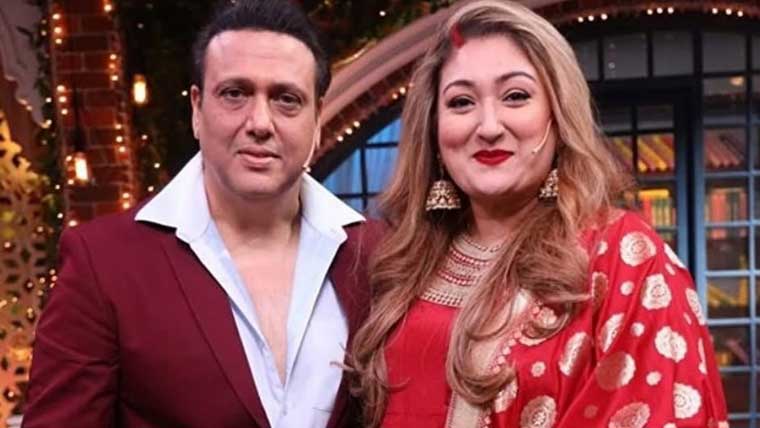
Mumbai (Web Desk): A recent controversy involving Bollywood icon Govinda and his wife, Sunita Ahuja, has spotlighted the delicate interface between celebrity life, personal beliefs, and public reverence for religious practice in India. The incident stemmed from remarks made by Sunita Ahuja during a podcast, which were widely interpreted as disrespectful towards a respected Hindu priest. In the face of considerable public backlash, Govinda has proactively issued a formal, public apology, attempting to mitigate the damage caused by the divisive statements and reaffirm his personal commitment to traditional religious figures.
The Context of the Controversial Remarks
The controversy was ignited by Sunita Ahuja’s comments during a podcast appearance, which focused on her personal philosophy regarding faith and ritualistic practice. Her remarks specifically addressed Pandit Mukesh Shukla, a well-known family priest who has been associated with the actor for a significant period. Her commentary questioned the efficacy and financial aspect of formalized religious ceremonies:
“We also have a priest at home — Govinda’s Pandit. He performs rituals and charges ₹2 lakh. I tell Govinda to pray himself because only those prayers are answered that come from your own heart.”
This statement, which publicly disclosed a substantial fee for ritualistic services, coupled with the assertion that personal, heartfelt prayers hold more spiritual weight than those mediated by a priest, generated immediate and intense public scrutiny. Sunita Ahuja further elaborated that she harbours a personal skepticism towards complex rituals, preferring to engage in “good deeds personally rather than through intermediaries.”
While her comments may have been intended as a personal reflection on her faith and an endorsement of direct, personal spirituality, they were widely perceived by many in the community—including traditionalists and staunch adherents of ritual practice—as a direct criticism of the Pandit’s profession and the value of organized religious customs. The disclosure of the monetary aspect, in particular, was interpreted by some as demeaning to the spiritual services provided by the priest.
The Necessity and Form of Govinda’s Intervention
In response to the growing social media backlash and the potential alienation of conservative segments of his fanbase, the actor Govinda intervened by releasing a video message publicly condemning the remarks and offering an apology on behalf of his wife. This move was clearly calculated to perform both damage control and a reaffirmation of his personal religious beliefs.
Govinda emphasized his long-standing and respectful relationship with the religious figure: “I have been seeking guidance from Pandit Mukesh Shukla for many years and hold him in high respect. His father was also our family priest.” By invoking the inter-generational relationship between his family and the priest’s family, the actor sought to establish the depth of his personal respect and commitment to the spiritual services rendered.
His apology was unequivocal: “I condemn the remarks made by my wife and sincerely apologize for the disrespect caused.” This strong, direct language was crucial in an attempt to distance himself from the controversial statements while fulfilling the societal expectation that the family publicly reconcile with the offended party.
Implications for Celebrity Responsibility and Public Ethics
The incident underscores the precarious tightrope walk that public figures in India must perform when discussing matters of religion, faith, and finance. In a society where religious practices often intertwine deeply with personal identity and ethical conduct, comments that appear to question the integrity or spiritual value of established rituals can quickly ignite intense public reactions.
Govinda’s swift apology has been largely well-received on social media, earning him praise for what has been described as a “responsible and respectful stance” amidst a brewing controversy. This reaction suggests that the public valued his act of accountability over his wife’s contentious remarks, viewing his intervention as a necessary defense of cultural values and personal loyalty to a respected figure. The episode thus serves as a case study in celebrity crisis management, where quick, clear, and deferential communication is paramount for maintaining public goodwill in sensitive socio-religious matters. It demonstrates the extent to which public figures’ associations and personal opinions are subject to immediate and often unforgiving public scrutiny. The public sphere today requires a heightened awareness of cultural and financial sensitivities, particularly when discussing religious intermediaries.
Conclusion: Reaffirming Faith and Loyalty
The controversy surrounding Sunita Ahuja’s podcast remarks regarding a family priest and the efficacy of paid rituals provided a temporary but intense rupture in the public standing of the celebrity couple. Govinda’s decisive action to publicly condemn the statements and offer a sincere apology was a strategic move aimed at reinforcing his long-standing allegiance to traditional religious figures and principles. By reaffirming his respect for Pandit Mukesh Shukla, Govinda successfully navigated a sensitive cultural flashpoint. The incident ultimately underscores the pervasive influence of religious sentiment in the Indian public sphere and the non-negotiable imperative for public figures to exercise extreme caution and deference when commenting on matters pertaining to faith, finance, and ritualistic practice.