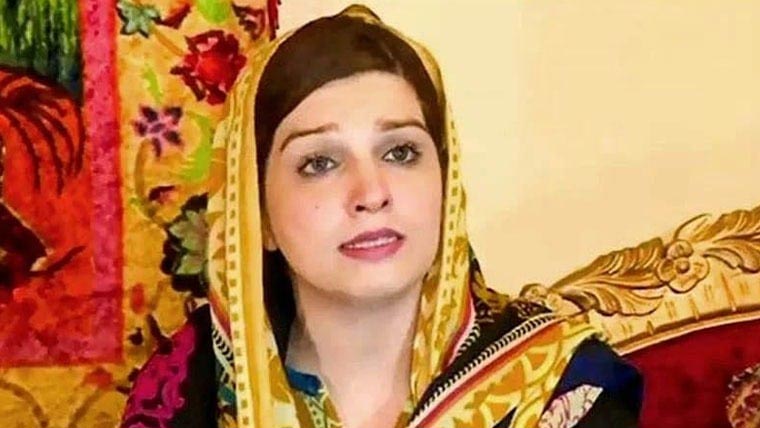
Islamabad: (Tassawar News) Kashmiri human rights advocate Mishaal Malik, wife of the incarcerated Hurriyat leader Yasin Malik, has issued a stark warning regarding the catastrophic potential of the current trajectory in the Indian-administered Kashmir region. Speaking at a press conference in Islamabad, she cautioned that the international community’s persistent silence on the rapidly deteriorating human rights and political situation is “extremely dangerous” and possesses the inherent risk of escalating the long-standing dispute into a nuclear confrontation across South Asia. Her address was a dual-pronged plea: demanding immediate global intervention to secure the life and release of her husband, and underscoring the severe humanitarian crisis enveloping the region.
Critical Health Crisis and Demand for International Intervention
Mishaal Malik focused acutely on the critical health status of Yasin Malik, revealing that his condition has reached a perilous stage due to the expiration of his metallic heart valve and the reported denial of appropriate and necessary medical treatment. She painted a distressing picture of his confinement, emphasizing the immediate threat to his life.
“Yasin Malik is being held in a death cell, completely cut off from the outside world. His physical and mental health is deteriorating rapidly,” she stated, highlighting the inhumane conditions of his detention.
In a meticulously detailed call for action, she appealed directly to several key international bodies, including the UN Working Group on Arbitrary Detention, the Special Rapporteurs on Torture, and the Special Rapporteurs on the Right to Health. The objective of this appeal is an urgent and decisive intervention “before it’s too late”. Mishaal Malik was adamant that the issue transcends simple political debate, stressing its gravity as an immediate humanitarian emergency.
She stressed the broader implication: “This is not just a political issue. This is a humanitarian crisis that requires immediate global attention.”
This plea firmly places the fate of Yasin Malik within the framework of universal human rights obligations and international humanitarian law, demanding a non-political response to a life-or-death situation.
Plea to Save a Life and Denouncing Prison Policies
The human rights advocate passionately called upon global human rights bodies, civil society organisations, and influential world leaders to decisively raise their collective voices against what she vehemently described as India’s “inhumane prison policies.” Her assertions detailed a systematic campaign of abuse directed towards her husband.
“Yasin Malik’s life is in grave danger. He has been subjected to psychological and physical torture. His trial lacks transparency, and his basic rights as a political prisoner are being violated,” Mishaal Malik asserted, highlighting systemic legal and ethical failures.
She emphasised the need for both Kashmiri and Pakistani political leadership to unify their voices in a collective appeal to the global conscience to secure the safe release and survival of the jailed Hurriyat leader. This combined political and moral pressure is deemed necessary to overcome the inertia of international diplomacy and secure immediate humanitarian relief.
Violations of International Human Rights Commitments
Mishaal Malik rigorously asserted that the treatment of her husband constitutes a blatant failure by India to uphold its commitments under various international treaties that explicitly guarantee the right to fair trials and the humane treatment of prisoners.
“India is a signatory to several international human rights conventions, but it has not honored its obligations. Denying medical care and fair legal access to Yasin Malik is a blatant violation of global law,” she contended, establishing a clear case of non-compliance.
To formalise her protest and initiate legal recourse at the highest level, Mishaal Malik confirmed the submission of an emergency petition to the United Nations Working Group on Arbitrary Detention. This petition specifically highlights the alleged systematic torture and illegal nature of her husband’s detention, aiming to trigger an international mechanism for redressal. This legal step underscores the gravity of the charges being levelled against the detaining authorities regarding the treatment of political prisoners.
geopolitics and Kashmir’s Deepening Crisis
Beyond the immediate concerns for her husband’s welfare, Mishaal Malik delivered a crucial geopolitical warning. She cautioned that the overall political and humanitarian crisis in Kashmir continues to worsen amidst increasing repression and severe restrictions on fundamental free speech within the Indian-administered region.
She deliberately portrayed Yasin Malik as “a symbol of peace and resistance,” arguing that his continued imprisonment, and the associated perceived injustice, could directly lead to further instability across the South Asian region. Her concern extends to the potential for the local crisis to metastasize into a wider conflict.
She cautioned: “The situation in Kashmir is not only a regional issue — it is a global humanitarian concern. Any escalation could threaten peace across the entire subcontinent.”
This assessment elevates the Kashmir issue from a localized human rights concern to a matter of international security, demanding attention from world powers concerned with strategic stability.
Transparency, Justice, and the Perils of Silence
In her final demands, Mishaal Malik called for an independent international investigation into India’s prison policies and the human rights violations being systematically reported in Kashmir. She strongly urged global watchdog bodies to undertake on-site visits to Indian prisons to verify the conditions under which political prisoners, including her husband, are being held.
She concluded her address with a powerful, unequivocal statement on moral responsibility: “This is not just about my husband; it’s about justice for every Kashmiri who has been silenced.”
“The world must not remain silent anymore — silence is complicity.”
This final, impassioned plea underscores the belief that international inaction effectively sanctions the alleged human rights abuses, making global silence an active part of the crisis itself.
Conclusion
Mishaal Malik’s press conference constitutes an urgent and multi-faceted appeal, framing the fate of her husband, Yasin Malik, as inextricably linked to the broader geopolitical stability and humanitarian crisis in Kashmir. Her stark warning about the risks of a nuclear confrontation underscores the high stakes of the international community’s continued indifference. By detailing the critical denial of medical care and alleged psychological torture, she has effectively mobilized a demand for immediate intervention from specialized UN bodies. The core of her message is a resolute call for transparency, accountability, and justice, urging world powers to abandon their silence and actively engage with the crisis before the deterioration of human rights in Kashmir precipitates a far wider and more dangerous regional conflict.
Would you like me to search for the current status of the emergency petition Mishaal Malik submitted to the UN Working Group on Arbitrary Detention?