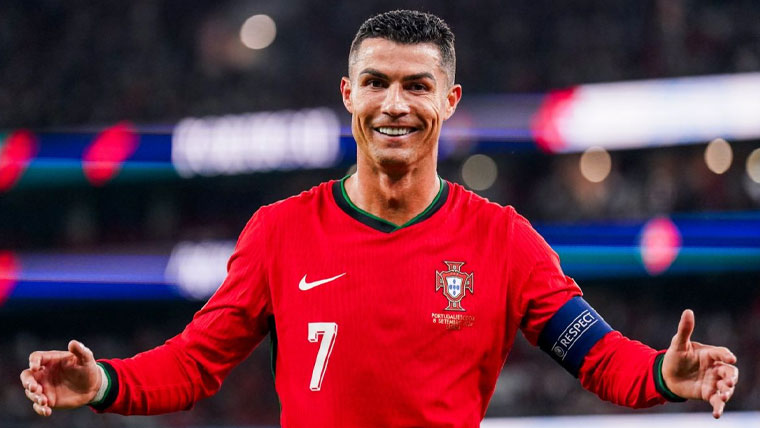
Riyadh (Web Desk): The global football community has been captivated by the recent announcement from legendary Portuguese icon Cristiano Ronaldo, who has indicated his intention to retire from professional football in the near future. The world-renowned star, currently spearheading the attack for Saudi Arabian club Al Nassr, revealed in a candid international media interview that his decision stems from a desire to allocate more time and focus to his family, recognizing the unsustainable nature of maintaining an elite, high-intensity career into his fifth decade. This decision marks the approaching close of one of the most decorated and illustrious careers in the history of the sport.
The Difficult Decision: Recognising Football’s Physical Toll
Speaking openly about the inevitable conclusion of his playing days, the forward, who is approaching his fortieth year, articulated the immense physical and mental demands that characterise top-tier professional football. He acknowledged that the commitment required at the highest level becomes increasingly challenging with age.
As reported by international media outlets, the legendary Portuguese star noted:
“Continuing a high-intensity football career at the age of 40 is not easy, and he now wants to focus on life after football.”
This statement provides a rare glimpse into the mindset of a player whose career has been defined by an almost unparalleled commitment to physical fitness and competitive zeal. Despite maintaining an incredible scoring record well into his late thirties, Ronaldo is clearly demonstrating a profound awareness of the body’s natural limitations and the pragmatic need to transition away from the relentless demands of the professional game. His decision is not one born of diminished ability—given his continued scoring prowess—but rather one of a conscious, strategic choice regarding his future well-being and life priorities.
Preparing for Life Beyond the Pitch: A Forward-Looking Approach
When directly questioned about the timeline for finally “hanging up his boots,” Ronaldo conveyed the gravity of the pending decision, yet confirmed that preparations for his post-football life have been a long-term project. He stressed that the move into retirement, though difficult, would not be entirely unforeseen or unplanned.
The celebrated athlete admitted the emotional weight of the decision, stating:
“It’s a very difficult decision, but I think I will make it soon.”
He further elaborated on the foresight that has governed his personal and financial planning for over a decade, illustrating a commitment to life beyond the constant spotlight of professional sports:
“I started preparing for my future when I was around 25 or 26 years old. I believe I can handle the pressure of retirement. Everything in life has an end, and I want to spend more time with my family and children.”
This remarkable discipline, which underpinned his longevity and success on the pitch, appears to have seamlessly extended to his retirement planning. The emphasis on preparing for the “pressure of retirement” highlights the psychological toll that ceasing a high-profile, globally celebrated career can inflict. By planning for this transition since his mid-twenties, Ronaldo demonstrates a proactive and responsible approach to managing the eventual shift from global sporting icon to private citizen. This meticulous preparation suggests a potential role as a mentor or businessman, ensuring his influence and activities continue well after his final match.
The Primary Motivation: Prioritizing the Personal Sphere
The central driving force behind the impending retirement, as clearly articulated by Ronaldo, is the desire for increased family time. After two decades spent traversing the globe, relentlessly pursuing titles and records across Portugal, England, Spain, Italy, and now Saudi Arabia, the forward recognizes the immense personal sacrifices made for his professional pursuits. The explicit mention of wanting to spend more time with his “family and children” underscores a shift in priorities from professional accumulation of accolades to the cultivation of deep personal relationships.
This decision resonates profoundly with the human aspect of professional sports, illustrating that even figures of Ronaldo’s monumental stature ultimately value personal connections above perpetual professional engagement. The relentless travel, training camps, and match schedules inherent in an elite football career leave precious little time for sustained family life. By choosing retirement, Ronaldo is actively pursuing a life where he can be fully present for his loved ones, a trade-off that is both understandable and laudable after such a demanding career.
A Legacy of Unprecedented Goalscoring
The potential closure of this era comes while Ronaldo remains an active and potent goalscorer. Currently playing as a striker for Al Nassr Club in Saudi Arabia, he continues to defy expectations regarding the typical decline curve of elite athletes.
It is absolutely crucial to note the scale of the legacy he leaves behind:
It is worth noting that Ronaldo, currently playing as a striker for Al Nassr Club in Saudi Arabia, has continued his incredible scoring record — with a total of 952 career goals for both his club and country.
This near-thousand goal tally is a testament to his sustained excellence, adaptability, and unwavering competitive spirit. His career statistics—ranging from his formative years at Sporting CP, his transformative periods at Manchester United, his record-breaking years at Real Madrid, and his stint at Juventus, culminating in his recent contributions in the Middle East—solidify his place among a tiny, elite group of global football legends. The retirement announcement, therefore, is not the fading out of a star, but the dignified conclusion of an icon still operating at a remarkably high level.
Conclusion: A Well-Earned Transition for a Global Icon
Cristiano Ronaldo’s announcement regarding his impending retirement marks a significant transition point for global football. The revelation, anchored in a genuine desire to prioritize family life over the demanding rigours of professional competition, is both reflective of his age and demonstrative of a pragmatic, forward-thinking approach to his future. Having achieved nearly every conceivable accolade and amassed a staggering 952 career goals, the Portuguese phenomenon is preparing to leave the pitch with his legendary status unequivocally secure. His decision, planned and considered over many years, suggests a smooth transition into the next phase of his life, centred on his personal well-being and the quality time he seeks with his loved ones—a well-earned conclusion to a truly extraordinary career.
Would you be interested in a summary of Cristiano Ronaldo’s major club and international career achievements?