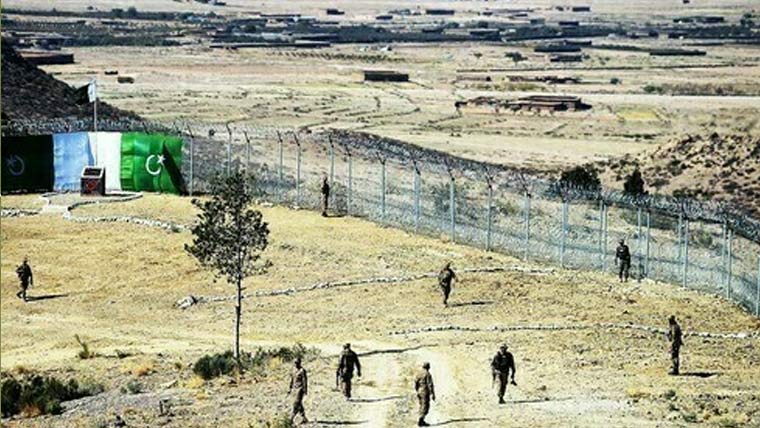
Islamabad: (Tassawar News) The volatile border region between Pakistan and Afghanistan has recently witnessed an unsettling exchange of fire at the Chaman crossing, an episode which has promptly drawn significant attention from both national and international observers. This recent flare-up underscores the delicate security situation along one of the busiest frontier points, occurring at a particularly sensitive juncture when diplomatic engagements between Pakistan and the Afghan Taliban are actively underway. The official position, articulated by Pakistan’s Ministry of Information and Broadcasting, is one of firm but measured response to unprovoked aggression, vehemently rejecting counter-claims that Pakistani forces were the first to commence firing.
The Dynamics of the Border Incident
According to detailed official sources from Islamabad, the incident was initiated by “a few elements” positioned on the Afghan side, who deliberately opened fire upon Pakistani security posts. This aggressive move necessitated a decisive, yet controlled and proportionate, response from Pakistan’s armed forces. The core of Pakistan’s statement lies in the principled rejection of any suggestion that it initiated hostilities, maintaining a clear distinction between an act of aggression and a defensive manoeuvre. Officials have consistently emphasised:
“Firing was initiated from the Afghan side, to which our security forces responded immediately in a measured and responsible manner, ensuring the safety of border personnel and nearby civilians.”
This careful use of language—“measured and responsible”—is critical, serving to frame the reaction not as an escalation of conflict but as an essential, professional action aimed at neutralising a direct threat. The swiftness with which the security forces contained the situation is commendable, reflecting a high degree of training and adherence to protocols designed to prevent a localised incident from spiralling into a wider confrontation. The immediate return to a ceasefire, which officials confirmed to be intact following the brief exchange, further demonstrates Pakistan’s overarching commitment to maintaining peace and regional stability, even in the face of direct provocation.
Diplomacy Amidst Intermittent Volatility
Perhaps the most compelling aspect of this confrontation is its occurrence parallel to the third round of bilateral talks being held between Pakistan and the Afghan Taliban in Istanbul. These high-level discussions are fundamentally focused on addressing shared security concerns, notably the persistent issue of cross-border terrorism, and fostering enhanced bilateral cooperation. The continuity of the diplomatic process, despite the border violation, speaks volumes about the determination of both sides to seek a lasting political solution.
Pakistan has forcefully reiterated its conviction that a strategy of peaceful engagement and sustained dialogue represents the only viable path forward for the region. The expectation from Islamabad is unambiguous: Afghan authorities must collaborate jointly and effectively to address burgeoning security challenges and ensure that such future border violations are preempted. Maintaining robust and open communication channels is viewed as an imperative step toward cultivating mutual trust and deepening cooperation, which is essential for tackling the destabilising activities of transnational militant groups. The simultaneous presence of conflict at the border and consultation at the negotiating table creates a complex and challenging environment, yet it reinforces the urgency of the diplomatic mission.
“Pakistan remains committed to ongoing dialogue and expects reciprocal cooperation from Afghan authorities to maintain peace along the border and prevent such violations in the future.”
This strategic dual approach—strong defence paired with proactive diplomacy—is characteristic of a mature foreign policy that prioritises long-term stability over short-term punitive action.
The Doctrine of Responsible Force
The official praise for the Pakistani forces’ conduct underscores a national security doctrine that champions professionalism and restraint. The security forces’ effective and timely response successfully neutralised the threat without resorting to unnecessary aggression or excessive use of force. This responsible conduct is viewed as a mirror reflecting Pakistan’s broader policy goals: scrupulously defending its sovereign borders while consistently seeking to avoid unnecessary conflict that could destabilise the region. The quick return to normalcy at the Chaman crossing, a vital artery for trade and movement, is a testament to the efficacy of this measured approach.
The Chaman Border, a critical hub for commerce between the two nations, remains a locus of periodic tension, primarily due to inherent security challenges and issues such as cross-border smuggling. Pakistan’s consistent advocacy for Afghan action against elements that exploit the border for illicit activities is a standing policy aimed at long-term de-escalation. The incident serves as a stark, albeit brief, reminder that achieving lasting regional stability hinges less on unilateral confrontation and more on genuine, sustained cooperation and a mutual respect for the principle of sovereignty. The incident highlights the intricate balance required to manage security along the porous border while preserving the vital lines of communication necessary for diplomatic progress.
Conclusion
The unprovoked firing at the Chaman Border, swiftly countered by Pakistani forces, represents a fleeting but potent breach of the existing ceasefire. Critically, this isolated skirmish did not derail the parallel peace talks underway in Istanbul, demonstrating the strategic resolve of both nations to favour dialogue over confrontation. Pakistan’s official posture—rejecting the initiation of force and praising the responsible conduct of its security personnel—reinforces its image as a state committed to regional peace and stability. The ongoing challenge remains the translation of high-level diplomatic commitments into tangible, on-the-ground security cooperation. Ultimately, as the Ministry has reaffirmed, cooperation, underpinned by mutual trust and respect for sovereign integrity, is the indispensable key to securing a peaceful and stable future for the historically volatile border region. This recent incident must serve as a further catalyst for both sides to double down on diplomatic efforts and operational coordination.