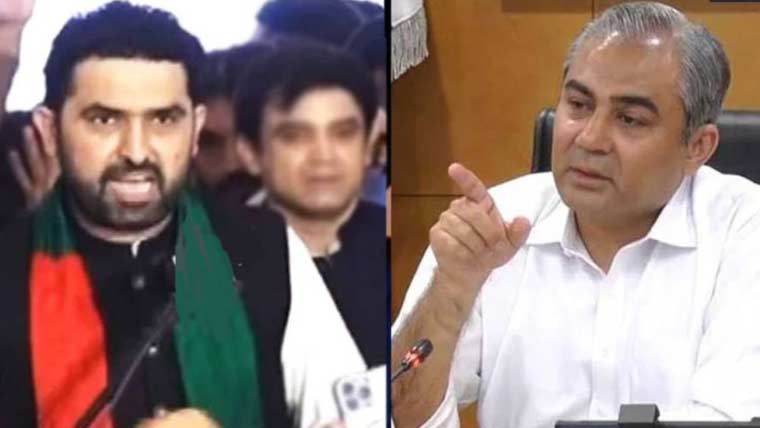
Islamabad: (Tassawar News) The political landscape in Islamabad has been sharply divided following the controversial remarks recently articulated by Khyber Pakhtunkhwa (KP) Chief Minister Sohail Afridi concerning Pakistan’s esteemed security forces. In a swift and unequivocal response, the nation’s Interior Minister, Mohsin Naqvi, issued a strongly worded condemnation, branding the Chief Minister’s comments as “provocative and misleading.” This high-stakes controversy has cast a critical light on the imperative for responsible and unifying communication from public officials, particularly when addressing matters of national security and the morale of the institutions dedicated to its defence.
The Minister’s Condemnation: An Unacceptable Breach of National Unity
In an official statement released by the Interior Ministry, Minister Naqvi voiced deep concern over the nature and substance of Chief Minister Afridi’s commentary. He lamented the remarks, characterizing them as “unfortunate and against the spirit of national unity.” The Minister stressed that such statements carry significant, detrimental consequences, arguing that they not only disrespect the immense sacrifices made by Pakistan’s security personnel but also possess the potential to create “unnecessary division and misunderstanding among citizens.” This immediate and forceful rebuttal underscores the sensitivity with which the government views any perceived slight against the country’s armed and law enforcement agencies.
The core of the Minister’s objection rested on the profound duty of the security forces.
“The brave men and women of our security forces have made countless sacrifices to protect this country from terrorism and violence,” Naqvi stated. He continued by asserting, “To question their commitment or spread misleading statements about them is unacceptable and deeply hurtful to the families of our martyrs.”
This quote serves as a powerful testament to the sacrifice inherent in military service and frames the Chief Minister’s remarks as an affront to those who have made the ultimate commitment to national peace.
Demand for Rectification and the Institutional Imperative
The Interior Minister did not confine his response to mere condemnation; he issued a clear and non-negotiable demand for immediate rectification. Mohsin Naqvi insisted that the KP Chief Minister must “immediately issue a public apology to the nation and to the families of the security personnel who have laid down their lives for Pakistan’s peace and stability.” This demand elevates the issue from a political spat to a moral and national obligation, positioning the apology as a necessary step towards healing the perceived damage.
Minister Naqvi further elucidated a fundamental principle of governance, emphasizing that Pakistan’s progress and internal stability are inextricably linked to mutual respect and constructive coordination among all state institutions. He cautioned all political leaders against making remarks that could be misinterpreted or, more dangerously, “used by hostile elements to create discord.” This highlights the strategic risk associated with inflammatory political rhetoric, particularly in a region facing persistent internal and external security challenges. The government’s concern is evidently not limited to domestic fallout but extends to the potential for geopolitical exploitation of such controversies.
In a move reinforcing the seriousness of the situation, official sources revealed that Minister Naqvi has directed relevant authorities to formally review the comments made by Sohail Afridi. This directive ensures that “no statements compromising national security or institutional integrity are tolerated,” indicating a commitment to upholding the legal and ethical boundaries of political discourse regarding sensitive national defence matters.
Analysis and the Call for Responsible Communication
Political observers and analysts have swiftly weighed in on the controversy, noting that it “highlights the need for responsible communication by public officials,” particularly when addressing highly sensitive subjects such as national defense and internal security. In an era characterized by heightened regional tension, political analysts have uniformly advised that leading figures should consistently “adopt a unifying tone rather than language that may inflame emotions.” The consensus is that the political leadership must prioritize national cohesion over partisan gain, particularly when the nation’s security is at stake.
The Ministry of Interior concluded its official statement by reiterating its full and unconditional support for the armed forces and all law enforcement agencies. This public assurance acknowledges their crucial, enduring role in maintaining peace, countering terrorism, and protecting Pakistan’s borders.
Minister Naqvi artfully defined the boundary between acceptable criticism and harmful rhetoric:
“Criticism is a democratic right,” Naqvi affirmed, “but it should be constructive and based on facts. Any rhetoric that undermines the morale of those who defend the nation cannot be justified.”
This distinction is crucial, underscoring that while freedom of expression is foundational to democracy, it must be tempered by responsibility, especially when addressing the individuals whose duty it is to defend the state. The widespread support for the Interior Minister’s position, particularly evident in the solidarity expressed on social media, suggests that a significant portion of the citizenry echoes the demand for an apology and stands firmly with the security establishment.
Conclusion: Dignity of Institutions as a Pillar of National Security
In its final pronouncement, the government of Pakistan unequivocally reaffirmed that protecting the dignity of national institutions is absolutely essential for strengthening democracy and ensuring robust national security. The Interior Minister’s reiteration that freedom of speech must always be exercised with a sense of responsibility and respect for those who serve the country encapsulates the government’s core position. The controversy surrounding Chief Minister Afridi’s remarks ultimately serves as a compelling case study on the critical tension between political expression and the necessity of national institutional integrity, reinforcing the message that in times of security challenge, unity and respect for the defenders of the state must remain paramount to Pakistan’s collective well-being and democratic future.