Washington / London: (Web DesK) The complex dynamics of the Israeli-Palestinian conflict have been further complicated by a major leak from US intelligence circles, revealing that Israeli military legal experts had internally cautioned about the existence of evidence suggesting potential war crimes committed by the Israel Defense Forces (IDF) during their protracted military operations in the Gaza Strip. The report, which has caused significant political fallout, alleges that the Biden administration consciously decided to disregard these internal warnings, raising profound questions about the geopolitical prioritisation of strategic alliances over adherence to international humanitarian law.
A comprehensive report by Reuters, citing the testimonies of five former US officials intimately familiar with the intelligence, described the findings as “shocking for policymakers.” The intelligence laid bare “internal doubts within the Israeli military about the legality of its own actions,” a striking contrast to Israel’s consistent public defence and justification of its operations as being necessary and fully compliant with international legal standards. This disparity between private legal concerns and public assertions has intensified global scrutiny on the nature and conduct of the conflict.
Confidential Intelligence Shared and Policy Implications
The sensitive documentation was circulated across various echelons of the US government, including the National Security Council, the White House, the State Department, and the Pentagon, ahead of a scheduled Congressional briefing in December 2024. The documents explicitly raised serious concerns in Washington regarding the alarming and rapidly escalating civilian casualty count in Gaza.
Statistics provided by Gaza’s Health Ministry indicated that over 68,000 Palestinians had been killed in the two years of the conflict, a figure that includes roughly 20,000 alleged militants, as claimed by the Israeli government. The core allegation contained within the intelligence was deeply disturbing:
“The intelligence suggested that Israeli forces may have deliberately targeted civilians and humanitarian workers, acts which constitute war crimes under international law.”
Israel has since categorically denied these specific and serious allegations, maintaining that its military actions are directed solely at Hamas and are conducted with every possible precaution to minimise civilian harm. Nevertheless, the existence of such intelligence, corroborated by the internal legal dissent within the IDF, has been exceptionally difficult for the US to dismiss.
Internal Rifts within the Biden Administration
The revelations concerning Israeli legal misgivings triggered a significant and highly consequential internal debate within the Biden administration. Top-level officials engaged in intense deliberation over the political and legal ramifications of the intelligence. A key point of contention was whether publicly designating Israel as a state potentially committing war crimes would legally compel the US government to invoke US law and halt the substantial supply of arms and intelligence sharing — a measure that would inevitably and severely strain the vital US-Israel relationship.
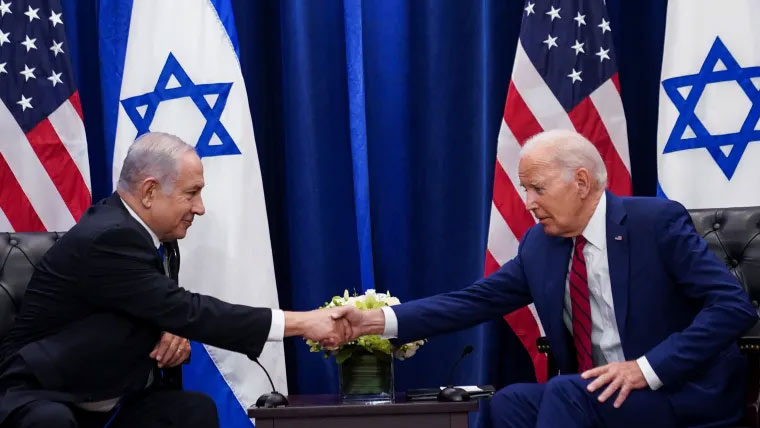
Ultimately, after protracted internal wrangling, the administration opted for a political resolution over a potentially devastating legal and diplomatic confrontation. Key decision-makers “concluded that there was no ‘definitive proof’ that Israel deliberately targeted civilians,” a determination that conveniently allowed for the continuation of military aid and intelligence cooperation.
“Ultimately, officials concluded that there was no ‘definitive proof’ that Israel deliberately targeted civilians, allowing arms transfers and cooperation to continue.”
Furthermore, it was reported that some high-ranking officials within the US government expressed a genuine fear that taking a formal, adversarial stance against Israel could inadvertently benefit Hamas politically and potentially undermine or stall the ongoing, fragile ceasefire negotiations. This prioritisation of political stability and strategic diplomacy thus overshadowed the legal imperative to investigate potential war crimes.
The Subordination of Legal Counsel to Political Will
The intelligence leak was corroborated by persistent, albeit ultimately unheeded, legal advice from within the US government’s own ranks. Lawyers within the US State Department reportedly “repeatedly warned Secretary of State Antony Blinken that Israeli operations could violate international humanitarian law,” explicitly equating them to potential war crimes. However, the consistent influence of political and diplomatic considerations successfully prevented the administration from taking any decisive or punitive action based on this legal advice.
A US government report, belatedly released in May 2024, offered a slight shift in tone, acknowledging that Israel’s use of US-supplied weapons may have violated international humanitarian law. Nevertheless, the report simultaneously introduced a caveat, noting a pervasive “ambiguity due to wartime conditions,” which served to dilute the force of the finding and ultimately provided a continued shield for arms transfers.
International Accountability and Ethical Condemnation
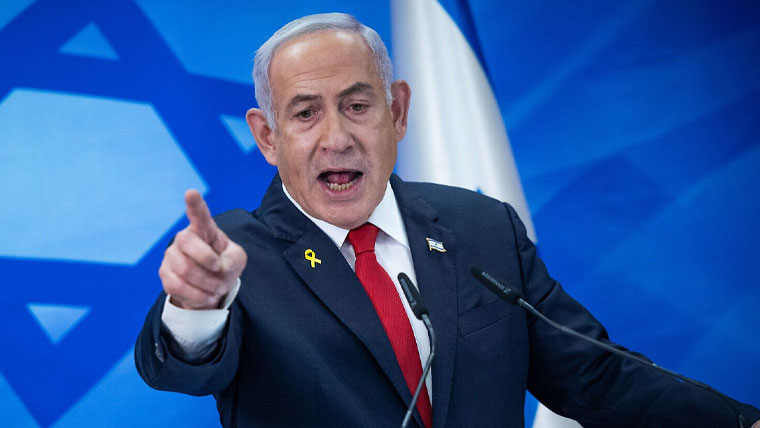
This climate of mounting international concern coincided with significant action taken by a key global judicial body. In November 2024, the International Criminal Court (ICC), acting independently of US domestic considerations, issued war crimes warrants against several high-profile figures, including Israeli Prime Minister Benjamin Netanyahu, a former Israeli defense minister, and the Hamas military leader, Mohammed Deif. As anticipated, Israel rejected the court’s jurisdiction entirely, and Hamas similarly denied the charges, highlighting the persistent challenge of enforcing international law against powerful state and non-state actors.
The Biden administration’s conduct faced particularly sharp criticism from within the US legislative body. US Senator Chris Van Hollen, for instance, publicly and strongly condemned the administration, asserting that the US government had “deliberately ignored evidence of Israeli war crimes” and effectively “turned a blind eye” to the manner in which US weapons were being employed. This criticism brought serious ethical and legal concerns regarding the US’s complicity in the conflict directly to the fore.
“US Senator Chris Van Hollen criticized the Biden administration, stating that the government deliberately ignored evidence of Israeli war crimes and ‘turned a blind eye’ to the use of US weapons, raising serious ethical and legal concerns.”
Conclusion: Political Expediency Over Justice
The emergence of US intelligence detailing Israeli legal warnings marks a critical juncture in the narrative of the Gaza conflict. The revelation has fundamentally intensified global scrutiny, prompting serious and unavoidable questions regarding the genuineness of Israel’s internal investigations and whether they are being conducted in good faith or merely serve as a strategic means to mislead the international community.
For the present, the actions taken by both the US and Israeli governments strongly suggest a shared political calculus: prioritising immediate strategic political considerations over the demands of international accountability and justice. This collective decision to defer formal legal judgment leaves the path to achieving justice for victims long, uncertain, and subject to the fluctuating winds of geopolitical influence. The true human cost of this strategic ambiguity will continue to be borne by the civilian population caught in the relentless cycle of conflict.