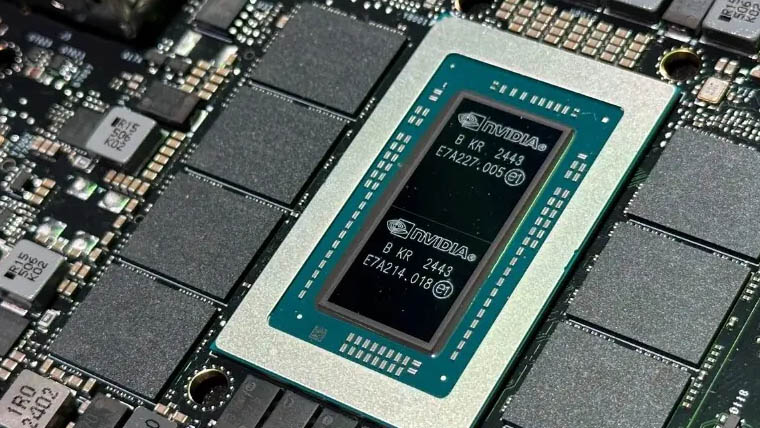
The administration of U.S. President Donald Trump has implemented a decisive and unprecedented policy shift regarding the export of cutting-edge semiconductor technology, specifically targeting Nvidia’s most advanced Blackwell AI chips. In a move signaling a significant intensification of the ongoing U.S.–China tech rivalry, these powerful processors are now to be reserved exclusively for American domestic use, effectively locking other nations, including the People’s Republic of China, out of access to the world’s most potent AI hardware. This strategic reservation underscores Washington’s determination to establish and maintain a decisive technological and geopolitical advantage in the critical sectors of Artificial Intelligence and advanced computing.

Presidential Mandate and Export Restrictions
The directive was unequivocally articulated by President Trump during a high-profile media appearance and subsequent remarks to journalists. The core of the policy is a stringent restriction on the international dissemination of the Blackwell chip technology, which represents the vanguard of current AI processing capability. The President’s statements leave no room for ambiguity regarding the exclusivity of this technology.
In a recorded interview for the esteemed CBS program “60 Minutes,” and later reiterated aboard Air Force One, President Trump outlined the rationale for this domestic retention policy, linking it directly to national security and technological supremacy.
“We’re not giving these advanced chips to anyone else. They’ll stay in the United States,” declared President Donald Trump.
This forceful statement confirms the administration’s commitment to tightening the existing export controls on U.S.-manufactured semiconductor technology. The clear and primary aim of this measure is to prevent rival nations, most notably China, from acquiring the foundational hardware necessary for developing and deploying cutting-edge artificial intelligence systems. By limiting the availability of these high-tier processors, Washington seeks to impede Beijing’s ambitious trajectory in AI research and military applications, thereby safeguarding U.S. technological superiority.
The Evolving U.S. AI Strategy and Global Competition
The current restriction on the Blackwell chips must be viewed within the context of a broader, formalized U.S. national strategy concerning artificial intelligence. This strategy was crystallized in July 2025 with the launch of a new federal initiative. This program was designed with a dual-pronged approach: to boost AI-related exports to allied and partner nations while simultaneously ensuring the U.S. maintains a substantial and clear technological edge over China.

This foundational policy is rooted in the long-term vision of Washington: to achieve and sustain dominance in the semiconductor and AI industries. These sectors are increasingly recognized by strategists as being absolutely critical determinants of both future economic prosperity and global military power. The ability to process vast amounts of data at unprecedented speeds, which advanced chips like the Blackwell series enable, is the key to breakthroughs in every domain, from predictive modeling and autonomous systems to advanced weaponry and cybersecurity.
The initial initiative sought to balance strategic alliances with technological containment. However, the decision to wholly restrict the most advanced Blackwell chips represents an escalation to an even stronger, maximalist stance. This policy effectively creates a technological fortress around the world’s most powerful AI hardware, ensuring that the critical resources for the next generation of AI development remain firmly within U.S. national borders. This strategy signals a paradigm shift from managed competition to outright technological protectionism in the highest-stakes areas of innovation.
Nvidia’s Position and the International Marketplace
The immediate impact of the President’s announcement reverberates through the global supply chains and affects major technological corporations, particularly Nvidia. The California-based tech giant, a world leader in high-performance computing and AI chips, had recently made significant international commitments. Of particular note were the publicly announced plans to supply a substantial quantity of its powerful Blackwell chips—over 260,000 units—to South Korea.
This pre-existing commitment to a key U.S. ally had previously raised questions and concerns in Washington regarding the potential for similar sales to other geopolitical regions. The critical inquiry revolved around whether sales to nations deemed strategic competitors, above all China, would be permitted under existing or future export control frameworks. President Trump’s recent clarification serves to definitively resolve this uncertainty: China will not be permitted to purchase Nvidia’s most advanced AI processors.
While the top-tier chips are strictly off-limits, the administration has indicated a limited scope for potential discussions concerning less powerful chip versions. Any such considerations would be entirely contingent upon a rigorous national security assessment. This suggests a nuanced, albeit highly restricted, approach to maintaining some level of commercial engagement while categorically blocking the transfer of the most sensitive technology.
Regarding potential access to less-powerful versions, the President confirmed, “We’ll let them work with Nvidia, but they won’t get the top-tier chips.”
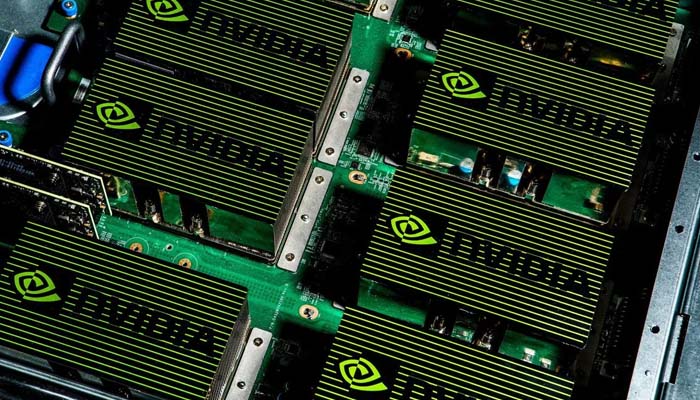
This dual-tier approach attempts to draw a clear line between general commercial activity and technology deemed essential for national defense and strategic dominance.
Political and Security Ramifications
The introduction of this severe restriction has generated a strong and immediate reaction within the American political sphere, especially among national security hawks in Congress. Some Republican lawmakers have vociferously warned that even the allowance of “downgraded” Blackwell chips to China could constitute a significant and unacceptable national security threat. These warnings underscore a deeply held belief that AI hardware is not merely a commercial product but a fundamental component of global geopolitics and future military parity.
One particularly stark analogy employed by an unnamed Senator compared the potential sale of downgraded chips to:
“handing Iran weapons-grade uranium,”
This powerful comparison highlights the perceived high-stakes nature of the technology, equating advanced AI hardware with proliferation-sensitive materials. It reflects a growing consensus in certain political circles that any contribution to China’s AI capabilities, no matter how minor, fundamentally undermines U.S. strategic interests.
Meanwhile, Jensen Huang, the CEO of Nvidia, has publicly acknowledged the challenging operational landscape. Huang stated that the company is currently not seeking export licenses for China for its advanced products. He further noted that the present regulatory climate in Beijing, combined with existing U.S. restrictions, presents substantial difficulties for Nvidia’s commercial activities within the Chinese market, making large-scale, high-end chip sales impractical even before the President’s latest announcement.
Conclusion
The Trump administration’s decisive action to restrict the export of Nvidia’s most advanced Blackwell AI chips marks a major and pivotal shift in the global trajectory of the AI race. By drawing a hard line and reserving this leading-edge technology exclusively for U.S. use, the policy unequivocally emphasizes America’s unyielding determination to secure and maintain technological dominance in both the semiconductor and artificial intelligence sectors. This move represents a calculated, high-stakes maneuver that is certain to intensify the ongoing U.S.–China tech war, transforming the contest for AI supremacy into an even more central feature of 21st-century international relations and geopolitical competition. The ultimate success of this policy will depend on its long-term impact on global supply chains, international alliances, and the speed of technological innovation both within and outside the United States.