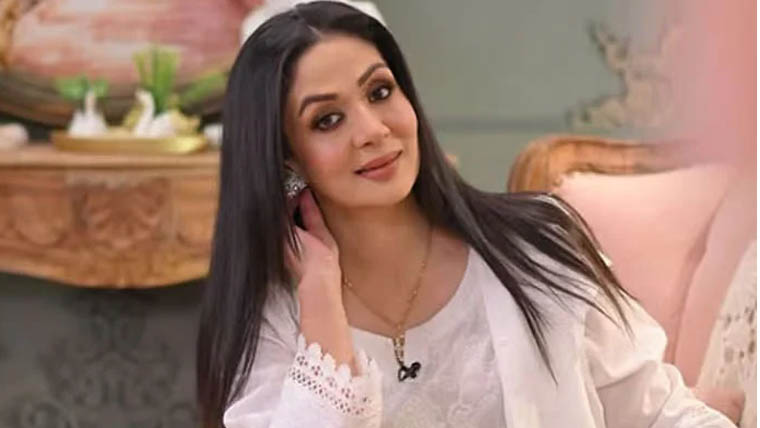
Karachi: (Tassawar News) The veteran Pakistani actress Saima Qureshi, an enduring and beloved figure on local television screens, recently offered a deeply personal and emotionally resonant reflection on the painful dissolution of her marriage. Appearing on a prominent private television talk show, the acclaimed artist bravely opened up about her experiences of heartbreak, the complex journey of healing, and the fundamental importance of acknowledging and externalising emotional distress rather than attempting to suppress it. Her candid dialogue has been widely praised for its sincerity and its powerful message of emotional resilience.
During the conversation, which was marked by its profound sincerity, Saima Qureshi articulated the extent of her initial despair upon the finalisation of her marriage’s end. She revealed a level of emotional devastation that is universally relatable to those who have faced similar relational losses.
“My heart truly broke when my marriage ended,” the actress shared. “I went through such deep sorrow that it felt as if the world had come to an end.”
The actress, celebrated for her elegant demeanour and her decades-long, significant contributions to the Pakistani drama industry, underscored a crucial element in the recovery process: the necessity of accepting the pain as the essential first step toward genuine recovery and eventual peace.
Advocating for Emotional Release: “If You’re Heartbroken, Cry”
One of the most impactful segments of her interview involved the heartfelt, practical advice she offered to viewers who might be navigating their own experiences of emotional turmoil. She positioned emotional expression not as a weakness, but as a vital mechanism for self-soothing and recovery.
“If someone’s heart breaks, they should cry. Crying helps ease the pain inside,” she firmly advised.
According to Ms. Qureshi, both crying and the act of writing are potent and necessary forms of emotional purgation. She posited that by articulating one’s feelings—whether the raw expression of grief or the detailed narrative of one’s personal story—individuals can effectively externalise their internal struggles. This process of externalisation, she believes, is a critical way to ‘let go’ of the burden of pent-up sorrow. Her emphasis here is a powerful validation of vulnerability and a rejection of the societal expectation to maintain a stoic facade during periods of acute pain.
The Crux of Acceptance and the Fight for Survival
Saima Qureshi maintained that achieving inner tranquility is intrinsically linked to the concept of acceptance. The moment an individual truly accepts the immutable reality that “what had to happen has happened,” they begin to tap into the inherent strength required to transition into the next chapter of life. However, she was quick to acknowledge the profound difficulty of this transition, stating:
“But only the person who goes through it knows how painful that journey really is.”
The conversation also touched upon the immense and often unrecognised effort women invest in sustaining their marital homes. The actress explained that virtually every woman enters a marriage with the intrinsic desire for its longevity and success.
“Every woman wants her relationship to survive. We put in time, effort, and emotions to keep our homes together,” she stressed.
She identified a common yet ultimately detrimental belief held by many women: the notion that they possess the capability to fundamentally alter their spouses’ core personalities or established behaviours. Qureshi concluded this point with a sobering piece of reality, noting that “there are certain traits in men that simply cannot be changed.” This perspective introduces a nuanced, mature understanding of relational dynamics, acknowledging the limits of individual efforts within a partnership.
Fighting for Family and Facing a Painful Reality
The actress shared her personal account of her own fierce yet ultimately futile efforts to safeguard her marriage. Despite her protracted battle to “fight for my home,” the union could not be preserved. She reiterated the fundamental truth that no woman willingly opts for the devastating experience of divorce, framing it as a “painful reality that no one wants to face.”
Adding further context to the profound nature of this second great loss, she revealed a significant early-life tragedy: the death of her father during her childhood. She drew a poignant parallel between these two life-altering events, indicating that:
“After my father passed away, the next hardest challenge I faced in life was divorce.”
This comparison underscores the devastating emotional weight of marital dissolution, placing it alongside the trauma of losing a parent.
Conclusion: A Message of Resilience and Vulnerability
Saima Qureshi’s open and forthright account serves as a potent testament to emotional resilience and the essential process of self-healing. Her willingness to share her experience of grief, coupled with her ultimate embrace of acceptance, provides a powerful and relatable narrative, particularly for women who often feel compelled to silently endure emotional suffering within fractured relationships.
Her concluding message is one of profound empowerment: true strength is not derived from the concealment of pain, but rather from the courage to confront it honestly and openly. By encouraging others to embrace their vulnerability, Saima Qureshi champions a pathway to inner peace and the eventual renewal of the self, transforming a personal tragedy into a source of public encouragement and strength.
Would you like me to find out more about Saima Qureshi’s career or her current projects following this interview?