New York: (Tassawar News) The humanitarian crisis in Sudan has reached a critical and horrific juncture, with the United Nations Human Rights Office issuing a dire warning about what it described as “unimaginable atrocities” unfolding in El Fasher, the capital of North Darfur. The city has recently been engulfed by a sharp surge in violence following reports that the Rapid Support Forces (RSF) have seized control of several key areas, trapping and terrorizing the civilian population.
Unprecedented Attacks and Civilian Vulnerability
In an emotionally charged video message circulated on social media, UN Human Rights representative Le Fang conveyed the extreme gravity of the situation, stating that the preceding ten days had been marked by “horrific attacks,” effectively transforming El Fasher into “a city of grief.” Many residents who had previously survived the grueling 18-month siege and intense fighting are now facing a renewed and immediate threat to their lives, safety, and security.
Reports filtering out of the besieged city paint a grim picture of civilian casualty. Hundreds of innocent non-combatants, including vulnerable women and children, have been killed. Essential civilian infrastructure, such as hospitals, schools, and designated shelters, have been deliberately targeted. Furthermore, entire families attempting the perilous journey to flee the violence have been directly attacked while on the road.
UN Human Rights representative Le Fang said the last ten days had brought “horrific attacks,” turning El Fasher into “a city of grief.”
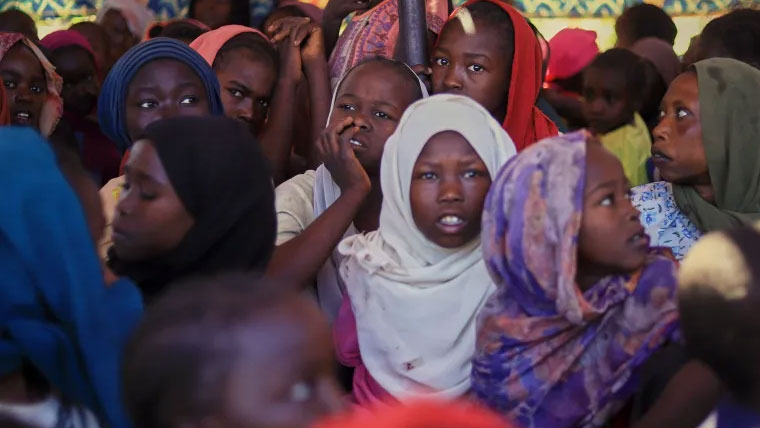
Humanitarian organisations are struggling to cope with the influx of the newly displaced. Aid groups report that thousands who managed to escape the relentless violence have reached the nearby town of Tawila. They arrive in an acutely dire condition, presenting urgent and overwhelming needs for food, medicine, shelter, and crucial psychological support to cope with the trauma they have endured.
Crisis of Displacement and Malnutrition
The depth of the humanitarian catastrophe is further detailed by organisations on the ground. Local Sudanese relief groups have shared harrowing footage that graphically illustrates the reality of the crisis: families are depicted living in barren, exposed areas, relying solely on makeshift tents crudely assembled from old sheets and plastic tarpaulins. Survival, for many, is reduced to subsisting on a mere single meal a day, a condition that is tragically manifesting in widespread acute malnutrition among the children.
Doctors Without Borders (MSF) has corroborated these observations, reporting alarming levels of malnutrition not just among children but also within the adult population. Adding to the tragedy, representatives from the Norwegian Refugee Council have noted that many displaced families are now compelled to care for unaccompanied children, who are believed to have lost their parents either during the brutal attacks or while desperately attempting to flee the active conflict zones.
The International Organization for Migration (IOM) estimates that the scale of flight from El Fasher and adjacent towns surpasses 82,000 people. The majority of the city’s original population of approximately 260,000 are reportedly trapped, subject to continued violence, and systematically denied safe passage out of the combat areas.
Evidence of Mass Atrocities and Geographical Expansion
Compounding the fears of mass atrocities, a recent report from Yale University’s Humanitarian Research Lab, dated October 28, provided chilling evidence derived from satellite images. These images reportedly reveal clear indications of mass graves and pools of blood, strongly suggesting possible mass killings have taken place.
Moreover, the conflict is alarmingly expanding geographically. The fighting, which originated in Darfur, has now spilled into the adjacent Kordofan region. In El Obeid, the capital of North Kordofan, a recent drone strike tragically resulted in the deaths of at least 40 people. Local residents now fear that the RSF is preparing to launch an imminent offensive on their city, especially since the paramilitary group recently captured the nearby town of Bara, forcing over 36,000 more individuals to become internally displaced.
A Divided Nation and the Search for Peace
The broader conflict has inflicted a devastating toll on Sudan. According to the World Health Organization (WHO), over 40,000 people have been killed since the fighting first began two years ago, though it is widely feared that the true death toll is substantially higher.
In an effort to find a diplomatic solution, the Quad Group—comprising regional and international heavyweights: Egypt, Saudi Arabia, the UAE, and the United States—has put forward a proposed ceasefire. This initiative calls for a three-month humanitarian truce, to be followed by concrete steps toward a permanent ceasefire and, crucially, a transition to civilian rule.
While the RSF has reportedly responded positively to this proposal, fresh explosions have been reported in Khartoum and Atbara, areas currently under the control of the Sudanese Armed Forces (SAF). The governor of Darfur, Minni Arko Minnawi, has issued a stark political warning: he cautions that any truce which fails to mandate the complete withdrawal of the RSF could effectively lead to the de facto division of Sudan, given that the paramilitary group now exerts control over all five state capitals in Darfur.
Conclusion: The Imperative for Immediate Action
The escalating violence in El Fasher and the wider expansion of the conflict into Kordofan represent a profound failure of international efforts to protect Sudanese civilians. The evidence of mass graves, the critical humanitarian needs of the displaced, and the widespread malnutrition underscore the necessity for immediate and decisive global action. While the diplomatic efforts of the Quad Group offer a sliver of hope for a humanitarian truce, the political stalemate—highlighted by Darfur’s governor—demonstrates that the fundamental issue of the RSF’s territorial control remains the key obstacle to a lasting peace. The international community must now move urgently to ensure safe passage for trapped civilians, provide comprehensive humanitarian aid, and enforce a credible ceasefire that genuinely addresses the political and security divisions threatening the integrity of the Sudanese state.
Would you like me to research the current status of the Quad Group’s proposed ceasefire and the latest official responses from the Sudanese Armed Forces (SAF)?