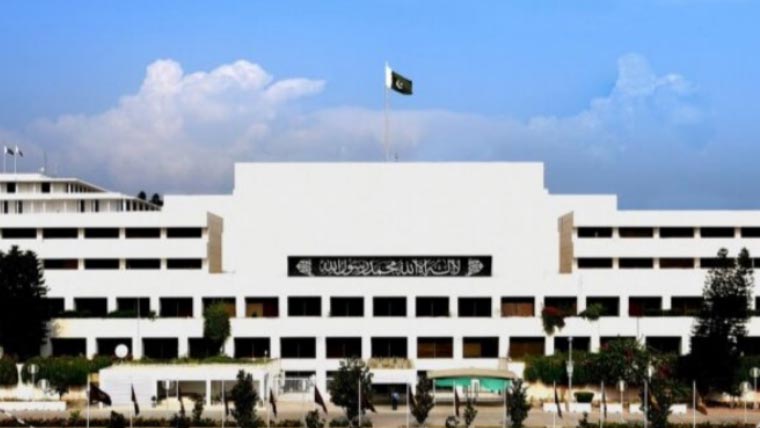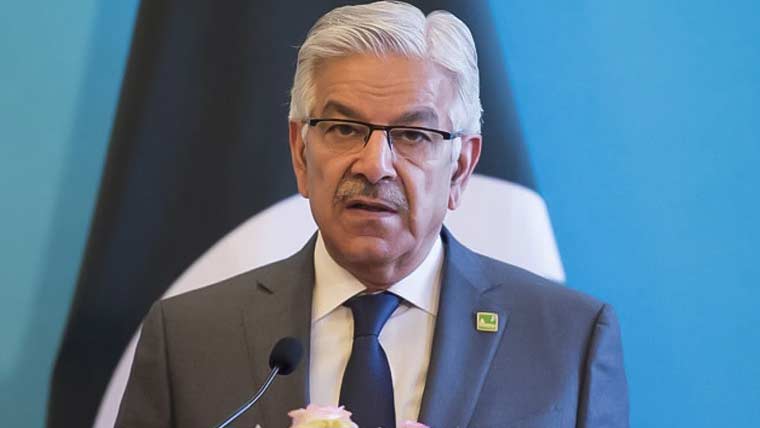
Islamabad (Tassawar News) In a significant contribution to the ongoing national debate regarding legislative processes and institutional conduct, Khawaja Asif, Pakistan’s Federal Minister for Defence and a veteran political figure, recently articulated trenchant criticisms aimed at former legislators and political operatives. His remarks, disseminated via the social media platform X, centered on what he perceives as a profound lack of consistency and integrity among those now critiquing the current government’s legislative agenda. This commentary casts a critical light on the historical pace of lawmaking and the subsequent hypocritical posturing by key political actors.
The Paradox of Legislative Hypocrisy
The crux of Minister Asif’s argument rests upon a sharp contrast between past legislative expediency and current political dissent. He specifically highlighted a notable instance where previous lawmakers purportedly sanctioned an unprecedented volume of legislation in a remarkably truncated timeframe.
“The very individuals who once approved 52 laws in a single hour during a midnight session are now criticizing the government’s constitutional amendments and other legislative initiatives. Such criticism feels ironic, considering the speed at which major decisions were taken in the past.”
This statement not only serves as a factual recall of previous political manoeuvres but also acts as a potent rhetorical device, exposing the selective morality underpinning much of the contemporary political critique. Minister Asif suggested that constructive and credible political debate requires a foundation of unwavering consistency and integrity, rather than opportunistic, selective commentary tailored to shifting political tides. The accelerated passage of fundamental laws, particularly those impacting constitutional architecture, often raises concerns regarding adequate scrutiny, deliberation, and public consultation, making the current critics’ historical behaviour a focal point of inconsistency.
The Defence Minister further extended his critique to encompass the abrupt political decisions that led to the dissolution of assemblies, noting that those responsible for such procedural hastiness are now attempting to “lecture others on procedural matters.” In his view, the inherent legitimacy of any criticism is inextricably linked to the critic’s own demonstrable commitment to core democratic principles, responsible decision-making, and the maintenance of institutional stability. Such actions, or lack thereof, he implied, ultimately detract from the maturity necessary for a robust political environment.
The Imperative for Judicial Neutrality
Khawaja Asif’s address moved beyond the legislative arm of the state to scrutinise the conduct of certain judicial figures. Without explicitly naming individuals, he raised serious concerns regarding decisions that appeared to be influenced by political considerations, thereby suggesting a potential deviation from the strict impartiality required of the judiciary.
“He remarked that some decisions seemed influenced by political considerations rather than by constitutional principles. He emphasized that the judiciary’s role must always remain neutral, as judicial independence is one of the key pillars of a functioning democracy.”
This commentary is particularly significant in Pakistan, where the relationship between the executive, the legislature, and the judiciary has historically been a source of tension and constitutional controversy. The Minister’s emphasis on judicial independence as a non-negotiable pillar of democracy highlights the profound importance of the judiciary’s commitment to constitutional principles above any fleeting political agenda. He stressed that any action perceived to favour political interests fundamentally undermines public trust in the justice system.
Accountability and the Democratic Narrative
The Minister’s remarks also touched upon the broader ethical landscape of political discourse, specifically targeting the tendency among certain actors to adopt a tone of “moral superiority or poetic commentary” while neglecting to acknowledge their own past roles and responsibilities.
“According to him, accountability in political and legal systems requires honesty, self-reflection, and transparency. When individuals involved in earlier processes criticize others without acknowledging their own role, it leads to unnecessary polarization and weakens the overall democratic environment.”
This call for self-reflection and transparency underscores a fundamental prerequisite for meaningful political accountability. Minister Asif argued that the failure to reconcile one’s public position with one’s historical conduct contributes to a fragmented and imbalanced national narrative, ultimately hindering the development of a stable and cohesive democratic culture. Such selective memory and criticism not only generate unnecessary polarization but also erode the public’s confidence in the political class as a whole.
Sustaining Governance Through Responsibility
In concluding his perspective, Khawaja Asif reiterated a crucial principle for enduring statecraft: legislative processes must be handled with unwavering responsibility, irrespective of the ruling political party.
“He stressed that sustainable governance is built on the rule of law, constructive debate, and respect for constitutional boundaries. Speedy or unexamined legal decisions, he suggested, often become controversial later, contributing to public mistrust.”
This perspective advocates for a measured, deliberate approach to lawmaking, one that prioritizes constructive debate and adherence to the rule of law over political expediency. The implication is clear: hastily passed legislation, particularly under dubious procedural circumstances, often lacks the necessary political consensus and legal robustness, leading to future controversy and a deepening sense of public cynicism.
Conclusion: A Call for Coherence and Maturity
Khawaja Asif’s recent, assertive statements serve as a significant intervention in Pakistan’s complex political dialogue, focusing on the critical issues of governance, legislative integrity, and institutional roles. His commentary explicitly challenges political actors, lawmakers, and judicial figures to demonstrate greater coherence between their public pronouncements and their historical or ongoing actions.
As the nation navigates continuing debates over constitutional amendments and legislative priorities, Minister Asif’s advocacy for consistency and responsibility introduces a powerful element of reflection. His remarks are a stark reminder that the strength and functionality of a democratic system are fundamentally reliant on the principled conduct of its participants. Moving forward, many political analysts suggest that fostering a more cooperative and transparent approach—one rooted in acknowledging past missteps and adhering to democratic norms—is essential for truly strengthening Pakistan’s democratic framework and political maturity. The call for an honest, balanced approach to governance and lawmaking remains a critical challenge for all institutions.