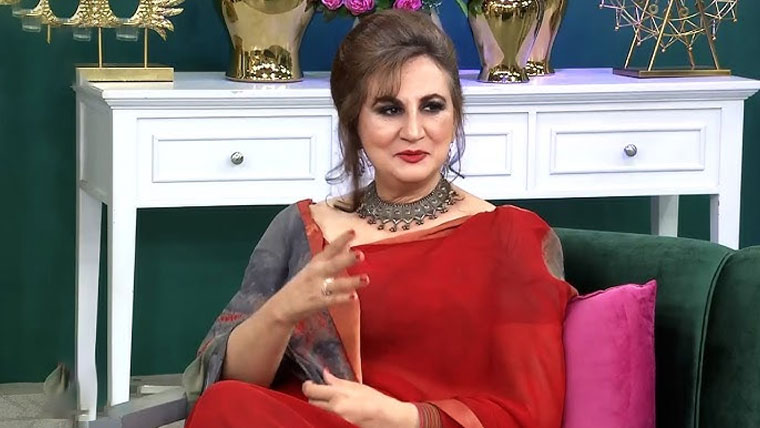
Lahore: (Tassawar News) The celebrated Pakistani actress and dedicated social activist, Faryal Gohar, has consistently captivated audiences, not only through her powerful performances and expressive storytelling but also by virtue of her formidable and distinctive personality. In a recent candid discourse, Gohar offered a rare and intimate glimpse into the less-documented facets of her private life. Her revelations spanned her multifaceted upbringing, the diverse cultural influences that shaped her worldview, the early trajectory of her acting career, her marriage to fellow actor Jamal Shah, and the nuanced evolution of her personal lifestyle over the decades. Her insights serve as a compelling narrative that transcends mere personal history, illuminating the rich and sometimes conflicting cultural experiences that have forged her identity.
A Tapestry of Cultural Heritage and Early Life
Faryal Gohar began her sharing by meticulously tracing the origins of her family background, revealing a fascinating cultural confluence. Her mother’s family, she disclosed, hailed originally from Gujarat, India, but had established a life in South Africa well before the tumultuous period of the Partition. Subsequently, her mother relocated to the United Kingdom, where she eventually met Faryal’s father, who was serving as an officer in the Pakistan Army and was posted at the Pakistani embassy in the UK.
“The union of my parents was effectively the marriage of two distinct cultural spheres. This blending of traditions, geographies, and social contexts became the foundational bedrock that profoundly influenced my subsequent upbringing and personal development.”
Growing up, Faryal was immersed in an environment that seamlessly blended traditional Eastern sensibilities with distinct Western surroundings. She openly shared that her mother, having been raised largely within a Western context, naturally imparted a modern, liberal perspective on lifestyle and sartorial choices during her own formative years. Faryal recalled:
“Before my marriage, I was accustomed to wearing modern clothing, which included short skirts. My choice of dress during that time was simply an authentic reflection of my comfort, my individual personality, and the cosmopolitan environment in which I was educated and raised.”
This early exposure to a liberal, Westernized lifestyle clearly underscored a self-assured, independent persona that would later become a defining trait of her public image.
A Career Forged in the Limelight and Marital Transitions
Gohar’s life trajectory experienced a significant shift when she decided to enter the realm of television. At the remarkably young age of 17, she secured her inaugural appearance on PTV (Pakistan Television). This initial role was notably modest, so small, in fact, that only her hands were visible on screen. This early, peripheral exposure unexpectedly led to opportunities in hand modeling, which subsequently served as a direct conduit into her full-fledged acting career.
It was during her increasingly prominent work in the television industry that she crossed paths with the talented actor Jamal Shah. Their professional association gradually deepened and eventually blossomed into a personal relationship, culminating in their marriage.
Faryal spoke with great affection about her spouse, openly admitting her deep admiration for Jamal Shah’s commanding personality, artistic talent, and innate charm. It was out of this profound sense of affection, mutual respect, and a desire to harmonize with her husband’s life that she gradually and naturally transitioned toward adopting more traditional clothing following their marriage, which included the voluntary wearing of a veil on occasion.
“I want to be absolutely clear: this change in my dressing was not imposed upon me. It was a completely natural and voluntary expression of my love, respect, and desire for harmony within our new life together. It was a personal choice reflecting a new stage in my life and relationship.”
Navigating Challenges and Embracing Personal Growth
Despite the palpable affection and artistic synergy between Faryal Gohar and Jamal Shah, Faryal revealed that acclimatizing to her new marital family environment presented unexpected and significant challenges. She subtly acknowledged that her in-laws reportedly expressed discomfort with her profession as a working actress, a societal prejudice that is unfortunately not uncommon in certain traditional circles. This clash of cultural expectations and professional realities led to a period of considerable emotional difficulty for her, particularly during the initial phase of the marriage.
While she consciously and maturely chose to refrain from divulging the most sensitive details of their private struggles, she did candidly confirm that the eventual marital problems and subsequent separation were not attributable to a singular cause. Instead, she characterized the breakdown as the result of multiple personal, situational, and relational reasons that compounded over time, leading to the unfortunate, yet necessary, dissolution of their partnership.
Faryal Gohar’s narration of her life story is particularly striking due to the unmistakable air of honesty, maturity, and self-awareness that permeates her account. Crucially, instead of focusing on assigning blame or dwelling on conflict, she strategically emphasizes themes of personal growth, the deepening of cultural understanding, and the inevitable, complex transitions that mark the lives of most individuals, especially those living under the public eye.
Conclusion
Faryal Gohar’s journey provides a deeply resonant reflection on how a multitude of external forces—ranging from one’s unique cultural environment and formative upbringing to pivotal relationships and deeply personal choices—converge to shape one’s evolving lifestyle and enduring identity over time. Today, Faryal Gohar maintains a position of high respect within the public sphere, celebrated not just for her artistic contributions but equally for her intellectual depth and her sustained commitment to social activism. Her candid reflections offer an invaluable insight into the delicate, often difficult, process of balancing a strong personal identity with the external pressures of societal and familial expectations. This honest and nuanced perspective makes her personal narrative not only deeply relatable to countless individuals navigating similar life transitions but also profoundly inspiring to those seeking to live authentically. Her life story stands as a testament to resilience and the continuous process of self-discovery.