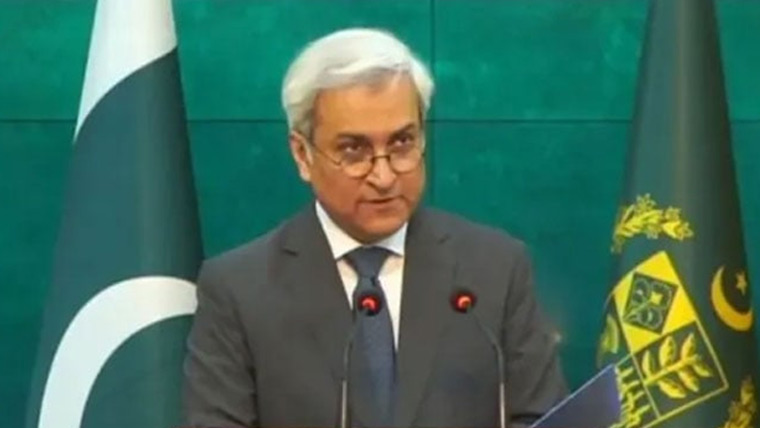
Islamabad (Tassawar News) The recent communiqué issued by Pakistan’s Foreign Office (FO), articulated by spokesperson Tahir Andrabi, offers a multifaceted and nuanced insight into the nation’s current diplomatic posture, particularly concerning its precarious relationship with the interim Afghan regime and its sustained commitment to key foreign policy objectives. The overarching theme is one of measured de-escalation coupled with an unequivocal commitment to national security and territorial integrity, framed within the context of robust bilateral and multilateral engagements.
The Imperative of Non-Escalation and Security Protocol
The Foreign Office’s assertion that the country “does not wish to escalate tensions with Afghanistan” establishes the guiding principle of Pakistan’s engagement: prioritizing stability over confrontation. This diplomatic overture, however, is strategically juxtaposed with a non-negotiable demand for the cessation of “cross-border infiltration.” This dichotomy underscores a fundamental challenge in the bilateral relationship, where foreign policy efforts to foster neighbourly coexistence are continually undermined by internal security threats emanating from Afghan soil.
The second round of bilateral negotiations with the Afghan Taliban regime, concluded in Istanbul, epitomised this delicate balancing act. Pakistan’s delegation, adopting a “constructive and positive approach,” explicitly reiterated the core security stipulation that Afghan territory must not be utilised as a launchpad for terrorism or any form of “provocation” against Pakistan. The spokesperson’s disclosure of having urged the Taliban regime for the past four years to take “firm action” against specific militant factions—termed “Fitna-e-Hindustan” and “Fitna-e-Khawarij”—provides a transparent account of the protracted nature of this security concern. The “continued rise in terrorism” within Pakistan during this period is justly cited as a “serious concern,” furnishing the geopolitical justification for the country’s “fully prepared and vigilant” posture.
“The primary objective of the dialogue remains the absolute cessation of cross-border infiltration, as the continued utilisation of Afghan soil for terrorism against Pakistan constitutes an egregious breach of international norms and is a serious setback to regional security.”
The spokesperson’s clarification regarding the sensitivity of specific details—such as whether the Taliban have formally designated the TTP a proscribed entity or issued a religious decree (fatwa) against terrorism—is a pragmatic acknowledgement of the inherent complexities and diplomatic protocols governing such high-stakes negotiations. The communiqué released by Turkey, being classified as a “covering note” rather than a definitive joint declaration, further highlights the preliminary nature of the progress achieved, suggesting that discussions on “written guarantees” are still in a state of flux.
Diversification of Diplomatic and Economic Outreach
Concurrently with its security-focused engagements in the West, Pakistan is actively strengthening its economic and diplomatic ties with key regional partners, as evidenced by the high-profile visit to Riyadh. Prime Minister Shehbaz Sharif’s attendance at the Future Investment Forum, at the solicitation of King Salman, culminated in a significant political and economic outcome.
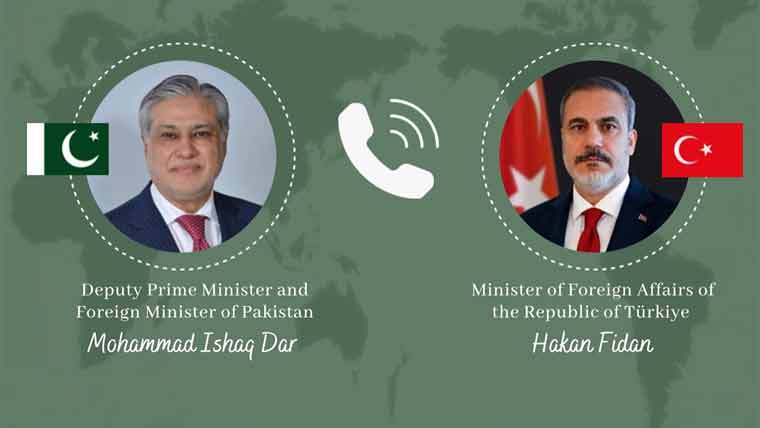
The meeting with Crown Prince Mohammed bin Salman proved instrumental in finalising a “joint investment framework,” a measure designed to catalyse substantial bilateral investments. Complementing this, the Deputy Prime Minister and Finance Minister, Ishaq Dar, engaged with Saudi Foreign Minister Faisal bin Farhan to deliberate upon avenues for enhanced bilateral ties, focusing primarily on investment facilitation and economic cooperation. The subsequent “comprehensive joint declaration” signifies a concerted and strategic effort to anchor Pakistan’s long-term economic stability through strengthened ties with its Gulf allies. This strategic economic pivot is an essential element of Pakistan’s broader foreign policy calculus.
Sustained Stance on International Flashpoints
The Foreign Office utilised the briefing to reiterate Pakistan’s unyielding stance on critical international and regional flashpoints, demonstrating the country’s adherence to principles of self-determination and humanitarian law.
On the Palestine issue, Pakistan delivered a strong condemnation of Israel’s alleged “violations of the ceasefire,” unequivocally branding them a “serious setback to global peace efforts.” This firm articulation reaffirmed Pakistan’s principled support for the establishment of an independent Palestinian state, with East Jerusalem as its capital.
Regionally, Pakistan observed October 27 as Black Day, a symbolic act designed to express unwavering solidarity with the Kashmiri people and underscore their inalienable right to self-determination. The acknowledgement of the U.S. role in facilitating the India-Pakistan ceasefire and the reference to the “bitter reality India has yet to accept” regarding past military incidents serves to keep the Kashmir dispute at the forefront of diplomatic discourse, maintaining Pakistan’s long-held position on the historical context of the conflict.
Conclusion
In sum, the Foreign Office briefing provided a comprehensive overview of a national foreign policy strategy that is currently juggling multiple high-stakes dossiers. It is defined by a pragmatic security doctrine advocating non-escalation with Afghanistan while simultaneously demanding a verifiable cessation of cross-border terrorism. This security focus is skillfully interwoven with a strategic economic thrust, particularly evidenced by the high-impact investment framework established with Saudi Arabia. Furthermore, by reaffirming its principled positions on Palestine and Kashmir, Pakistan positions itself as a committed advocate for international justice and self-determination. This blend of vigilance, diplomacy, and economic diversification constitutes a sophisticated and adaptive foreign policy apparatus aimed at fortifying national security and advancing its geopolitical interests on the global stage.