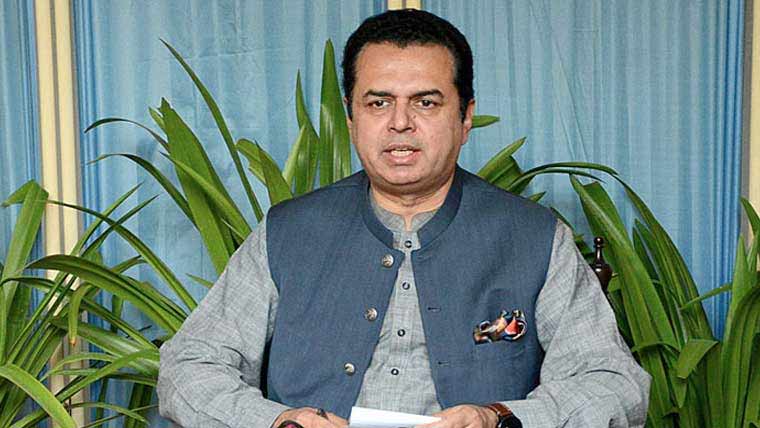
Islamabad (Tassawar News) The recent diplomatic engagement between Pakistan and Afghanistan, culminating in a joint declaration, has been emphatically characterized by Minister of State for Interior Talal Chaudhry as a “major diplomatic achievement.” Speaking from Islamabad, Chaudhry framed the agreement not merely as a temporary truce but as a foundational blueprint reflecting tangible progress toward regional peace, mutual understanding, and long-term security cooperation. This successful high-level dialogue underscores a crucial shift from strained relations toward a commitment to structured, cooperative engagement, signaling a hopeful trajectory for the volatile border dynamics that have historically defined their bilateral relationship.
Institutionalizing Cooperation: The Mechanism for Peace
A core component of this diplomatic success, as highlighted by Minister Chaudhry, is the commitment to establishing a formal mechanism for sustained engagement. The Minister disclosed that the final details of this framework are scheduled to be formalized on November 6, a critical date for operationalizing the commitments made in the joint declaration. Central to this upcoming discussion is the plan to institute a joint monitoring system. This system is clearly designed to enhance border management, improve communication channels, and ensure the fidelity of the agreement over an extended period, thus promoting a culture of accountability and shared responsibility.
The proactive development of this monitoring system is indicative of both countries’ recognition that abstract promises must be anchored in concrete, operational procedures. Chaudhry expressed considerable optimism, articulating a strong hope that Afghanistan will demonstrably undertake measures to prevent its territory from being exploited for activities detrimental to Pakistan’s national security.
“In his statement, Talal Chaudhry said that a formal mechanism will be finalised on November 6, and both countries will hold talks on establishing a joint monitoring system to ensure long-term cooperation.”
Crucially, the Minister reaffirmed Pakistan’s non-negotiable right to self-defence, explicitly stating that the country “reserves the right to respond in accordance with international law to any violation of the agreement.” This assertion serves as a prudent safeguard, balancing diplomatic engagement with the sovereign imperative of safeguarding national interests and border integrity.
The Nexus of Peace and Security: Interdependence
Talal Chaudhry’s commentary consistently emphasized the profound interdependence between the peace of Afghanistan and the stability of Pakistan. This philosophical underpinning highlights that the security of one nation is intrinsically linked to the other, making mutual cooperation a geopolitical necessity rather than merely a choice. He underscored the fundamental requirement that both countries must guarantee their respective territories are not utilized for hostile actions against the other. This principle is not only key to counter-terrorism efforts but is also essential for fostering the mutual trust necessary to sustain any long-term diplomatic relationship.
The Minister’s remarks also extended to a cautionary note regarding the potential pitfalls of external involvement. He explicitly warned that “external influence or proxy involvement could harm Afghanistan’s sovereignty and long-term interests,” urging the Afghan leadership to prioritize internal stability and self-determination. This is a pointed reminder that genuine and lasting security in the region can only be cemented through mutual respect and genuine regional collaboration, rather than reliance on guarantees from non-regional powers.
“He emphasized that Afghanistan’s peace is deeply linked with Pakistan’s stability, and that both countries must ensure their territories are not used against each other.”
Chaudhry’s vision clearly champions a regional paradigm where dialogue, cooperation, and development take precedence over confrontation. He firmly stated that “no foreign country can guarantee Afghanistan’s security and that lasting stability can only be achieved through mutual respect and regional collaboration,” thus aligning the joint declaration with Pakistan’s broader diplomatic strategy of promoting indigenous solutions to regional challenges.
Strategic Implications and Future Trajectory
Political analysts view this joint declaration as a significant turning point, potentially providing a much-needed structured framework for communication and accountability between the two states. The upcoming November 6 meeting is pivotal, as the detailing of operational procedures for the proposed joint monitoring system could indeed establish a model for cross-border collaboration and conflict resolution that could positively influence the wider South Asian region.
The Minister’s measured and policy-focused discourse supports Pakistan’s diplomatic priority of reducing cross-border tensions, strengthening vital trade ties, and advancing shared security objectives. His expression of confidence that renewed dialogue will help eliminate misunderstandings and promote trust reinforces the notion that Pakistan’s engagement remains firmly rooted in diplomacy, peaceful coexistence, and constructive engagement with Kabul.
Conclusion: A Commitment to a Shared Future
In summary, Minister of State for Interior Talal Chaudhry has effectively positioned the Pakistan-Afghanistan joint declaration as a seminal moment in regional diplomacy. His statement transcends mere political rhetoric, outlining a clear and forward-looking vision where the historical default of mistrust and instability is systematically replaced by a framework of partnership and mutual respect. The commitment to finalizing a formal monitoring mechanism underscores the seriousness of both nations in moving beyond past grievances toward a shared, secure future.
The declaration is viewed not simply as a diplomatic document, but as a commitment to a shared future built on the principles of understanding, respect for sovereignty, and cooperation. The success of the November 6 talks and the subsequent implementation of the joint monitoring system will be the ultimate measure of this strategic achievement, determining whether this diplomatic turning point will translate into enduring peace and stability for both Pakistan and Afghanistan, and by extension, the entire region.