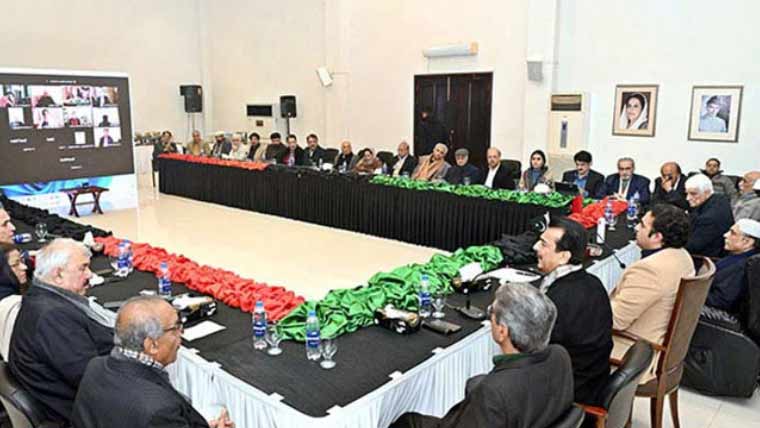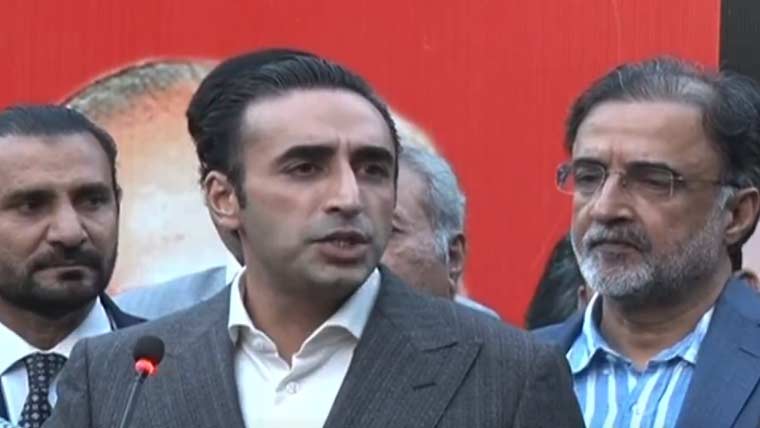
Islamabad: (Tassawar News)The recent pronouncements by Chairman Bilawal Bhutto Zardari of the Pakistan Peoples Party (PPP), following a parliamentary gathering in the federal capital, represent a potent reaffirmation of his party’s enduring commitment to the cause of Kashmir. This statement, while serving an immediate political purpose—mobilizing support in Azad Kashmir—also offers a fascinating case study in the intersection of national historical narrative, dynastic political legacy, and contemporary democratic strategy. The essence of his message pivots on the assertion that the very “foundation” of the PPP was inextricably linked to the “defend[ing] and promot[ing] the Kashmir cause,” thereby positioning the party not merely as a political contender but as the historical custodian of the Kashmiri people’s aspirations.
The Historical and Ideological Lineage of the PPP’s Stance
Bilawal Bhutto Zardari’s reference to the PPP’s involvement spanning “three generations” is a crucial rhetorical device. It invokes the legacy of his grandfather, Zulfikar Ali Bhutto, and his mother, Benazir Bhutto, imbuing the party’s current stance with a sense of historical mandate and intergenerational constancy. This deep-rooted association is deployed to validate the party’s claim as the “only true representative of the Kashmiri people.” In the volatile political landscape of the region, where numerous factions vie for influence, asserting this unique and unbroken lineage is a powerful tool to differentiate the PPP from its contemporaries. The appeal is to a sense of reliability and a historical track record that, according to the Chairman, transcends transient political maneuvering.
“He reaffirmed that the PPP has always been at the forefront of advocating for the rights of the Kashmiri people… The party’s foundation was laid to defend and promote the Kashmir cause, a principle that has been steadfastly upheld across three generations of leadership.”
This invocation of history serves not just as a political boast but as a cohesive ideological anchor. The Kashmir issue is a cornerstone of Pakistani foreign policy and national identity; by claiming it as the raison d’être of the PPP, the Chairman strategically merges the party’s destiny with the national cause. This strategy is designed to resonate deeply with voters who prioritize the resolution of the conflict above other domestic concerns. The implication is clear: to vote for the PPP is to vote for the historical and ideological integrity of the movement for Kashmiri rights.
The Diagnosis of the ‘Political Vacuum’ and the Offer of a Solution
A central critique in Bilawal Bhutto Zardari’s address is his analysis of the current political environment in Kashmir. He attributes the “emerged political vacuum” to “non-political interference and conspiracies.” This diagnosis is highly significant. By labeling the instability as a consequence of “non-political interference,” he subtly indicts rival political elements or perhaps even extra-parliamentary forces, suggesting that the integrity of the democratic process has been compromised. A “political vacuum” implies an absence of effective governance and legitimate representation, which, in turn, fuels public dissatisfaction and disenfranchisement.
The PPP then positions itself as the necessary and inevitable solution to this self-described void. The statement, “Our party is now in a strong position to form the government in Azad Kashmir,” is not merely a forecast but a declaration of intent. It frames the upcoming election as a critical juncture for restoring authentic democracy and people-oriented governance to the region. The Chairman’s expression of “gratitude to those joining his party” further bolsters this narrative, presenting the movement as one of coalescence and growing popular consensus, a visible manifestation of the political vacuum being naturally filled by the PPP’s platform.
“Due to non-political interference and conspiracies, a political vacuum has emerged in Kashmir… This vacuum has left the Kashmiri people in need of a true, representative, and democratic voice, a role that the Pakistan Peoples Party is uniquely positioned to fulfill.”
The constant emphasis on the PPP remaining a “democratic and people-oriented party” is a deliberate attempt to contrast their political methodology with the alleged conspiratorial forces. In this framing, the PPP offers transparency and legitimacy, standing as a bulwark against the forces of destabilization. This rhetorical positioning is vital in a context where political legitimacy is frequently debated and contested.
The Vow of Fidelity and the Rhetoric of Representation
The concluding promise from Bilawal Bhutto Zardari is a pledge of political fidelity: to “never to disappoint the people of Kashmir.” This vow serves as the ultimate guarantee, linking the party’s political fate directly to its performance in upholding the Kashmiri cause. In political discourse, such promises are designed to forge an emotional compact with the electorate. It elevates the political campaign from a mere contest for seats to a commitment of unwavering service and loyalty.
Furthermore, the continuous stress on the party’s role to “continue to represent the voice of the Kashmiri people” highlights a key strategic objective: to be recognized as the authentic voice. The implication is that other parties fail to truly capture the aspirations of the populace, perhaps becoming too entangled in federal politics or self-interest. The PPP, by consistently foregrounding the Kashmir issue and its democratic principles, seeks to secure the mandate not just to govern, but to speak for the people on the national and international stage. This aspiration for sole, legitimate representation underscores the high stakes of the electoral contest in Azad Kashmir.
The strategic reiteration of the party’s strength and readiness to govern is an essential component of this high-stakes political messaging. It transforms an aspirational goal into a declaration of imminent success, leveraging the psychological effect of momentum to further encourage voters and potential political allies.
Conclusion
Bilawal Bhutto Zardari’s address is a masterclass in politically charged rhetoric, skillfully merging the historical legacy of the Pakistan Peoples Party with a contemporary critique of the political malaise in Kashmir. By centering the Kashmir cause as the foundational principle of the PPP and diagnosing a “political vacuum” caused by external conspiracies, the Chairman effectively positions his party as the sole, legitimate, and historically mandated agent for democratic restoration. The persistent emphasis on a “people-oriented” and “democratic” approach, coupled with a firm promise to never disappoint, forms a powerful and cohesive political narrative designed to mobilize support and secure a governing majority in Azad Kashmir. This strategic deployment of history, critique, and promise is integral to the party’s efforts to establish itself as the dominant political force and the authentic voice of the Kashmiri people.
Would you like me to analyze any specific rhetorical devices or linguistic features in this expanded text to further refine it for an academic setting?