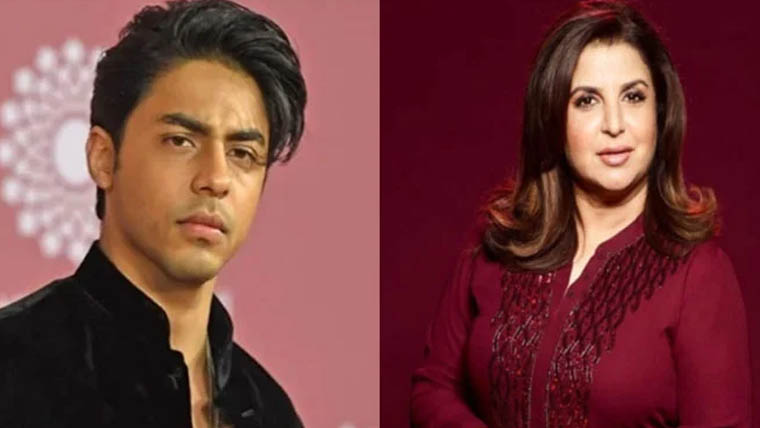
(Web Desk) The intersection of celebrity childhoods and cinematic influences often yields fascinating anecdotes, and a recent revelation by renowned Bollywood director and choreographer Farah Khan has offered a surprising insight into the early life of Aryan Khan, the son of global superstar Shah Rukh Khan. In a disclosure that has garnered considerable media attention, Farah Khan shared that Aryan’s most admired actor during his formative years was not a leading contemporary but the character actor Rajat Bedi, whose performance in the film Jaani Dushman left a lasting impression on the young film enthusiast. This story not only highlights a lesser-known facet of the Khan family’s private life but also provides a charming commentary on the unexpected ways in which actors can resonate with young audiences.
The Revelation on the Culinary Set
The disclosure occurred during Farah Khan’s popular YouTube series, a show where she blends her professional life with a personal touch by visiting the homes of various celebrities to engage in cooking and conversation. The latest episode featured a visit to the residence of Rajat Bedi, who currently resides in Canada. It was amidst this casual, culinary setting that the choreographer unveiled Aryan Khan’s childhood fandom.
“Aryan Khan has always been a big fan of Rajat Bedi. When I told Aryan that Rajat would be on my show, he said he had admired his roles since childhood,” Farah Khan stated, injecting a light-hearted element into the chat. She further remarked on the revelation, adding, “It made me happy to know that our boy turned out to be quite the film buff too.”
This anecdote is particularly compelling as it deviates from the predictable narrative of a star’s son idolising only global A-listers. Instead, it underscores the profound impact character actors, such as Rajat Bedi, can have on audiences, regardless of their star power. Bedi, known primarily for his villainous or supporting roles, clearly struck a chord with Aryan, proving that cinematic appreciation transcends typical box office hierarchy.
The Encounter: Humility Meets Admiration
Rajat Bedi himself shared his genuine surprise and reaction to learning about his high-profile admirer. Having shifted his base to Canada, the actor was initially taken aback when he received news of the interest from the Khan camp.
“I got a call saying a director wanted to meet me — I was surprised when I learned that Shah Rukh Khan’s son wanted to meet me. I had to pinch myself to believe it!” Bedi admitted, reflecting on the unexpected nature of the request.
The subsequent meeting between the two, which took place at Aryan Khan’s office, was evidently a respectful and memorable event for Bedi. He was deeply impressed by the young man’s demeanour, noting a striking level of politeness and deference.
Bedi recalled the interaction with palpable warmth: “I was genuinely impressed by his humility.” He highlighted that Aryan personally welcomed him and treated him with remarkable respect, a trait that clearly stood out.
This sentiment was swiftly echoed and validated by Farah Khan, who has a long-standing and close relationship with the Khan family. She offered a compelling testament to the character of Shah Rukh Khan’s son: “I must say, Aryan is one of the most well-mannered young men I’ve met in the industry.” Such endorsements from established figures like Bedi and Khan provide valuable context to Aryan Khan’s public image, focusing not on his celebrity lineage, but on his personal conduct and respectful behaviour within the demanding environment of the film industry.
The Significance for Cinematic Culture
The narrative surrounding Aryan Khan’s childhood admiration for Rajat Bedi carries a broader significance for cinematic culture and audience studies. It serves as a reminder that the influence of cinema is multifaceted; a particular role, a memorable scene, or the intensity of a character actor’s performance can capture a viewer’s imagination as profoundly as any leading star’s charisma. Rajat Bedi’s portrayal in Jaani Dushman, a film known for its dramatic flair, was evidently potent enough to become a source of childhood admiration for someone raised in the heart of Bollywood’s royalty. Furthermore, the genuine humility demonstrated by Aryan Khan during their meeting showcases a positive side of the next generation of industry talent, suggesting a respect for the craft and the individuals who contribute to it, regardless of their position in the cinematic hierarchy. This exchange, facilitated by Farah Khan’s engaging platform, offers a refreshing perspective on the connections and mutual respect that underpin the Indian film fraternity.