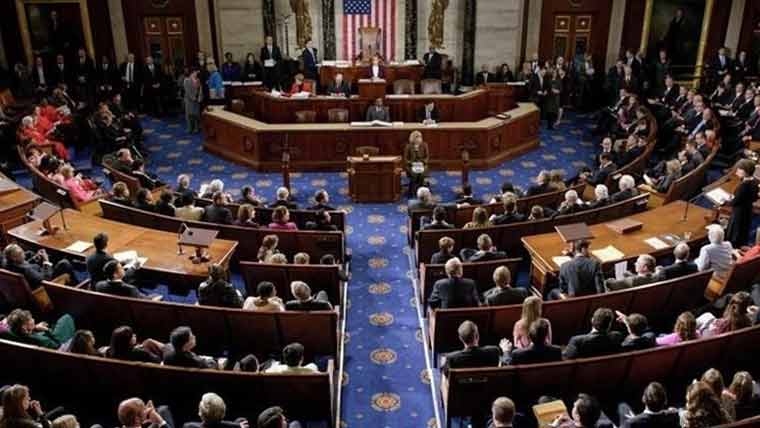
Washington (Tassawar News): The recent vote in the United States Senate, which successfully rejected the expansive tariffs imposed by the former Trump administration on a multiplicity of global trading partners, represents a seminal, albeit largely symbolic, repudiation of the use of emergency presidential powers in matters of international trade. While the legislative resolution lacks the force of immediate mandatory implementation, its passage underscores a profound and persistent constitutional tension regarding the delegation of tariff-setting authority between the executive and legislative branches of government.
The Senate’s action was not an isolated incident; rather, it constitutes a deliberate and calculated legislative check against a previous administration’s propensity to invoke obscure national emergency statutes to enact sweeping economic measures. The former administration’s invocation of the International Emergency Economic Powers Act (IEEPA), a statute historically reserved for imposing sanctions against hostile foreign entities or terrorist organisations, to justify broad-based tariffs on allies like Canada and Brazil, has been the subject of intense judicial and congressional scrutiny.
“This vote serves as a vital signal that the Senate, representing the collective will of the states, is prepared to push back against the overreach of executive prerogative. While the resolution itself is non-binding, its political efficacy lies in its bipartisan condemnation of weaponising national security provisions for conventional trade policy objectives,” commented a constitutional law expert on the implications of the decision.
The Dynamics of Legislative Dissent
The success of the resolution was predicated upon a rare coalition of bipartisan dissent. The measure garnered the unanimous support of all Democratic senators, who were critically joined by a cadre of four Republican members. This cross-party collaboration signified a momentary breach in party solidarity, driven by a confluence of free-market principles and concerns over legislative autonomy. These Republican “break ranks” members essentially prioritized what they perceived as the Constitutional mandate of Congress to regulate commerce over party loyalty to the former President’s protectionist agenda.
This specific vote, which addressed the broader use of emergency powers for tariffs on multiple countries, followed earlier, similarly successful measures aimed at nullifying the specific 50% duties levied against Brazil and the 35% duties on Canada. The cumulative effect of these sequential votes is to establish a clear congressional record of disapproval concerning the unilateral deployment of tariffs under national emergency declarations.
The Non-Binding Nature and Legislative Gridlock
A critical analysis of the Senate’s action requires acknowledging its non-binding status. The resolution, which functions as a sense of the Senate, does not possess the legislative power to compel the executive branch to immediately repeal the tariffs. This limitation stems from the complex requirements for passing joint resolutions to terminate a declared national emergency, which demand passage in both the Senate and the House of Representatives before being sent to the President.
Given the existing legislative landscape, specifically the narrow yet influential control exerted by the former President’s party in the House of Representatives, the likelihood of the resolution passing the lower chamber was, and remains, vanishingly low. Furthermore, even if the resolution were to successfully navigate the House, it would almost certainly face a presidential veto. The prospect of Congress mustering the two-thirds majority in both chambers required to override such a veto is generally considered politically unfeasible, thereby rendering the Senate’s action symbolic rather than immediately substantive.
This institutional gridlock exposes a fundamental vulnerability in the mechanisms designed for Congressional oversight of executive emergency powers, particularly when the President is determined to exercise that authority.
Economic Fallout and International Ramifications
Beyond the domestic political theatre, the tariffs, which were often announced abruptly and without consultation, generated considerable economic upheaval and strained key transatlantic and North American alliances. The imposition of duties on critical imports not only disrupted complex global supply chains but also led to retaliatory tariffs from affected nations, ultimately burdening American consumers and manufacturers.
The Senate’s vote can thus be interpreted as a political effort to assuage the concerns of trading partners and provide a measure of reassurance to American industries that were negatively impacted. By rejecting the tariffs, senators were implicitly endorsing a return to multilateral trade norms and the traditional legislative process for setting commercial policy, rather than governing by executive decree under the pretense of a national security threat.
The former administration’s use of the IEEPA for trade purposes was, in the eyes of many critics, a drastic departure from historical precedent. While a previous President, Richard Nixon, used a similar predecessor statute to impose a temporary import surcharge in 1971, that action was related to a monetary crisis and was upheld under different legal reasoning. The broad, often ad hoc, and long-term imposition of tariffs by the Trump administration on a multitude of products and countries established a new, legally contested, and diplomatically volatile precedent.
Conclusion: The Assertion of Congressional Prerogative
In summation, the vote by the U.S. Senate to reject the tariffs imposed under the guise of emergency powers by the former Trump administration represents a pivotal, albeit non-binding, assertion of Congressional prerogative. The successful passage, facilitated by bipartisan solidarity against executive overreach, clearly communicates the legislature’s intent to claw back powers it believes were unilaterally usurped.
Although the resolution is unlikely to result in the immediate repeal of the duties due to the subsequent legislative and veto hurdles, its enduring significance lies in its unequivocal political message. It serves as a powerful, historical benchmark for future debates on the appropriate boundaries of presidential authority in both economic and national security spheres, ultimately highlighting the enduring tension between efficiency of executive action and the deliberative oversight essential to democratic governance.