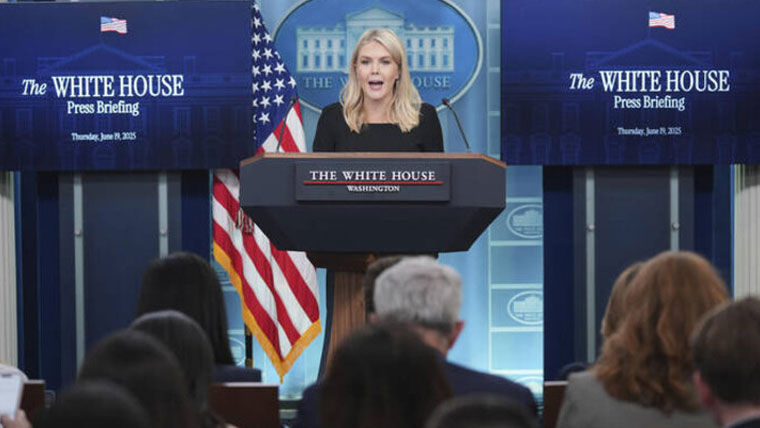
Washington: (Tassawar News) The recent imposition of stringent new access restrictions by the White House on credentialed members of the press marks a significant and concerning development in the ongoing, often fraught, relationship between the executive branch and the media. This decision, as reported by various international news outlets, mandates an immediate and substantial tightening of entry protocols for journalists seeking access to pivotal governmental spaces. The new policy specifically dictates that journalists are precluded from entering the offices of the Press Secretary or other senior officials without obtaining prior, explicit authorisation. Furthermore, access to the highly significant “Upper Press Room” is now contingent upon a pre-scheduled appointment, fundamentally altering the traditional, fluid reporting environment. This move, officially framed as a measure to safeguard “sensitive information within the White House,” is perceived by many observers and press advocacy groups as a profound erosion of journalistic autonomy and government transparency.
The Ramifications of Impeded Access and Unscheduled Reporting
The historical context of White House press coverage underscores the gravity of these new limitations. Traditionally, the ability of reporters to frequent the workspaces of senior communications staff, particularly in the immediate vicinity of the Oval Office, has been crucial for prompt, unscheduled newsgathering. This spontaneous access, often referred to as “wandering up” to officials, allows journalists to quickly seek clarification, confirm breaking stories, or elicit immediate reactions on emergent issues. This environment fosters a form of continuous, low-level accountability, whereby officials are perpetually subject to queries from the press corps. The new requirement for pre-scheduled appointments effectively dismantles this critical mechanism, replacing spontaneous inquiry with a controlled, formal, and bureaucratic process.
Critics contend that this shift fundamentally diminishes the press’s capacity to fulfil its role as a governmental watchdog. By imposing an official barrier to access, the administration gains greater control over the flow and timing of information, thereby allowing officials to avoid difficult, unexpected questioning. The ostensible rationale for this overhaul—“protecting sensitive information”—is often viewed with scepticism in the context of previous administrations’ efforts to manage media narratives. It raises critical questions regarding the balance between national security imperatives and the fundamental principle of public accountability.
“The bedrock of an informed democracy rests upon the ability of the press to operate without undue hindrance. The imposition of pre-scheduled access in areas traditionally open for spontaneous newsgathering is not merely an administrative inconvenience; it is a systemic impediment to the immediate and unfiltered flow of information, effectively creating a controlled narrative environment.”
This expert view highlights the perceived long-term structural harm these restrictions may inflict upon governmental transparency.
A Pattern of Controlled Information Management
Significantly, the White House’s decision does not occur in a vacuum; it follows a similar, antecedent move by the Pentagon just last month, where access controls were also introduced to curtail unapproved press movement in sensitive zones. This mirroring of policy across two of the most critical federal institutions suggests a nascent, potentially coordinated governmental strategy to centralise and regulate media access to senior officials and sensitive areas.
This emerging pattern of restriction is particularly noteworthy for its contrast with the spirit of the First Amendment of the U.S. Constitution, which guarantees freedom of the press. While government officials have a legitimate right to protect genuinely classified or sensitive material, the extension of such restrictions to the non-sensitive administrative offices of communications staff—a move reportedly justified by claims of reporters attempting to secretly record conversations or capture images of documents—is seen by many as a disproportionate response. The potential for a chilling effect on aggressive investigative reporting becomes a substantial concern when access to key information brokers is systematically curtailed.
- Erosion of Trust: The restrictions signify a deepening institutional mistrust between the political leadership and the journalistic corps.
- Selective Disclosure: The appointment-based system enables officials to engage only with reporters deemed favourable or whose questions are anticipated, thus fostering selective disclosure of information.
- The Precedent Set: Following the Pentagon’s similar action, the White House’s policy establishes a dangerous precedent for federal agencies to unilaterally redefine the parameters of media engagement, potentially jeopardising a decades-long tradition of relatively unhindered press access.
The ongoing tension between the necessity for operational security and the demand for maximum transparency is a constant feature of democratic governance, yet these recent executive decisions appear to weigh heavily in favour of control.
Conclusion
In conclusion, the new access mandates from the White House, requiring pre-approval for entry into the offices of senior communications staff and the Upper Press Room, represent a considerable alteration to the environment of political reporting. The administration justifies the move as a crucial measure for protecting sensitive material, particularly given structural changes within the National Security Council. However, when viewed in conjunction with the preceding restrictions implemented at the Pentagon, this policy appears to be part of a broader, more systematic initiative to tightly manage and restrict the spontaneity of media interaction with high-level officials. This development risks impeding the essential function of the press in holding the executive branch accountable, potentially undermining the delicate balance that sustains a healthy and transparent democracy. The long-term impact on the public’s right to timely, unfettered information necessitates close scrutiny from legislative bodies and press freedom advocates.