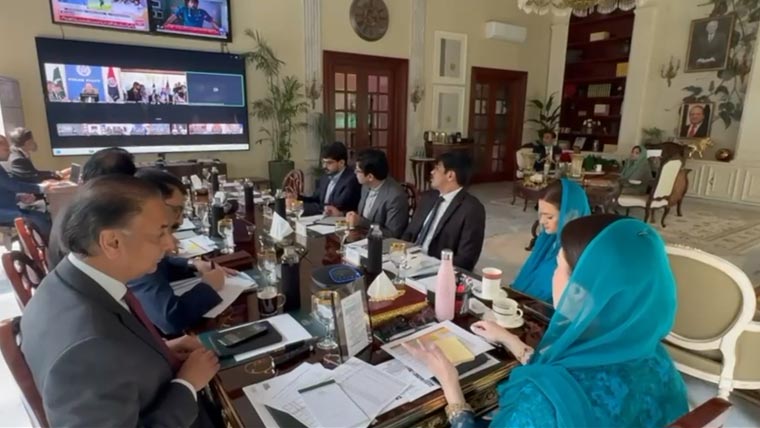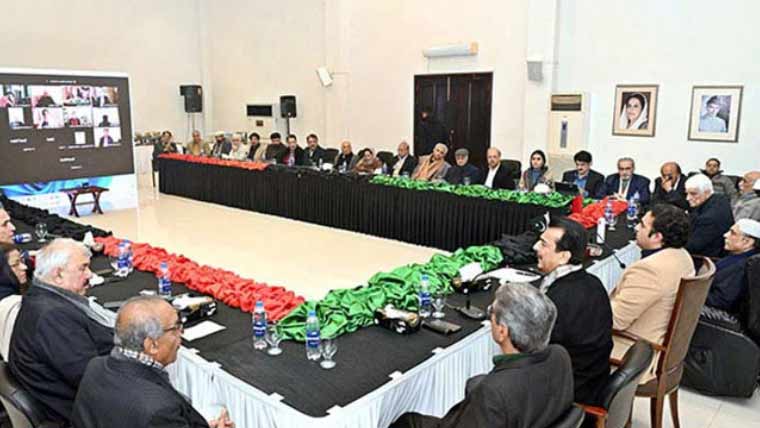
Karachi: (Tassawar News) The political landscape in Pakistan is currently witnessing a critical confluence of constitutional negotiation and intra-coalition dynamics, epitomized by the Pakistan Peoples Party (PPP)’s scheduled Central Executive Committee (CEC) meeting in Karachi. This pivotal assembly is convened to undertake a rigorous examination of the draft proposal for the 27th Constitutional Amendment, a piece of legislation that, political analysts contend, possesses the potential to fundamentally recalibrate the power-sharing framework between the federation and its constituent provinces. The deliberation is not merely an internal party matter; rather, it is viewed as a definitive moment that will shape the future trajectory of the incumbent government’s legislative agenda and the enduring stability of the country’s federal structure.
The Substance of the Proposed Amendment and the Source of Dissension
According to high-level party insiders, the executive branch has formally furnished the PPP leadership with the particulars of the constitutional amendments. This proactive sharing of the draft is indicative of the government’s efforts to ensure political consensus, a prerequisite for the successful passage of any constitutional overhaul. However, despite this gesture of good faith, authoritative sources within the PPP have disclosed that the party harbours a set of five major reservations concerning the draft’s provisions. These objections are deeply rooted in the party’s long-standing commitment to provincial autonomy and decentralization of power, principles that were substantially enshrined in the preceding 18th Constitutional Amendment.
The Unwavering Stance on Fiscal Federalism
The most salient of the PPP’s concerns pertains to the principles of fiscal federalism, specifically the National Finance Commission (NFC) Award. The party has issued an unequivocal declaration that the share of national resources allocated to the provinces must, under no circumstances, be permitted to fall below a threshold of 57 percent. This firm position underscores the significance of financial self-sufficiency for provincial governments, enabling them to execute their mandate effectively and address regional developmental disparities. Any attempt to dilute this established share is perceived as a direct assault on the economic sovereignty of the provinces.
“The bedrock of a robust federation is equitable resource distribution. We maintain a principled and non-negotiable stance that the provincial share in the NFC must be preserved, indeed, buttressed, to ensure that the hard-won fiscal autonomy is not retrospectively compromised. A reduction would be interpreted as a regression from the democratic maturation Pakistan has achieved.”
Protecting Provincial Autonomy: The Education Curriculum Dispute
A secondary, yet equally significant, point of contention revolves around the proposed introduction of a uniform education curriculum across the entirety of the nation. The PPP vehemently contends that educational policy formulation and implementation constitute a provincial subject, a responsibility explicitly devolved to the federating units under the spirit and letter of the 18th Amendment. Party representatives articulate the belief that a standardized national curriculum runs contrary to the constitutional ethos of devolution, potentially undermining the ability of provinces to tailor educational content to specific regional, linguistic, and cultural needs. This issue transcends mere administrative demarcation; it touches upon the core philosophical divergence concerning the degree of centralisation appropriate for a diverse federation.
Parliamentary Calculus: The Numerical Imperative for Passage
The political and constitutional gravity of the situation is heightened by the stringent requirement for passing any amendment to the Constitution of Pakistan: a two-thirds majority in the National Assembly. This supermajority rule is a democratic safeguard intended to ensure that constitutional changes reflect a broad and stable national consensus, rather than a fleeting simple majority.
The National Assembly comprises a total of 336 seats. With 10 seats currently remaining vacant, the effective strength of the house stands at 326 members. Consequently, the minimum number of affirmative votes required for the approval of the 27th Amendment is mathematically determined to be 224.
The Coalition’s Numerical Advantage
The incumbent ruling coalition, which includes the PPP, ostensibly possesses the requisite numerical superiority. Their collective support base currently accounts for 237 members. The composition of this influential alliance is meticulously detailed:
- Pakistan Muslim League (N) (PML-N): The largest partner, commanding 125 seats.
- Pakistan Peoples Party (PPP): A crucial component with 74 seats.
- Muttahida Qaumi Movement-Pakistan (MQM-P): Contributing 22 members.
- Pakistan Muslim League-Quaid (PML-Q): Holding 5 seats.
- Istehkam-e-Pakistan Party (IPP): Accountable for 4 members.
- The remaining support comprises one seat each from the Balochistan Awami Party (BAP), National Party, and PML-Zia, supplemented by four independent members aligned with the government.
The Opposition’s Collective Strength
Arrayed against the ruling alliance are 89 members occupying the opposition benches. This bloc is primarily composed of 75 independent lawmakers, alongside the 10 members of the Jamiat Ulema-e-Islam (F). The final segment is formed by single-seat representation from the Sunni Ittehad Council (SIC), Majlis Wahdat-ul-Muslimeen (MWM), BNP-Mengal, and the Pakhtunkhwa Milli Awami Party (PkMAP).
Despite the seemingly comfortable 237-vote support for the government—a margin of 13 votes over the 224-vote requirement—political commentators are unanimous in their assessment that this advantage is highly contingent upon the unconditional support of the PPP.
“The parliamentary arithmetic reveals a delicate equilibrium. While 237 votes appear sufficient on paper, the withdrawal or conditionalisation of the 74 PPP votes would instantly plunge the government’s position into jeopardy. This underscores the party’s immense leverage; it holds the decisive key to the successful constitutional transition.”
Political Significance and Contingent Outcomes
The anticipated outcome of the PPP’s CEC meeting is therefore being regarded as a bellwether for the future stability and working relationship between the party and the federal government. The concerns raised by the PPP—particularly those concerning the inviolability of provincial rights—are not merely tactical manoeuvres; they represent a fundamental commitment to the principles of decentralisation that have historically defined the party’s ideological platform.
Political observers believe that the meeting will critically inform the future direction of the PPP’s collaboration with the federal government. Should the core reservations of the party remain unaddressed, it is highly probable that the PPP will insist upon substantive amendments to the draft bill prior to extending its complete and unified support.
The 27th Constitutional Amendment, even at this nascent stage of deliberation, has already ignited a spirited and consequential debate across the entirety of the political establishment. Its potential to reshape the delicate balance of powers between the federation and its constituents is not underestimated. Consequently, the deliberations scheduled for the PPP’s CEC are being meticulously monitored by an array of stakeholders, including political analysts, the journalistic fraternity, and various institutions across Pakistan, all keenly awaiting the pronouncements that will ultimately determine the future constitutional framework.
Conclusion
The ongoing scrutiny of the 27th Constitutional Amendment by the Pakistan Peoples Party’s Central Executive Committee represents a profound moment of constitutional reflection and political leverage within Pakistan’s democratic ecosystem. The PPP’s reservations, notably regarding the 57 percent provincial share in the NFC and the proposed uniform education curriculum, serve as a potent reminder of the enduring tension between centralised governance and the principles of devolution cemented by the 18th Amendment. While the ruling coalition currently possesses the numerical majority required in the National Assembly, this advantage is highly conditional upon the endorsement of the 74 PPP seats. The final decision emanating from the Karachi meeting will thus not only determine the fate of the proposed amendment but will also provide a crucial barometer for the future cohesion of the ruling alliance and, more broadly, the sustained commitment to cooperative federalism within the nation. The outcome is poised to significantly impact the trajectory of power distribution for the foreseeable future.