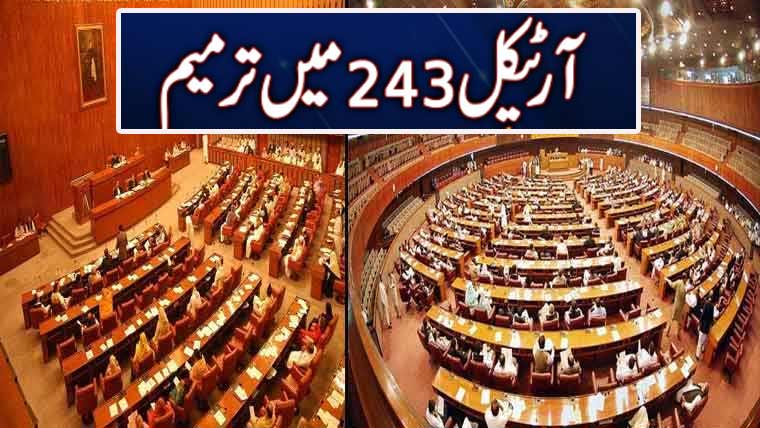
Islamabad: (Tassawar News) The Joint Parliamentary Committee on Law and Justice, a crucial body comprising representatives from both the Senate and the National Assembly, has successfully concluded detailed deliberations and formally approved several significant amendments to the Constitution as part of the proposed 27th Constitutional Amendment Bill. This development marks a substantial step forward in what is considered one of Pakistan’s most ambitious constitutional reform efforts in recent years, encompassing profound changes to judicial restructuring, administrative protocols, and the balance of federal-provincial relations.
Breakthrough on Core Articles and Judicial Reform
After several weeks of intensive review and detailed scrutiny of the draft bill, parliamentary sources have confirmed a series of major decisions reached by the committee. Central to these approvals is the amendment to Article 243, a pivotal part of the Constitution that governs the command and control of the Armed Forces and defines the powers of the President in their capacity as the Supreme Commander.
Furthermore, the committee has formally endorsed a significant judicial reform initiative: the establishment of constitutional courts. This measure is intended as a major structural enhancement aimed at expediting the handling of constitutional and human rights cases, thereby streamlining the appellate process and potentially reducing the burden on the superior judiciary.
Another crucial adjustment approved relates to addressing the notorious judicial backlog. The committee voted to extend the time limit for concluding pending cases from the current six months to a more realistic one year. A supplementary provision was also endorsed:
Under the approved draft, if a case remains inactive for one year without follow-up proceedings, it will be considered closed or settled—a measure intended to reduce the judicial backlog.
This structural change is designed to enhance judicial efficiency by clearing stagnant cases from the system, compelling timely action from legal counsel, and offering a procedural mechanism to declare long-dormant matters resolved.
Immunity Clause Generates Debate
The committee also formally approved a new clause granting lifetime immunity to the President of Pakistan. This specific provision has already become a subject of intense scrutiny and considerable debate among legal and political circles, raising serious questions about the principles of accountability and equality before the law. While the proposal was sanctioned by the joint committee, its contentious nature suggests it will likely face rigorous opposition during the subsequent parliamentary debate in the Senate and National Assembly.
During the joint session, government coalition parties introduced three additional amendments, all of which were formally incorporated into the final discussion draft, signifying the broad legislative engagement surrounding the bill. Parliamentary insiders confirmed that the core consultation process on the draft of the 27th Amendment is now complete, although final decisions on a few supplementary proposals remain pending, with an outcome expected within a day.
Incorporating Diverse Political Proposals
The committee deliberations served as a platform for political parties across the spectrum to present their respective regional and political demands, underscoring the federal character of the amendment process. Insiders reported that several significant proposals were tabled by key political entities:
- The Awami National Party (ANP) proposed a constitutional change in the name of Khyber Pakhtunkhwa province.
- The Balochistan National Party (BNP) suggested a constitutional increase in the number of provincial assembly seats for Balochistan, a proposal aimed at enhancing the political representation of the province.
- The Muttahida Qaumi Movement (MQM) also tabled its own set of proposals, contributing to the comprehensive nature of the discussions.
Government representatives requested additional time to carefully review both the ANP and BNP proposals before reaching a final decision, which, along with other supplementary matters, is anticipated within the next 24 hours. This deferral is critical to ensure that provincial and regional sensitivities are adequately addressed before the final bill is presented.
The decision follows extensive consultation within the committee on the 27th Constitutional Amendment Draft, which has been under review for several weeks.
The Road to Enactment
According to sources involved in the process, the final version of the 27th Constitutional Amendment Bill is nearing completion and will be ready for presentation to the full Parliament immediately after the committee finalises its review of the remaining supplementary suggestions.
The procedural path for the bill is clearly defined: it will first be tabled in the Senate for approval, requiring a two-thirds majority, before being moved to the National Assembly for its final endorsement, which also necessitates a constitutional majority.
This amendment package is poised to address an intricate array of issues, ranging from judicial restructuring and administrative reforms to refining the complex relationship between federal and provincial authorities. The successful navigation of the committee stage is a testament to the willingness of the ruling coalition and some opposition elements to engage in a constructive, although arduous, constitutional dialogue.
Conclusion: A Test of National Consensus
The approval of key clauses and the completion of the core consultation on the 27th Constitutional Amendment Draft signify a major milestone in Pakistan’s legislative history. The decisions—particularly those on Article 243, the constitutional courts, and measures to combat the judicial backlog—have the potential to fundamentally reshape the nation’s institutional architecture and expedite justice delivery. However, contentious issues, such as the Presidential lifetime immunity clause and the final decisions on proposals from the ANP and BNP, remain crucial determinants of the bill’s success. Political observers widely concur that the upcoming parliamentary debate will be the ultimate test, determining the true extent of political consensus on these far-reaching and transformative changes to Pakistan’s constitutional framework. The level of maturity and political goodwill demonstrated in the Senate and National Assembly will ultimately dictate whether these proposed amendments become law and whether they succeed in strengthening Pakistan’s democratic institutions.
Would you like to explore the potential legal and political implications of the approved lifetime immunity for the President?